

24
2 Results and Discussion
HO
H
H
OH
O
H
H
H
O
H
Cl
O
Pyridine (15.2 equiv)
DCM, 20 °C
(98 %)
(IIIa)
(b)
HON
TCCA (0.8 equiv),
then i-PrOH
(0.8 equiv)
NH 2 OH · HCl
(3.2 equiv)
5
6 a
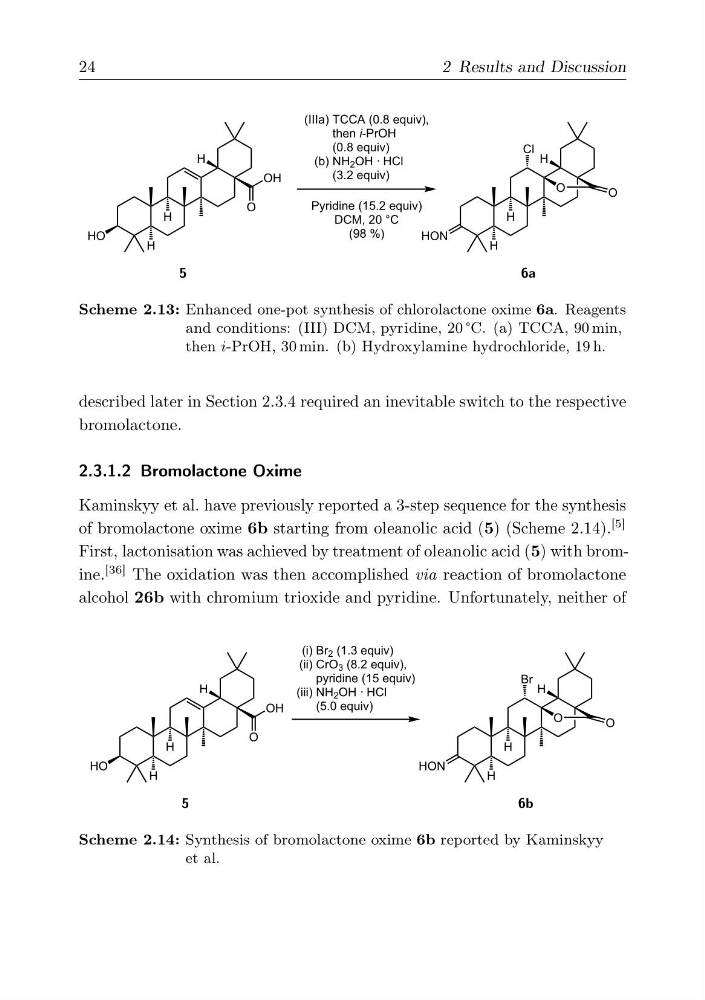
Scheme 2.13: Enhanced one-pot synthesis of chlorolactone oxime 6a. Reagents
and conditions: (III) DCM, pyridine, 20 °C. (a) TCCA, 90 min,
then i-PrOH, 30 min. (b) Hydroxylamine hydrochloride, 19 h.
described later in Section 2.3.4 required an inevitable switch to the respective
bromolactone.
2.3.1.2 Bromolactone Oxime
Kaminskyy et al. have previously reported a 3-step sequence for the synthesis
of bromolactone oxime 6b starting from oleanolic acid (5) (Scheme 2.14).
[5]
First, lactonisation was achieved by treatment of oleanolic acid (5) with bromine.
[36] The oxidation was then accomplished via reaction of bromolactone
alcohol 26b with chromium trioxide and pyridine. Unfortunately, neither of
HO
H
H
OH
O
H
H
H
O
H
Br
O
(i)
(ii)
(iii)
HON
Br 2 (1.3 equiv)
CrO 3 (8.2 equiv),
pyridine (15 equiv)
NH 2 OH · HCl
(5.0 equiv)
5
6 b
Scheme 2.14: Synthesis of bromolactone oxime 6b reported by Kaminskyy
et al.
2 Results and Discussion
HO
H
H
OH
O
H
H
H
O
H
Cl
O
Pyridine (15.2 equiv)
DCM, 20 °C
(98 %)
(IIIa)
(b)
HON
TCCA (0.8 equiv),
then i-PrOH
(0.8 equiv)
NH 2 OH · HCl
(3.2 equiv)
5
6 a
Scheme 2.13: Enhanced one-pot synthesis of chlorolactone oxime 6a. Reagents
and conditions: (III) DCM, pyridine, 20 °C. (a) TCCA, 90 min,
then i-PrOH, 30 min. (b) Hydroxylamine hydrochloride, 19 h.
described later in Section 2.3.4 required an inevitable switch to the respective
bromolactone.
2.3.1.2 Bromolactone Oxime
Kaminskyy et al. have previously reported a 3-step sequence for the synthesis
of bromolactone oxime 6b starting from oleanolic acid (5) (Scheme 2.14).
[5]
First, lactonisation was achieved by treatment of oleanolic acid (5) with bromine.
[36] The oxidation was then accomplished via reaction of bromolactone
alcohol 26b with chromium trioxide and pyridine. Unfortunately, neither of
HO
H
H
OH
O
H
H
H
O
H
Br
O
(i)
(ii)
(iii)
HON
Br 2 (1.3 equiv)
CrO 3 (8.2 equiv),
pyridine (15 equiv)
NH 2 OH · HCl
(5.0 equiv)
5
6 b
Scheme 2.14: Synthesis of bromolactone oxime 6b reported by Kaminskyy
et al.