

2.3 Optimisation of the Synthetic Sequence
21
HO
H
H
OH
O
H
H
H
O
H
Cl
O
THF, 60 °C
(<86 %, containing
varying amounts
of chromium)
(IIa)
(b)
(c)
HON
NCS (1.05 equiv)
PCC (1.25 equiv)
NH 2 OH · HCl
(2.00 equiv),
pyridine (10.0 equiv)
5
6 a
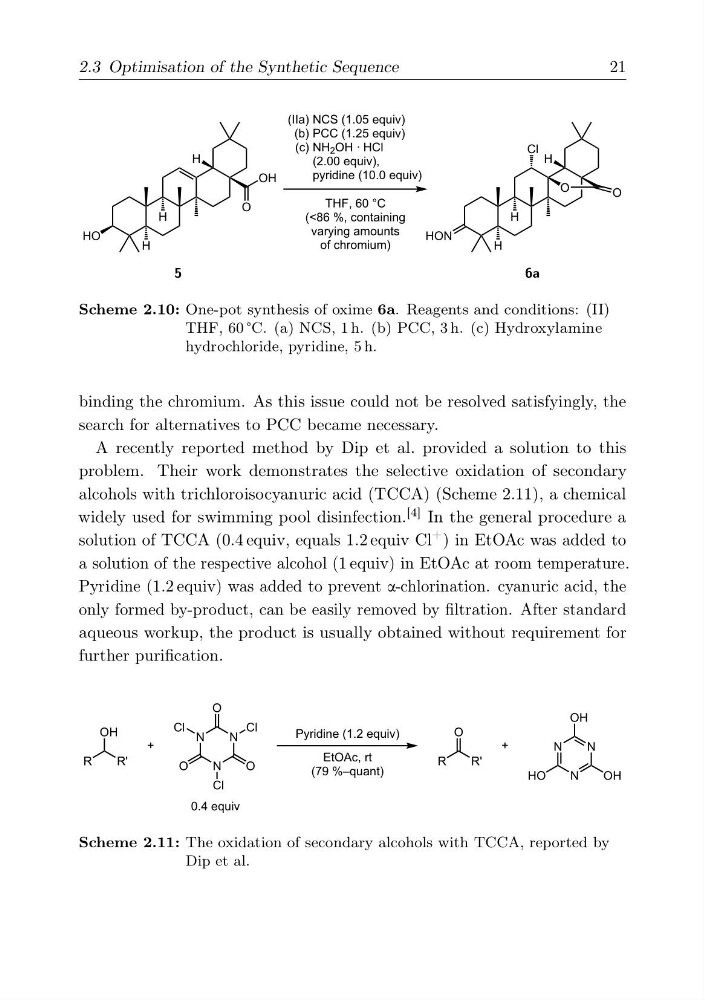
Scheme 2.10: One-pot synthesis of oxime 6a. Reagents and conditions: (II)
THF, 60 °C. (a) NCS, 1 h. (b) PCC, 3 h. (c) Hydroxylamine
hydrochloride, pyridine, 5 h.
binding the chromium. As this issue could not be resolved satisfyingly, the
search for alternatives to PCC became necessary.
A recently reported method by Dip et al. provided a solution to this
problem. Their work demonstrates the selective oxidation of secondary
alcohols with trichloroisocyanuric acid (TCCA) (Scheme 2.11), a chemical
widely used for swimming pool disinfection.
[4] In the general procedure a
solution of TCCA (0.4 equiv, equals 1.2 equiv Cl
+ ) in EtOAc was added to
a solution of the respective alcohol (1 equiv) in EtOAc at room temperature.
Pyridine (1.2 equiv) was added to prevent α-chlorination. cyanuric acid, the
only formed by-product, can be easily removed by filtration. After standard
aqueous workup, the product is usually obtained without requirement for
further purification.
N
N
N
O
O
O
Cl
Cl
Cl
Pyridine (1.2 equiv)
N
N
N
OH
OH
HO
R
R'
OH
R
R'
O
+
+
0.4 equiv
EtOAc, rt
(79 %–quant)
Scheme 2.11: The oxidation of secondary alcohols with TCCA, reported by
Dip et al.
21
HO
H
H
OH
O
H
H
H
O
H
Cl
O
THF, 60 °C
(<86 %, containing
varying amounts
of chromium)
(IIa)
(b)
(c)
HON
NCS (1.05 equiv)
PCC (1.25 equiv)
NH 2 OH · HCl
(2.00 equiv),
pyridine (10.0 equiv)
5
6 a
Scheme 2.10: One-pot synthesis of oxime 6a. Reagents and conditions: (II)
THF, 60 °C. (a) NCS, 1 h. (b) PCC, 3 h. (c) Hydroxylamine
hydrochloride, pyridine, 5 h.
binding the chromium. As this issue could not be resolved satisfyingly, the
search for alternatives to PCC became necessary.
A recently reported method by Dip et al. provided a solution to this
problem. Their work demonstrates the selective oxidation of secondary
alcohols with trichloroisocyanuric acid (TCCA) (Scheme 2.11), a chemical
widely used for swimming pool disinfection.
[4] In the general procedure a
solution of TCCA (0.4 equiv, equals 1.2 equiv Cl
+ ) in EtOAc was added to
a solution of the respective alcohol (1 equiv) in EtOAc at room temperature.
Pyridine (1.2 equiv) was added to prevent α-chlorination. cyanuric acid, the
only formed by-product, can be easily removed by filtration. After standard
aqueous workup, the product is usually obtained without requirement for
further purification.
N
N
N
O
O
O
Cl
Cl
Cl
Pyridine (1.2 equiv)
N
N
N
OH
OH
HO
R
R'
OH
R
R'
O
+
+
0.4 equiv
EtOAc, rt
(79 %–quant)
Scheme 2.11: The oxidation of secondary alcohols with TCCA, reported by
Dip et al.