

20
2 Results and Discussion
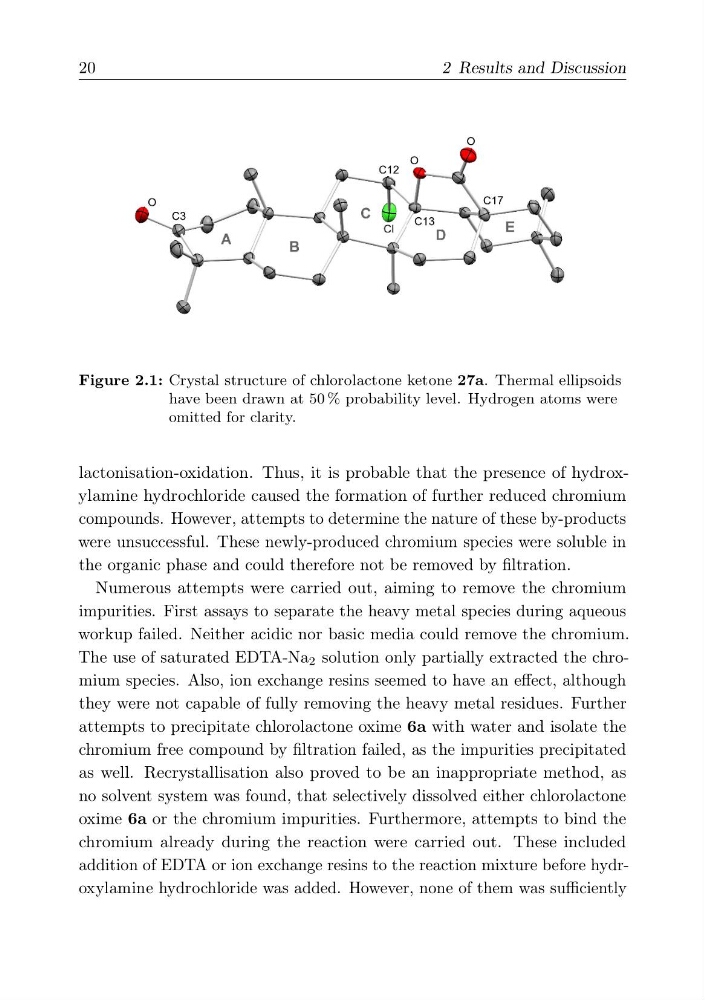
Figure 2.1: Crystal structure of chlorolactone ketone 27a. Thermal ellipsoids
have been drawn at 50 % probability level. Hydrogen atoms were
omitted for clarity.
lactonisation-oxidation. Thus, it is probable that the presence of hydroxylamine hydrochloride caused the formation of further reduced chromium
compounds. However, attempts to determine the nature of these by-products
were unsuccessful. These newly-produced chromium species were soluble in
the organic phase and could therefore not be removed by filtration.
Numerous attempts were carried out, aiming to remove the chromium
impurities. First assays to separate the heavy metal species during aqueous
workup failed. Neither acidic nor basic media could remove the chromium.
The use of saturated EDTA-Na 2 solution only partially extracted the chromium species. Also, ion exchange resins seemed to have an effect, although
they were not capable of fully removing the heavy metal residues. Further
attempts to precipitate chlorolactone oxime 6a with water and isolate the
chromium free compound by filtration failed, as the impurities precipitated
as well. Recrystallisation also proved to be an inappropriate method, as
no solvent system was found, that selectively dissolved either chlorolactone
oxime 6a or the chromium impurities. Furthermore, attempts to bind the
chromium already during the reaction were carried out. These included
addition of EDTA or ion exchange resins to the reaction mixture before hydroxylamine hydrochloride was added. However, none of them was sufficiently
2 Results and Discussion
Figure 2.1: Crystal structure of chlorolactone ketone 27a. Thermal ellipsoids
have been drawn at 50 % probability level. Hydrogen atoms were
omitted for clarity.
lactonisation-oxidation. Thus, it is probable that the presence of hydroxylamine hydrochloride caused the formation of further reduced chromium
compounds. However, attempts to determine the nature of these by-products
were unsuccessful. These newly-produced chromium species were soluble in
the organic phase and could therefore not be removed by filtration.
Numerous attempts were carried out, aiming to remove the chromium
impurities. First assays to separate the heavy metal species during aqueous
workup failed. Neither acidic nor basic media could remove the chromium.
The use of saturated EDTA-Na 2 solution only partially extracted the chromium species. Also, ion exchange resins seemed to have an effect, although
they were not capable of fully removing the heavy metal residues. Further
attempts to precipitate chlorolactone oxime 6a with water and isolate the
chromium free compound by filtration failed, as the impurities precipitated
as well. Recrystallisation also proved to be an inappropriate method, as
no solvent system was found, that selectively dissolved either chlorolactone
oxime 6a or the chromium impurities. Furthermore, attempts to bind the
chromium already during the reaction were carried out. These included
addition of EDTA or ion exchange resins to the reaction mixture before hydroxylamine hydrochloride was added. However, none of them was sufficiently