

2.2 Preliminary Results
17
H
O
H
HO
MeOH, 75 °C
(68 %)
H
O
H
Cl
O
H
O
H
Cl
O
AcON
AcO
(5a)
(b)
K 2 CO 3 (1 equiv),
CuSO 4 (5 equiv),
H 2 O/THF
7a
(dr 80:20)
8a
(dr > 20:1)
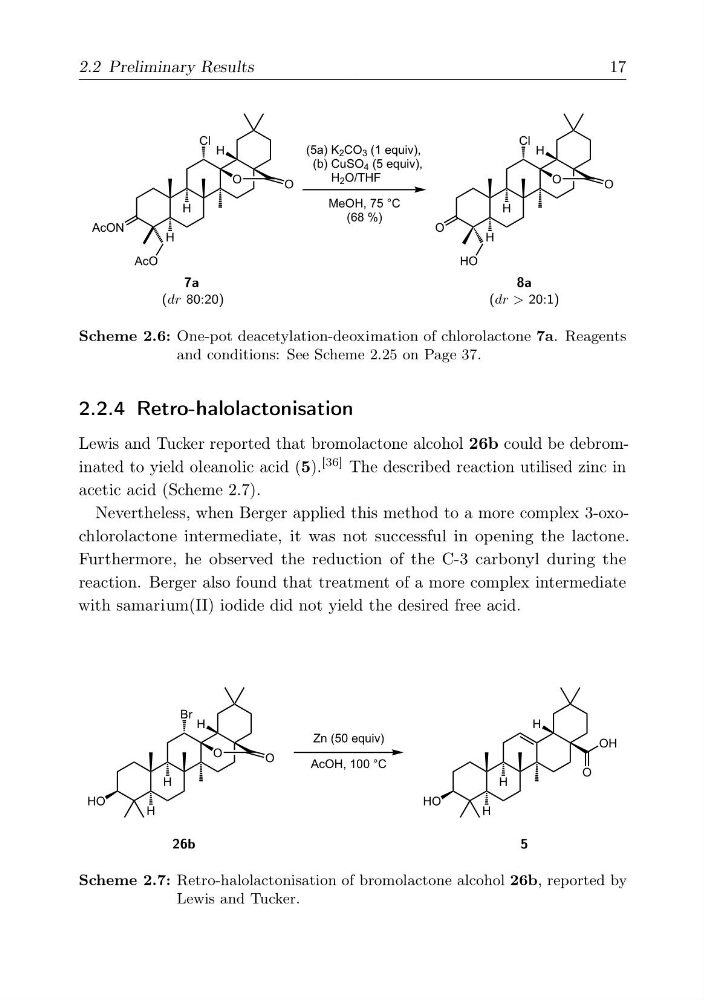
Scheme 2.6: One-pot deacetylation-deoximation of chlorolactone 7a. Reagents
and conditions: See Scheme 2.25 on Page 37.
2.2.4 Retro-halolactonisation
Lewis and Tucker reported that bromolactone alcohol 26b could be debrominated to yield oleanolic acid (5).
[36] The described reaction utilised zinc in
acetic acid (Scheme 2.7).
Nevertheless, when Berger applied this method to a more complex 3-oxochlorolactone intermediate, it was not successful in opening the lactone.
Furthermore, he observed the reduction of the C-3 carbonyl during the
reaction. Berger also found that treatment of a more complex intermediate
with samarium(II) iodide did not yield the desired free acid.
Zn (50 equiv)
HO
H
H
OH
O
H
HO
H
H
O
H
O
Br
AcOH, 100 °C
26b
5
Scheme 2.7: Retro-halolactonisation of bromolactone alcohol 26b, reported by
Lewis and Tucker.
17
H
O
H
HO
MeOH, 75 °C
(68 %)
H
O
H
Cl
O
H
O
H
Cl
O
AcON
AcO
(5a)
(b)
K 2 CO 3 (1 equiv),
CuSO 4 (5 equiv),
H 2 O/THF
7a
(dr 80:20)
8a
(dr > 20:1)
Scheme 2.6: One-pot deacetylation-deoximation of chlorolactone 7a. Reagents
and conditions: See Scheme 2.25 on Page 37.
2.2.4 Retro-halolactonisation
Lewis and Tucker reported that bromolactone alcohol 26b could be debrominated to yield oleanolic acid (5).
[36] The described reaction utilised zinc in
acetic acid (Scheme 2.7).
Nevertheless, when Berger applied this method to a more complex 3-oxochlorolactone intermediate, it was not successful in opening the lactone.
Furthermore, he observed the reduction of the C-3 carbonyl during the
reaction. Berger also found that treatment of a more complex intermediate
with samarium(II) iodide did not yield the desired free acid.
Zn (50 equiv)
HO
H
H
OH
O
H
HO
H
H
O
H
O
Br
AcOH, 100 °C
26b
5
Scheme 2.7: Retro-halolactonisation of bromolactone alcohol 26b, reported by
Lewis and Tucker.