

10
1 Introduction
Pd(OAc) 2 (5 mol-%)
PhI(OAc) 2 (1.10 equiv)
R = H
R = Me
Na 2 [PdCl 4 ] (1.00 eq)
NaOAc (1.02 eq)
N
RO
N
MeO
OAc
23 R = H
24 R = Me
25
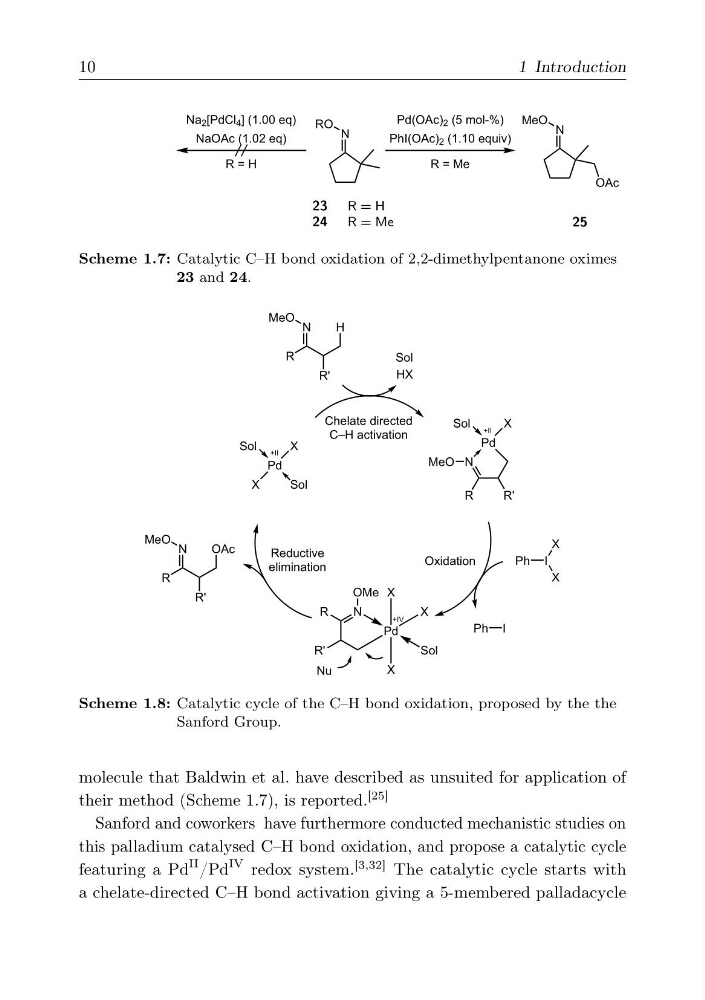
Scheme 1.7: Catalytic C–H bond oxidation of 2,2-dimethylpentanone oximes
23 and 24.
MeO
R
R'
Pd
X
Sol
Sol
X
Pd
X
Sol
N
N
MeO
R
R'
H
OMe
R
R'
N
Pd
N
MeO
R
R'
OAc
HX
Sol
X
X
Ph I
Ph I
Oxidation
Reductive
elimination
Chelate directed
C–H activation
+II
+IV
+II
Nu
Sol
X
X
X
Scheme 1.8: Catalytic cycle of the C–H bond oxidation, proposed by the the
Sanford Group.
molecule that Baldwin et al. have described as unsuited for application of
their method (Scheme 1.7), is reported.
[25]
Sanford and coworkers have furthermore conducted mechanistic studies on
this palladium catalysed C–H bond oxidation, and propose a catalytic cycle
featuring a Pd
II /Pd
IV redox system.
[3,32] The catalytic cycle starts with
a chelate-directed C–H bond activation giving a 5-membered palladacycle
1 Introduction
Pd(OAc) 2 (5 mol-%)
PhI(OAc) 2 (1.10 equiv)
R = H
R = Me
Na 2 [PdCl 4 ] (1.00 eq)
NaOAc (1.02 eq)
N
RO
N
MeO
OAc
23 R = H
24 R = Me
25
Scheme 1.7: Catalytic C–H bond oxidation of 2,2-dimethylpentanone oximes
23 and 24.
MeO
R
R'
Pd
X
Sol
Sol
X
Pd
X
Sol
N
N
MeO
R
R'
H
OMe
R
R'
N
Pd
N
MeO
R
R'
OAc
HX
Sol
X
X
Ph I
Ph I
Oxidation
Reductive
elimination
Chelate directed
C–H activation
+II
+IV
+II
Nu
Sol
X
X
X
Scheme 1.8: Catalytic cycle of the C–H bond oxidation, proposed by the the
Sanford Group.
molecule that Baldwin et al. have described as unsuited for application of
their method (Scheme 1.7), is reported.
[25]
Sanford and coworkers have furthermore conducted mechanistic studies on
this palladium catalysed C–H bond oxidation, and propose a catalytic cycle
featuring a Pd
II /Pd
IV redox system.
[3,32] The catalytic cycle starts with
a chelate-directed C–H bond activation giving a 5-membered palladacycle