

16 Integration of Detectors into a Large Experiment: Examples from ATLAS. . .
779
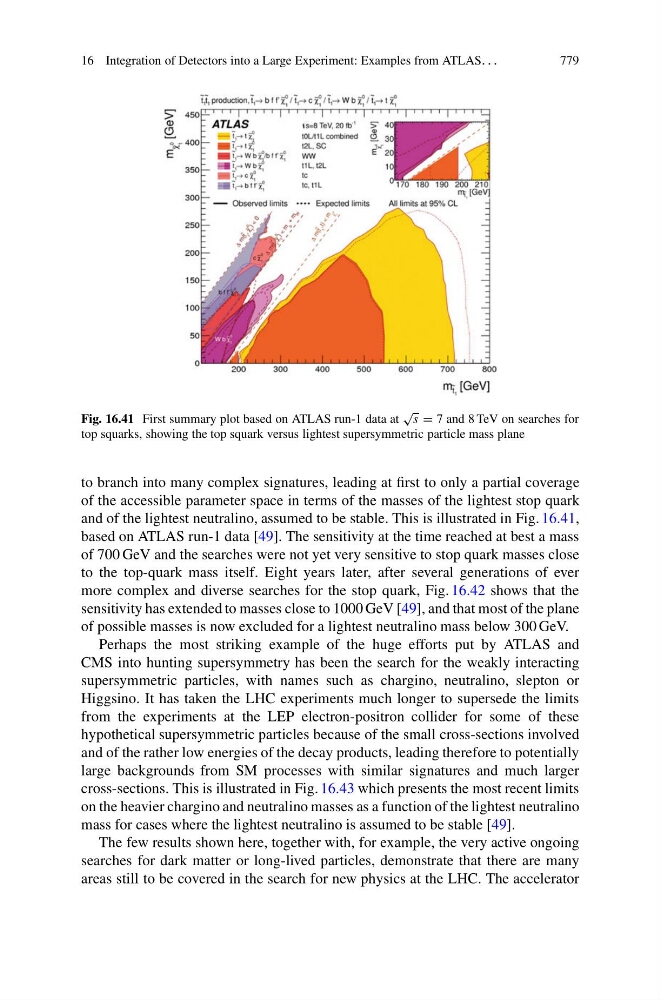
Fig. 16.41 First summary plot based on ATLAS run-1 data at
√
s = 7 and 8 TeV on searches for
top squarks, showing the top squark versus lightest supersymmetric particle mass plane
to branch into many complex signatures, leading at first to only a partial coverage
of the accessible parameter space in terms of the masses of the lightest stop quark
and of the lightest neutralino, assumed to be stable. This is illustrated in Fig. 16.41,
based on ATLAS run-1 data [49]. The sensitivity at the time reached at best a mass
of 700 GeV and the searches were not yet very sensitive to stop quark masses close
to the top-quark mass itself. Eight years later, after several generations of ever
more complex and diverse searches for the stop quark, Fig. 16.42 shows that the
sensitivity has extended to masses close to 1000 GeV [49], and that most of the plane
of possible masses is now excluded for a lightest neutralino mass below 300 GeV.
Perhaps the most striking example of the huge efforts put by ATLAS and
CMS into hunting supersymmetry has been the search for the weakly interacting
supersymmetric particles, with names such as chargino, neutralino, slepton or
Higgsino. It has taken the LHC experiments much longer to supersede the limits
from the experiments at the LEP electron-positron collider for some of these
hypothetical supersymmetric particles because of the small cross-sections involved
and of the rather low energies of the decay products, leading therefore to potentially
large backgrounds from SM processes with similar signatures and much larger
cross-sections. This is illustrated in Fig. 16.43 which presents the most recent limits
on the heavier chargino and neutralino masses as a function of the lightest neutralino
mass for cases where the lightest neutralino is assumed to be stable [49].
The few results shown here, together with, for example, the very active ongoing
searches for dark matter or long-lived particles, demonstrate that there are many
areas still to be covered in the search for new physics at the LHC. The accelerator