

778
D. Froidevaux
1
2
3
4
5
6
[TeV]
Z'
m
5
−
10
4
−
10
3
−
10
2
−
10
1
−
10
1
10
SSM
σ
/
limit
σ
)
-1
139 fb
μ
μ
;
-1
= 13 TeV (ee 139 fb
s
ATLAS
)
-1
36.1 fb
μ
μ
;
-1
= 13 TeV (ee 36.1 fb
s
ATLAS
)
-1
3.2 fb
μ
μ
;
-1
= 13 TeV (ee 3.2 fb
s
ATLAS
)
-1
20.5 fb
μ
μ
;
-1
= 8 TeV (ee 20.3 fb
s
ATLAS
)
-1
5.0 fb
μ
μ
;
-1
= 7 TeV (ee 4.9 fb
s
ATLAS
)
-1
42 pb
μ
μ
;
-1
= 7 TeV (ee 39 pb
s
ATLAS
ATLAS
Z'
ll
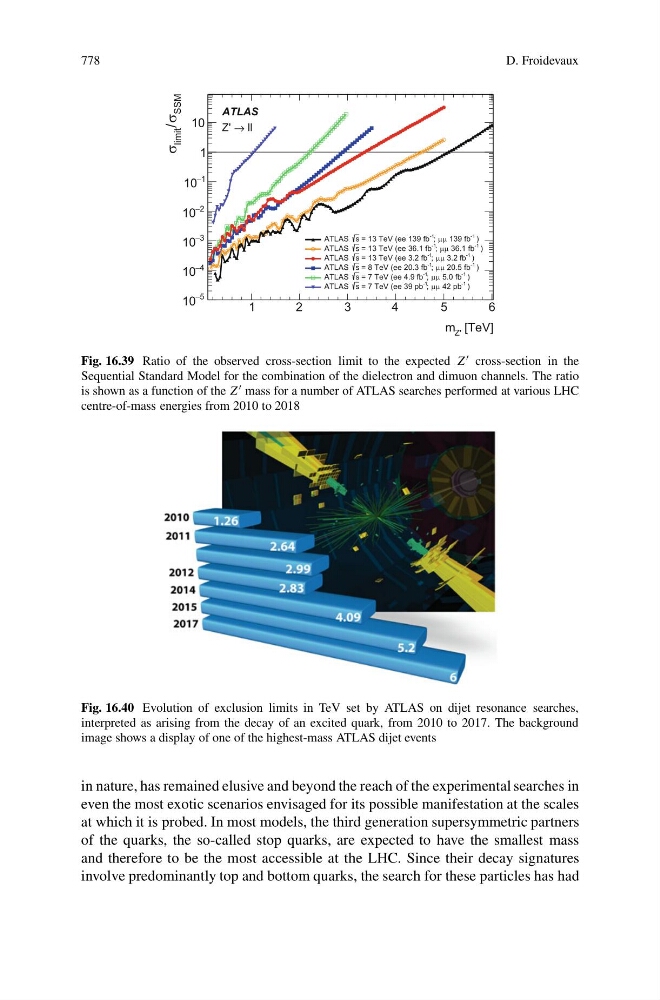
Fig. 16.39 Ratio of the observed cross-section limit to the expected Z cross-section in the
Sequential Standard Model for the combination of the dielectron and dimuon channels. The ratio
is shown as a function of the Z mass for a number of ATLAS searches performed at various LHC
centre-of-mass energies from 2010 to 2018
Fig. 16.40 Evolution of exclusion limits in TeV set by ATLAS on dijet resonance searches,
interpreted as arising from the decay of an excited quark, from 2010 to 2017. The background
image shows a display of one of the highest-mass ATLAS dijet events
in nature, has remained elusive and beyond the reach of the experimental searches in
even the most exotic scenarios envisaged for its possible manifestation at the scales
at which it is probed. In most models, the third generation supersymmetric partners
of the quarks, the so-called stop quarks, are expected to have the smallest mass
and therefore to be the most accessible at the LHC. Since their decay signatures
involve predominantly top and bottom quarks, the search for these particles has had