

432
A. Ariga et al.
Entries
2476
/ ndf
2
χ
88.48 / 54
VR01
0
100
200
300
400
500
600
0
20
40
60
80
100
120
Entries
2476
/ ndf
2
χ
88.48 / 54
H
He
Entries
1809
/ ndf
2
χ
97.6 / 50
VR12
100 200 300 400 500 600 700 800
0
20
40
60
80
100
120
140
Entries
1809
/ ndf
2
χ
97.6 / 50
He
Li
Be
B C
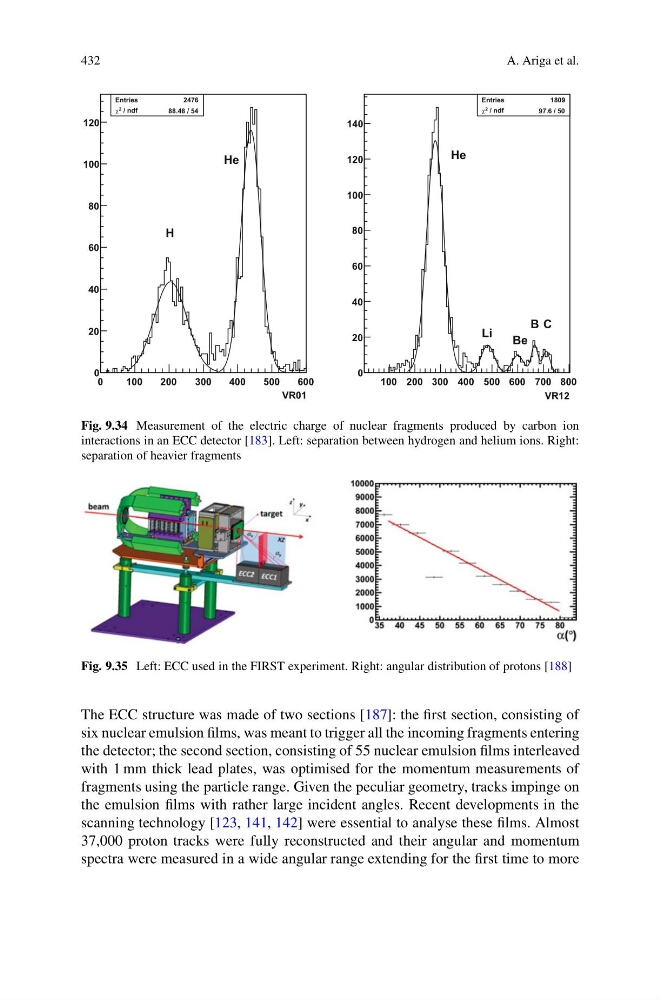
Fig. 9.34 Measurement of the electric charge of nuclear fragments produced by carbon ion
interactions in an ECC detector [183]. Left: separation between hydrogen and helium ions. Right:
separation of heavier fragments
Fig. 9.35 Left: ECC used in the FIRST experiment. Right: angular distribution of protons [188]
The ECC structure was made of two sections [187]: the first section, consisting of
six nuclear emulsion films, was meant to trigger all the incoming fragments entering
the detector; the second section, consisting of 55 nuclear emulsion films interleaved
with 1 mm thick lead plates, was optimised for the momentum measurements of
fragments using the particle range. Given the peculiar geometry, tracks impinge on
the emulsion films with rather large incident angles. Recent developments in the
scanning technology [123, 141, 142] were essential to analyse these films. Almost
37,000 proton tracks were fully reconstructed and their angular and momentum
spectra were measured in a wide angular range extending for the first time to more
A. Ariga et al.
Entries
2476
/ ndf
2
χ
88.48 / 54
VR01
0
100
200
300
400
500
600
0
20
40
60
80
100
120
Entries
2476
/ ndf
2
χ
88.48 / 54
H
He
Entries
1809
/ ndf
2
χ
97.6 / 50
VR12
100 200 300 400 500 600 700 800
0
20
40
60
80
100
120
140
Entries
1809
/ ndf
2
χ
97.6 / 50
He
Li
Be
B C
Fig. 9.34 Measurement of the electric charge of nuclear fragments produced by carbon ion
interactions in an ECC detector [183]. Left: separation between hydrogen and helium ions. Right:
separation of heavier fragments
Fig. 9.35 Left: ECC used in the FIRST experiment. Right: angular distribution of protons [188]
The ECC structure was made of two sections [187]: the first section, consisting of
six nuclear emulsion films, was meant to trigger all the incoming fragments entering
the detector; the second section, consisting of 55 nuclear emulsion films interleaved
with 1 mm thick lead plates, was optimised for the momentum measurements of
fragments using the particle range. Given the peculiar geometry, tracks impinge on
the emulsion films with rather large incident angles. Recent developments in the
scanning technology [123, 141, 142] were essential to analyse these films. Almost
37,000 proton tracks were fully reconstructed and their angular and momentum
spectra were measured in a wide angular range extending for the first time to more