

402
A. Ariga et al.
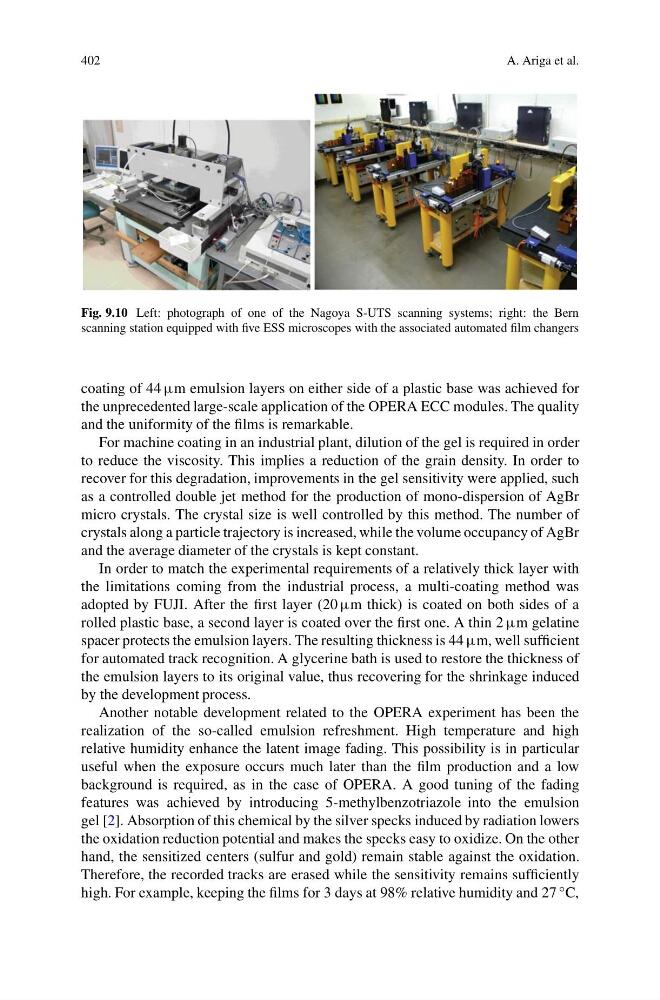
Fig. 9.10 Left: photograph of one of the Nagoya S-UTS scanning systems; right: the Bern
scanning station equipped with five ESS microscopes with the associated automated film changers
coating of 44 μm emulsion layers on either side of a plastic base was achieved for
the unprecedented large-scale application of the OPERA ECC modules. The quality
and the uniformity of the films is remarkable.
For machine coating in an industrial plant, dilution of the gel is required in order
to reduce the viscosity. This implies a reduction of the grain density. In order to
recover for this degradation, improvements in the gel sensitivity were applied, such
as a controlled double jet method for the production of mono-dispersion of AgBr
micro crystals. The crystal size is well controlled by this method. The number of
crystals along a particle trajectory is increased, while the volume occupancy of AgBr
and the average diameter of the crystals is kept constant.
In order to match the experimental requirements of a relatively thick layer with
the limitations coming from the industrial process, a multi-coating method was
adopted by FUJI. After the first layer (20 μm thick) is coated on both sides of a
rolled plastic base, a second layer is coated over the first one. A thin 2 μm gelatine
spacer protects the emulsion layers. The resulting thickness is 44 μm, well sufficient
for automated track recognition. A glycerine bath is used to restore the thickness of
the emulsion layers to its original value, thus recovering for the shrinkage induced
by the development process.
Another notable development related to the OPERA experiment has been the
realization of the so-called emulsion refreshment. High temperature and high
relative humidity enhance the latent image fading. This possibility is in particular
useful when the exposure occurs much later than the film production and a low
background is required, as in the case of OPERA. A good tuning of the fading
features was achieved by introducing 5-methylbenzotriazole into the emulsion
gel [2]. Absorption of this chemical by the silver specks induced by radiation lowers
the oxidation reduction potential and makes the specks easy to oxidize. On the other
hand, the sensitized centers (sulfur and gold) remain stable against the oxidation.
Therefore, the recorded tracks are erased while the sensitivity remains sufficiently
high. For example, keeping the films for 3 days at 98% relative humidity and 27 ◦ C,
A. Ariga et al.
Fig. 9.10 Left: photograph of one of the Nagoya S-UTS scanning systems; right: the Bern
scanning station equipped with five ESS microscopes with the associated automated film changers
coating of 44 μm emulsion layers on either side of a plastic base was achieved for
the unprecedented large-scale application of the OPERA ECC modules. The quality
and the uniformity of the films is remarkable.
For machine coating in an industrial plant, dilution of the gel is required in order
to reduce the viscosity. This implies a reduction of the grain density. In order to
recover for this degradation, improvements in the gel sensitivity were applied, such
as a controlled double jet method for the production of mono-dispersion of AgBr
micro crystals. The crystal size is well controlled by this method. The number of
crystals along a particle trajectory is increased, while the volume occupancy of AgBr
and the average diameter of the crystals is kept constant.
In order to match the experimental requirements of a relatively thick layer with
the limitations coming from the industrial process, a multi-coating method was
adopted by FUJI. After the first layer (20 μm thick) is coated on both sides of a
rolled plastic base, a second layer is coated over the first one. A thin 2 μm gelatine
spacer protects the emulsion layers. The resulting thickness is 44 μm, well sufficient
for automated track recognition. A glycerine bath is used to restore the thickness of
the emulsion layers to its original value, thus recovering for the shrinkage induced
by the development process.
Another notable development related to the OPERA experiment has been the
realization of the so-called emulsion refreshment. High temperature and high
relative humidity enhance the latent image fading. This possibility is in particular
useful when the exposure occurs much later than the film production and a low
background is required, as in the case of OPERA. A good tuning of the fading
features was achieved by introducing 5-methylbenzotriazole into the emulsion
gel [2]. Absorption of this chemical by the silver specks induced by radiation lowers
the oxidation reduction potential and makes the specks easy to oxidize. On the other
hand, the sensitized centers (sulfur and gold) remain stable against the oxidation.
Therefore, the recorded tracks are erased while the sensitivity remains sufficiently
high. For example, keeping the films for 3 days at 98% relative humidity and 27 ◦ C,