

8 Neutrino Detectors
367
Automatic microscope
CCD
Reconstruction by hardware
video processor
(1–3 sec/event)
Tomographic image
to video processor
x 50
local depth 5μm
[one view
512 x 512 pixels
120 x 150μm
2
]
Emulsion
Frame [formed by
adjacent views]
Track (matching grains)
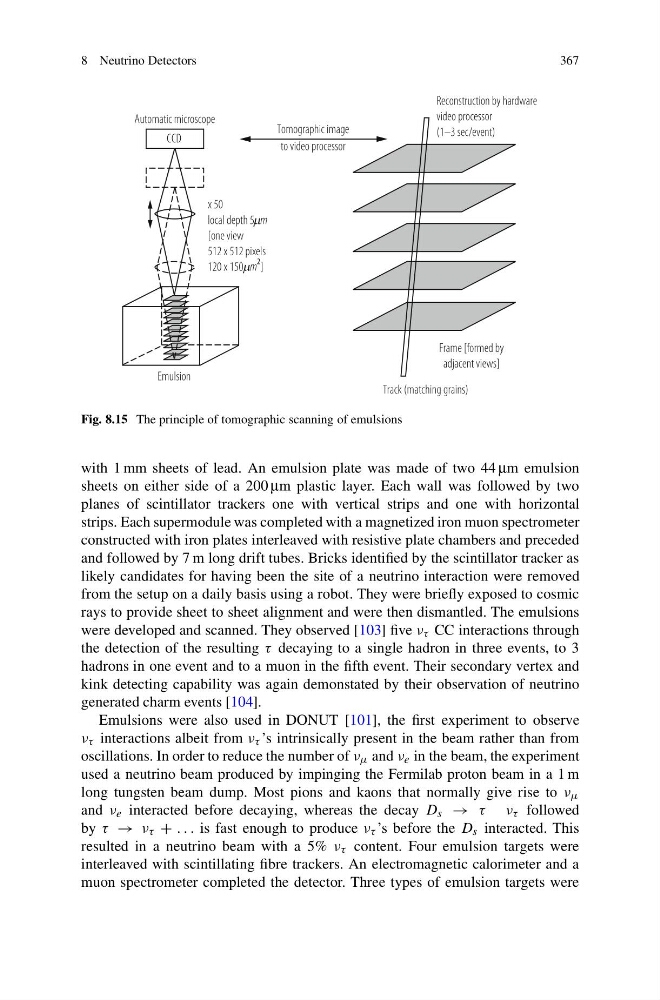
Fig. 8.15 The principle of tomographic scanning of emulsions
with 1 mm sheets of lead. An emulsion plate was made of two 44 μm emulsion
sheets on either side of a 200 μm plastic layer. Each wall was followed by two
planes of scintillator trackers one with vertical strips and one with horizontal
strips. Each supermodule was completed with a magnetized iron muon spectrometer
constructed with iron plates interleaved with resistive plate chambers and preceded
and followed by 7 m long drift tubes. Bricks identified by the scintillator tracker as
likely candidates for having been the site of a neutrino interaction were removed
from the setup on a daily basis using a robot. They were briefly exposed to cosmic
rays to provide sheet to sheet alignment and were then dismantled. The emulsions
were developed and scanned. They observed [103] five ν τ CC interactions through
the detection of the resulting τ decaying to a single hadron in three events, to 3
hadrons in one event and to a muon in the fifth event. Their secondary vertex and
kink detecting capability was again demonstated by their observation of neutrino
generated charm events [104].
Emulsions were also used in DONUT [101], the first experiment to observe
ν τ interactions albeit from ν τ ’s intrinsically present in the beam rather than from
oscillations. In order to reduce the number of ν μ and ν e in the beam, the experiment
used a neutrino beam produced by impinging the Fermilab proton beam in a 1 m
long tungsten beam dump. Most pions and kaons that normally give rise to ν μ
and ν e interacted before decaying, whereas the decay D s → τ ν τ followed
by τ → ν τ + . . . is fast enough to produce ν τ ’s before the D s interacted. This
resulted in a neutrino beam with a 5% ν τ content. Four emulsion targets were
interleaved with scintillating fibre trackers. An electromagnetic calorimeter and a
muon spectrometer completed the detector. Three types of emulsion targets were
367
Automatic microscope
CCD
Reconstruction by hardware
video processor
(1–3 sec/event)
Tomographic image
to video processor
x 50
local depth 5μm
[one view
512 x 512 pixels
120 x 150μm
2
]
Emulsion
Frame [formed by
adjacent views]
Track (matching grains)
Fig. 8.15 The principle of tomographic scanning of emulsions
with 1 mm sheets of lead. An emulsion plate was made of two 44 μm emulsion
sheets on either side of a 200 μm plastic layer. Each wall was followed by two
planes of scintillator trackers one with vertical strips and one with horizontal
strips. Each supermodule was completed with a magnetized iron muon spectrometer
constructed with iron plates interleaved with resistive plate chambers and preceded
and followed by 7 m long drift tubes. Bricks identified by the scintillator tracker as
likely candidates for having been the site of a neutrino interaction were removed
from the setup on a daily basis using a robot. They were briefly exposed to cosmic
rays to provide sheet to sheet alignment and were then dismantled. The emulsions
were developed and scanned. They observed [103] five ν τ CC interactions through
the detection of the resulting τ decaying to a single hadron in three events, to 3
hadrons in one event and to a muon in the fifth event. Their secondary vertex and
kink detecting capability was again demonstated by their observation of neutrino
generated charm events [104].
Emulsions were also used in DONUT [101], the first experiment to observe
ν τ interactions albeit from ν τ ’s intrinsically present in the beam rather than from
oscillations. In order to reduce the number of ν μ and ν e in the beam, the experiment
used a neutrino beam produced by impinging the Fermilab proton beam in a 1 m
long tungsten beam dump. Most pions and kaons that normally give rise to ν μ
and ν e interacted before decaying, whereas the decay D s → τ ν τ followed
by τ → ν τ + . . . is fast enough to produce ν τ ’s before the D s interacted. This
resulted in a neutrino beam with a 5% ν τ content. Four emulsion targets were
interleaved with scintillating fibre trackers. An electromagnetic calorimeter and a
muon spectrometer completed the detector. Three types of emulsion targets were