

300
R. Forty and O. Ullaland
(a)
(b)
Fig. 7.15 (a) A threshold gas Cherenkov counter as used to tag particles in the secondary beams.
CERN IT 6304088. (b) CEDAR counter (internal part). Here on the mounting bench. The counter
is a differential Cherenkov, corrected for chromaticity, able to differentiate pions from kaons up to
350 GeV. Counters of this type were used in all SPS hadron beams. CERN PHOTO 7603033
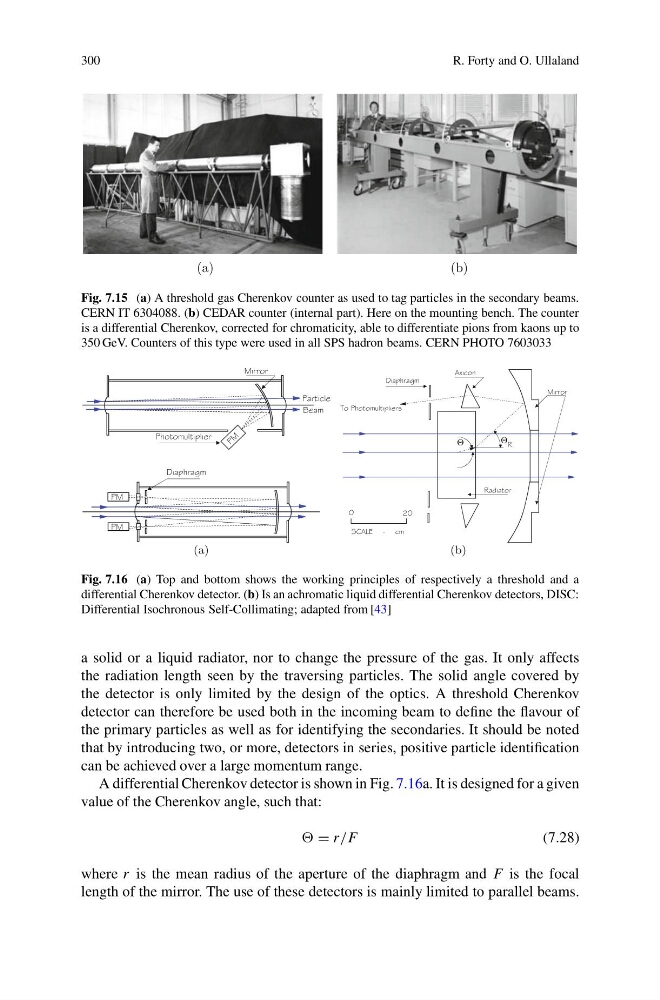
Fig. 7.16 (a) Top and bottom shows the working principles of respectively a threshold and a
differential Cherenkov detector. (b) Is an achromatic liquid differential Cherenkov detectors, DISC:
Differential Isochronous Self-Collimating; adapted from [43]
a solid or a liquid radiator, nor to change the pressure of the gas. It only affects
the radiation length seen by the traversing particles. The solid angle covered by
the detector is only limited by the design of the optics. A threshold Cherenkov
detector can therefore be used both in the incoming beam to define the flavour of
the primary particles as well as for identifying the secondaries. It should be noted
that by introducing two, or more, detectors in series, positive particle identification
can be achieved over a large momentum range.
A differential Cherenkov detector is shown in Fig. 7.16a. It is designed for a given
value of the Cherenkov angle, such that:
= r/F
(7.28)
where r is the mean radius of the aperture of the diaphragm and F is the focal
length of the mirror. The use of these detectors is mainly limited to parallel beams.
R. Forty and O. Ullaland
(a)
(b)
Fig. 7.15 (a) A threshold gas Cherenkov counter as used to tag particles in the secondary beams.
CERN IT 6304088. (b) CEDAR counter (internal part). Here on the mounting bench. The counter
is a differential Cherenkov, corrected for chromaticity, able to differentiate pions from kaons up to
350 GeV. Counters of this type were used in all SPS hadron beams. CERN PHOTO 7603033
Fig. 7.16 (a) Top and bottom shows the working principles of respectively a threshold and a
differential Cherenkov detector. (b) Is an achromatic liquid differential Cherenkov detectors, DISC:
Differential Isochronous Self-Collimating; adapted from [43]
a solid or a liquid radiator, nor to change the pressure of the gas. It only affects
the radiation length seen by the traversing particles. The solid angle covered by
the detector is only limited by the design of the optics. A threshold Cherenkov
detector can therefore be used both in the incoming beam to define the flavour of
the primary particles as well as for identifying the secondaries. It should be noted
that by introducing two, or more, detectors in series, positive particle identification
can be achieved over a large momentum range.
A differential Cherenkov detector is shown in Fig. 7.16a. It is designed for a given
value of the Cherenkov angle, such that:
= r/F
(7.28)
where r is the mean radius of the aperture of the diaphragm and F is the focal
length of the mirror. The use of these detectors is mainly limited to parallel beams.