

7 Particle Detectors and Detector Systems
293
0.1
1
10
100
1000
10000
0
5
2
0
0
2
0
5
1
0
0
1
Wave length (nm)
Absorption (/cm/bar)
C H
H O
CO
C H
O
2 2
2
2
2
6 6
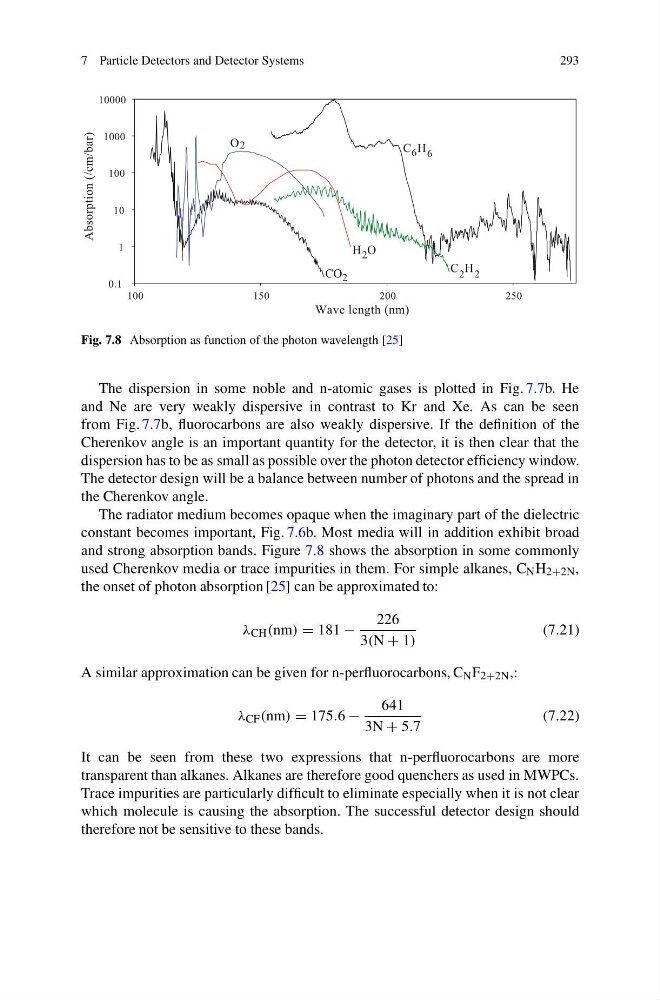
Fig. 7.8 Absorption as function of the photon wavelength [25]
The dispersion in some noble and n-atomic gases is plotted in Fig. 7.7b. He
and Ne are very weakly dispersive in contrast to Kr and Xe. As can be seen
from Fig. 7.7b, fluorocarbons are also weakly dispersive. If the definition of the
Cherenkov angle is an important quantity for the detector, it is then clear that the
dispersion has to be as small as possible over the photon detector efficiency window.
The detector design will be a balance between number of photons and the spread in
the Cherenkov angle.
The radiator medium becomes opaque when the imaginary part of the dielectric
constant becomes important, Fig. 7.6b. Most media will in addition exhibit broad
and strong absorption bands. Figure 7.8 shows the absorption in some commonly
used Cherenkov media or trace impurities in them. For simple alkanes, C N H 2+2N ,
the onset of photon absorption [25] can be approximated to:
λ CH (nm) = 181 −
226
3(N + 1)
(7.21)
A similar approximation can be given for n-perfluorocarbons, C N F 2+2N ,:
λ CF (nm) = 175.6 −
641
3N + 5.7
(7.22)
It can be seen from these two expressions that n-perfluorocarbons are more
transparent than alkanes. Alkanes are therefore good quenchers as used in MWPCs.
Trace impurities are particularly difficult to eliminate especially when it is not clear
which molecule is causing the absorption. The successful detector design should
therefore not be sensitive to these bands.
293
0.1
1
10
100
1000
10000
0
5
2
0
0
2
0
5
1
0
0
1
Wave length (nm)
Absorption (/cm/bar)
C H
H O
CO
C H
O
2 2
2
2
2
6 6
Fig. 7.8 Absorption as function of the photon wavelength [25]
The dispersion in some noble and n-atomic gases is plotted in Fig. 7.7b. He
and Ne are very weakly dispersive in contrast to Kr and Xe. As can be seen
from Fig. 7.7b, fluorocarbons are also weakly dispersive. If the definition of the
Cherenkov angle is an important quantity for the detector, it is then clear that the
dispersion has to be as small as possible over the photon detector efficiency window.
The detector design will be a balance between number of photons and the spread in
the Cherenkov angle.
The radiator medium becomes opaque when the imaginary part of the dielectric
constant becomes important, Fig. 7.6b. Most media will in addition exhibit broad
and strong absorption bands. Figure 7.8 shows the absorption in some commonly
used Cherenkov media or trace impurities in them. For simple alkanes, C N H 2+2N ,
the onset of photon absorption [25] can be approximated to:
λ CH (nm) = 181 −
226
3(N + 1)
(7.21)
A similar approximation can be given for n-perfluorocarbons, C N F 2+2N ,:
λ CF (nm) = 175.6 −
641
3N + 5.7
(7.22)
It can be seen from these two expressions that n-perfluorocarbons are more
transparent than alkanes. Alkanes are therefore good quenchers as used in MWPCs.
Trace impurities are particularly difficult to eliminate especially when it is not clear
which molecule is causing the absorption. The successful detector design should
therefore not be sensitive to these bands.