

Developing Health-Promoting Schools …
27
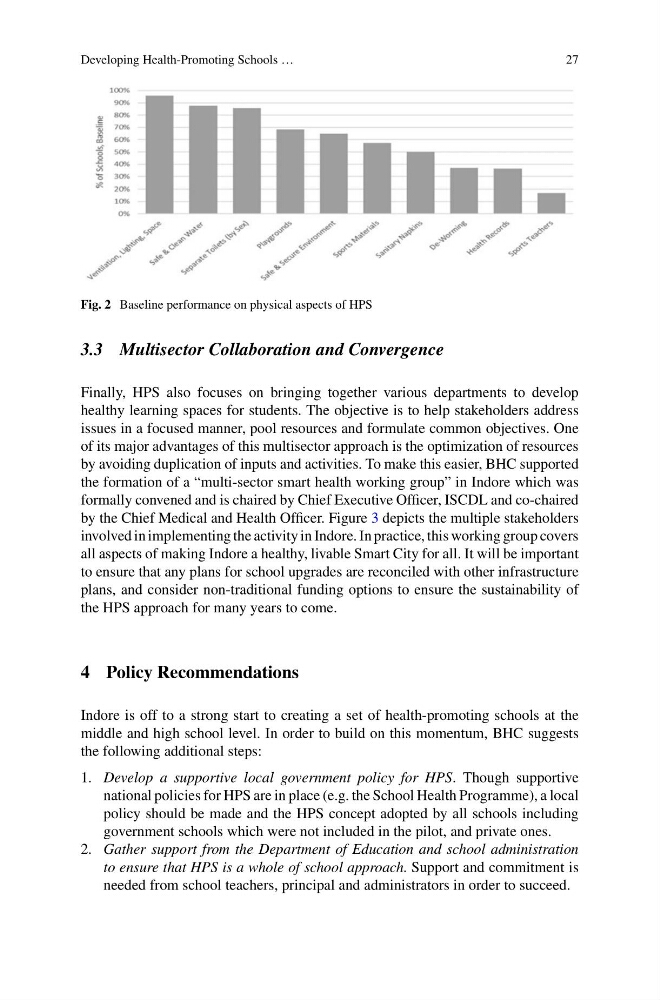
Fig. 2 Baseline performance on physical aspects of HPS
3.3 Multisector Collaboration and Convergence
Finally, HPS also focuses on bringing together various departments to develop
healthy learning spaces for students. The objective is to help stakeholders address
issues in a focused manner, pool resources and formulate common objectives. One
of its major advantages of this multisector approach is the optimization of resources
by avoiding duplication of inputs and activities. To make this easier, BHC supported
the formation of a “multi-sector smart health working group” in Indore which was
formally convened and is chaired by Chief Executive Officer, ISCDL and co-chaired
by the Chief Medical and Health Officer. Figure 3 depicts the multiple stakeholders
involved in implementing the activity in Indore. In practice, this working group covers
all aspects of making Indore a healthy, livable Smart City for all. It will be important
to ensure that any plans for school upgrades are reconciled with other infrastructure
plans, and consider non-traditional funding options to ensure the sustainability of
the HPS approach for many years to come.
4 Policy Recommendations
Indore is off to a strong start to creating a set of health-promoting schools at the
middle and high school level. In order to build on this momentum, BHC suggests
the following additional steps:
1. Develop a supportive local government policy for HPS. Though supportive
national policies for HPS are in place (e.g. the School Health Programme), a local
policy should be made and the HPS concept adopted by all schools including
government schools which were not included in the pilot, and private ones.
2. Gather support from the Department of Education and school administration
to ensure that HPS is a whole of school approach. Support and commitment is
needed from school teachers, principal and administrators in order to succeed.
27
Fig. 2 Baseline performance on physical aspects of HPS
3.3 Multisector Collaboration and Convergence
Finally, HPS also focuses on bringing together various departments to develop
healthy learning spaces for students. The objective is to help stakeholders address
issues in a focused manner, pool resources and formulate common objectives. One
of its major advantages of this multisector approach is the optimization of resources
by avoiding duplication of inputs and activities. To make this easier, BHC supported
the formation of a “multi-sector smart health working group” in Indore which was
formally convened and is chaired by Chief Executive Officer, ISCDL and co-chaired
by the Chief Medical and Health Officer. Figure 3 depicts the multiple stakeholders
involved in implementing the activity in Indore. In practice, this working group covers
all aspects of making Indore a healthy, livable Smart City for all. It will be important
to ensure that any plans for school upgrades are reconciled with other infrastructure
plans, and consider non-traditional funding options to ensure the sustainability of
the HPS approach for many years to come.
4 Policy Recommendations
Indore is off to a strong start to creating a set of health-promoting schools at the
middle and high school level. In order to build on this momentum, BHC suggests
the following additional steps:
1. Develop a supportive local government policy for HPS. Though supportive
national policies for HPS are in place (e.g. the School Health Programme), a local
policy should be made and the HPS concept adopted by all schools including
government schools which were not included in the pilot, and private ones.
2. Gather support from the Department of Education and school administration
to ensure that HPS is a whole of school approach. Support and commitment is
needed from school teachers, principal and administrators in order to succeed.