

782
M. Dohlus et al.
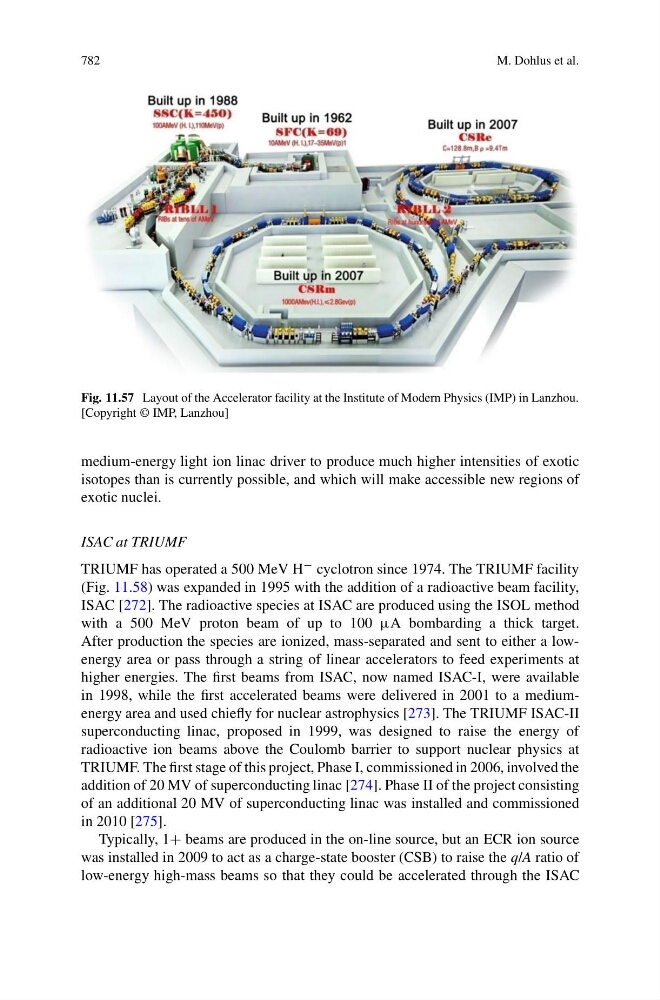
Fig. 11.57 Layout of the Accelerator facility at the Institute of Modern Physics (IMP) in Lanzhou.
[Copyright © IMP, Lanzhou]
medium-energy light ion linac driver to produce much higher intensities of exotic
isotopes than is currently possible, and which will make accessible new regions of
exotic nuclei.
ISAC at TRIUMF
TRIUMF has operated a 500 MeV H − cyclotron since 1974. The TRIUMF facility
(Fig. 11.58) was expanded in 1995 with the addition of a radioactive beam facility,
ISAC [272]. The radioactive species at ISAC are produced using the ISOL method
with a 500 MeV proton beam of up to 100 μA bombarding a thick target.
After production the species are ionized, mass-separated and sent to either a lowenergy area or pass through a string of linear accelerators to feed experiments at
higher energies. The first beams from ISAC, now named ISAC-I, were available
in 1998, while the first accelerated beams were delivered in 2001 to a mediumenergy area and used chiefly for nuclear astrophysics [273]. The TRIUMF ISAC-II
superconducting linac, proposed in 1999, was designed to raise the energy of
radioactive ion beams above the Coulomb barrier to support nuclear physics at
TRIUMF. The first stage of this project, Phase I, commissioned in 2006, involved the
addition of 20 MV of superconducting linac [274]. Phase II of the project consisting
of an additional 20 MV of superconducting linac was installed and commissioned
in 2010 [275].
Typically, 1+ beams are produced in the on-line source, but an ECR ion source
was installed in 2009 to act as a charge-state booster (CSB) to raise the q/A ratio of
low-energy high-mass beams so that they could be accelerated through the ISAC