

11 Application of Accelerators and Storage Rings
781
200 feet
50 meters
Reaccelerator
Reaccelerated Beam
Stopped Beam Area
Gas Stopping
Fast Beam Area
Fragment
Separator
Production
Target
Systems
Beam Delivery System (201 MeV/u)
Linac Segment 3
Linac Segment 1
Folding Segment 2 (148 MeV/u)
Front End
Linac Segment 2
Folding Segment 1 (17 MeV/u)
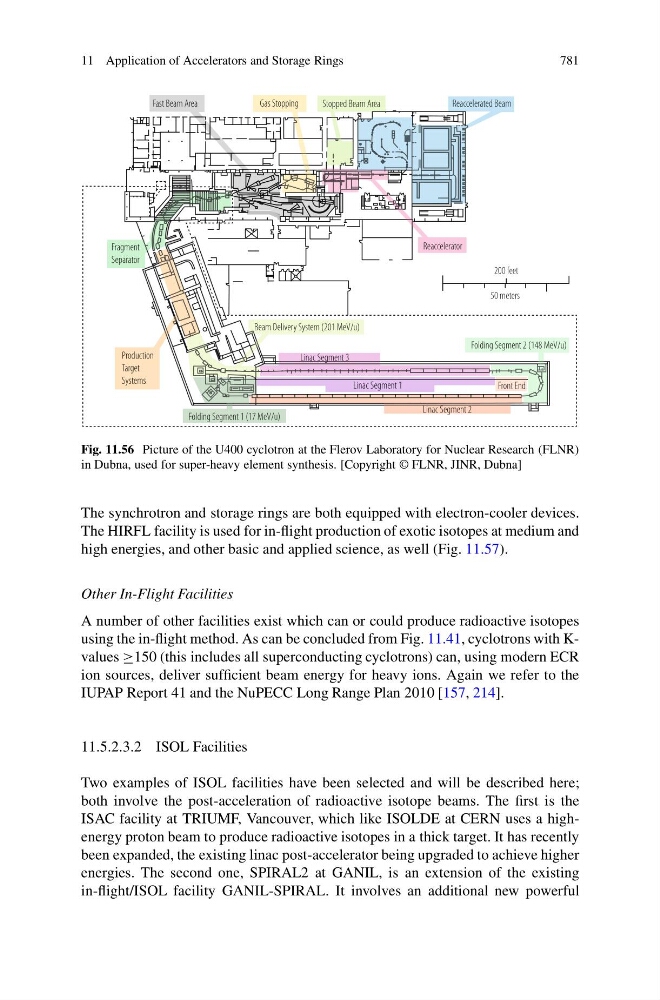
Fig. 11.56 Picture of the U400 cyclotron at the Flerov Laboratory for Nuclear Research (FLNR)
in Dubna, used for super-heavy element synthesis. [Copyright © FLNR, JINR, Dubna]
The synchrotron and storage rings are both equipped with electron-cooler devices.
The HIRFL facility is used for in-flight production of exotic isotopes at medium and
high energies, and other basic and applied science, as well (Fig. 11.57).
Other In-Flight Facilities
A number of other facilities exist which can or could produce radioactive isotopes
using the in-flight method. As can be concluded from Fig. 11.41, cyclotrons with Kvalues ≥150 (this includes all superconducting cyclotrons) can, using modern ECR
ion sources, deliver sufficient beam energy for heavy ions. Again we refer to the
IUPAP Report 41 and the NuPECC Long Range Plan 2010 [157, 214].
11.5.2.3.2 ISOL Facilities
Two examples of ISOL facilities have been selected and will be described here;
both involve the post-acceleration of radioactive isotope beams. The first is the
ISAC facility at TRIUMF, Vancouver, which like ISOLDE at CERN uses a highenergy proton beam to produce radioactive isotopes in a thick target. It has recently
been expanded, the existing linac post-accelerator being upgraded to achieve higher
energies. The second one, SPIRAL2 at GANIL, is an extension of the existing
in-flight/ISOL facility GANIL-SPIRAL. It involves an additional new powerful