

778
M. Dohlus et al.
MSU Facility for Rare Isotope Beams (FRIB)
The major new initiative in the US in radioactive beams is the Facility for Rare
Isotope Beams (FRIB). FRIB is a research facility for the creation and utilization
of radioactive isotope beams based on the concept of a high-intensity (400 kW)
and high-energy (200 MeV/u) heavy-ion linac. It will include the capability to
provide radioactive ion beams at all energies from thermal to nearly 200 MeV/u.
Originally, the Rare Isotope Accelerator (RIA) with 100 kW and 400 MeV/u beams
was proposed in 2003. In the years that followed an alternative design, FRIB, based
on a lower energy (200 MeV/u) but higher intensity (400 kW) heavy-ion driver linac,
was developed. Michigan State University was selected near the end of 2008 to build
FRIB and the project attained DOE Critical Decision 1, CD-1, in 2010 [263].
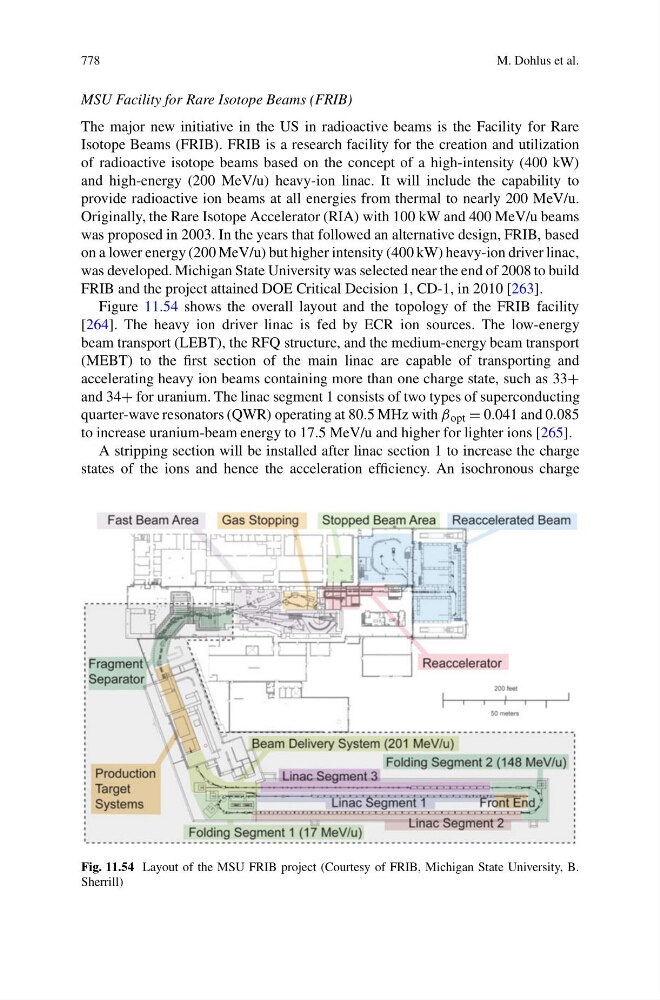
Figure 11.54 shows the overall layout and the topology of the FRIB facility
[264]. The heavy ion driver linac is fed by ECR ion sources. The low-energy
beam transport (LEBT), the RFQ structure, and the medium-energy beam transport
(MEBT) to the first section of the main linac are capable of transporting and
accelerating heavy ion beams containing more than one charge state, such as 33+
and 34+ for uranium. The linac segment 1 consists of two types of superconducting
quarter-wave resonators (QWR) operating at 80.5 MHz with β opt = 0.041 and 0.085
to increase uranium-beam energy to 17.5 MeV/u and higher for lighter ions [265].
A stripping section will be installed after linac section 1 to increase the charge
states of the ions and hence the acceleration efficiency. An isochronous charge
Fig. 11.54 Layout of the MSU FRIB project (Courtesy of FRIB, Michigan State University, B.
Sherrill)