

760
M. Dohlus et al.
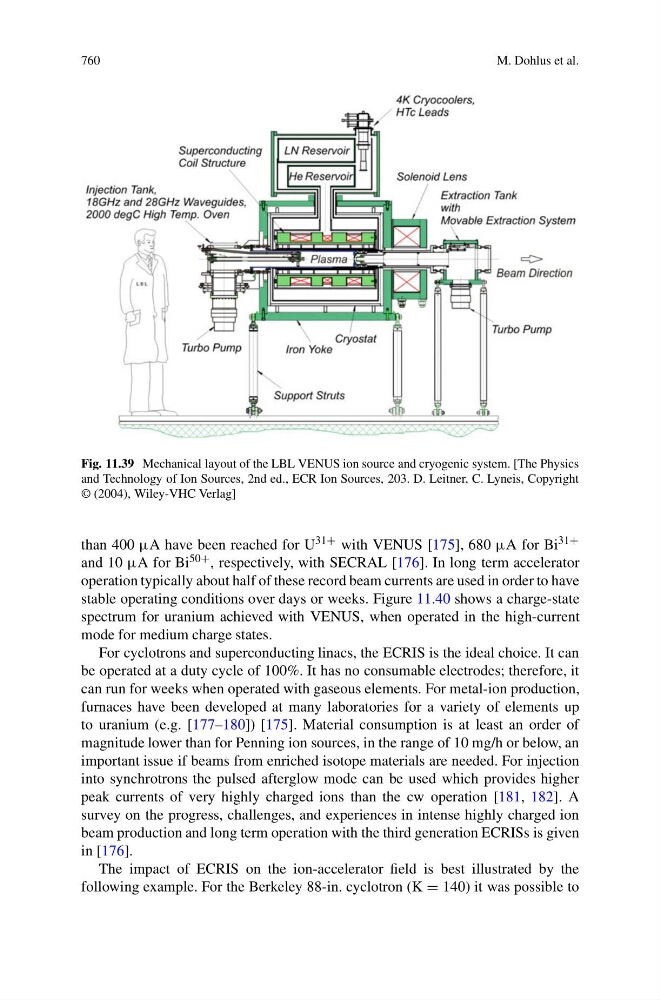
Fig. 11.39 Mechanical layout of the LBL VENUS ion source and cryogenic system. [The Physics
and Technology of Ion Sources, 2nd ed., ECR Ion Sources, 203. D. Leitner, C. Lyneis, Copyright
© (2004), Wiley-VHC Verlag]
than 400 μA have been reached for U 31+ with VENUS [175], 680 μA for Bi 31+
and 10 μA for Bi 50+ , respectively, with SECRAL [176]. In long term accelerator
operation typically about half of these record beam currents are used in order to have
stable operating conditions over days or weeks. Figure 11.40 shows a charge-state
spectrum for uranium achieved with VENUS, when operated in the high-current
mode for medium charge states.
For cyclotrons and superconducting linacs, the ECRIS is the ideal choice. It can
be operated at a duty cycle of 100%. It has no consumable electrodes; therefore, it
can run for weeks when operated with gaseous elements. For metal-ion production,
furnaces have been developed at many laboratories for a variety of elements up
to uranium (e.g. [177–180]) [175]. Material consumption is at least an order of
magnitude lower than for Penning ion sources, in the range of 10 mg/h or below, an
important issue if beams from enriched isotope materials are needed. For injection
into synchrotrons the pulsed afterglow mode can be used which provides higher
peak currents of very highly charged ions than the cw operation [181, 182]. A
survey on the progress, challenges, and experiences in intense highly charged ion
beam production and long term operation with the third generation ECRISs is given
in [176].
The impact of ECRIS on the ion-accelerator field is best illustrated by the
following example. For the Berkeley 88-in. cyclotron (K = 140) it was possible to