

7 Design and Principles of Linear Accelerators and Colliders
305
Fig. 7.3 CLIC two-beam scheme (left) and overall layout (right). In the case of a 380 GeV initial
phase only one drive-beam is needed and the layout is simplified accordingly
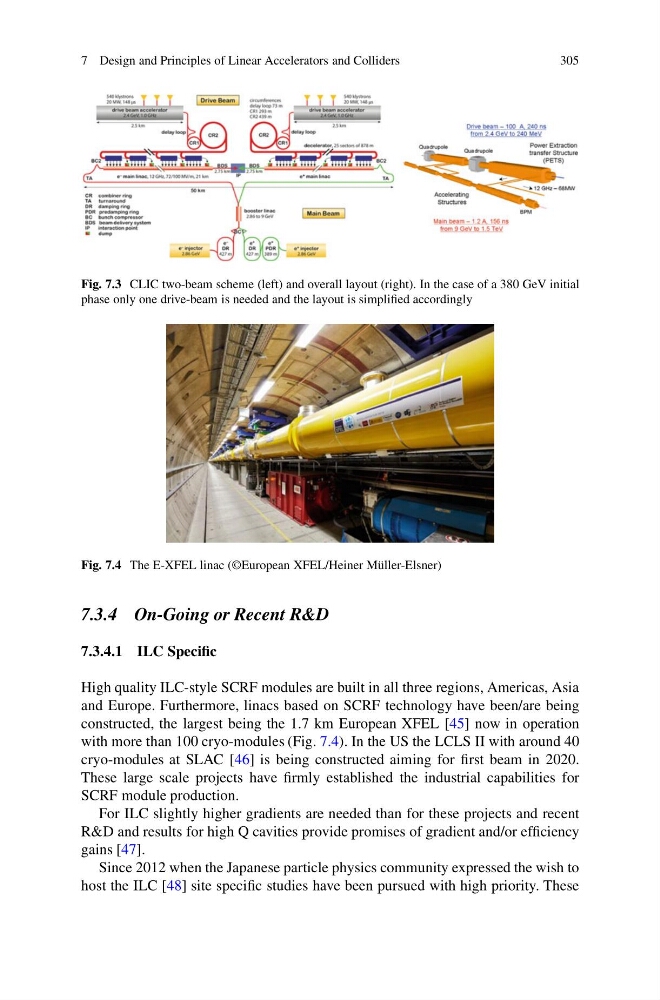
Fig. 7.4 The E-XFEL linac (©European XFEL/Heiner Müller-Elsner)
7.3.4 On-Going or Recent R&D
7.3.4.1 ILC Specific
High quality ILC-style SCRF modules are built in all three regions, Americas, Asia
and Europe. Furthermore, linacs based on SCRF technology have been/are being
constructed, the largest being the 1.7 km European XFEL [45] now in operation
with more than 100 cryo-modules (Fig. 7.4). In the US the LCLS II with around 40
cryo-modules at SLAC [46] is being constructed aiming for first beam in 2020.
These large scale projects have firmly established the industrial capabilities for
SCRF module production.
For ILC slightly higher gradients are needed than for these projects and recent
R&D and results for high Q cavities provide promises of gradient and/or efficiency
gains [47].
Since 2012 when the Japanese particle physics community expressed the wish to
host the ILC [48] site specific studies have been pursued with high priority. These
305
Fig. 7.3 CLIC two-beam scheme (left) and overall layout (right). In the case of a 380 GeV initial
phase only one drive-beam is needed and the layout is simplified accordingly
Fig. 7.4 The E-XFEL linac (©European XFEL/Heiner Müller-Elsner)
7.3.4 On-Going or Recent R&D
7.3.4.1 ILC Specific
High quality ILC-style SCRF modules are built in all three regions, Americas, Asia
and Europe. Furthermore, linacs based on SCRF technology have been/are being
constructed, the largest being the 1.7 km European XFEL [45] now in operation
with more than 100 cryo-modules (Fig. 7.4). In the US the LCLS II with around 40
cryo-modules at SLAC [46] is being constructed aiming for first beam in 2020.
These large scale projects have firmly established the industrial capabilities for
SCRF module production.
For ILC slightly higher gradients are needed than for these projects and recent
R&D and results for high Q cavities provide promises of gradient and/or efficiency
gains [47].
Since 2012 when the Japanese particle physics community expressed the wish to
host the ILC [48] site specific studies have been pursued with high priority. These