

5 Interactions of Beams with Surroundings
195
Table 5.2 Numerical values
for σ eN for an energy loss of
at least 1% and for σ pN , the
pN cross section at high
energy (p lab = 0.01–10 TeV)
Gas σ eN
σ pN
b
b
H 2
0.28 0.08
He
0.39 0.19
CH 4
3.02 0.43
H 2 O
4.38 0.40
N 2
6.47 0.56
CO
6.56 0.56
CO 2 10.7
0.87
Ar
17.8
0.60
beam pipe
γ
e
Compton
scattering
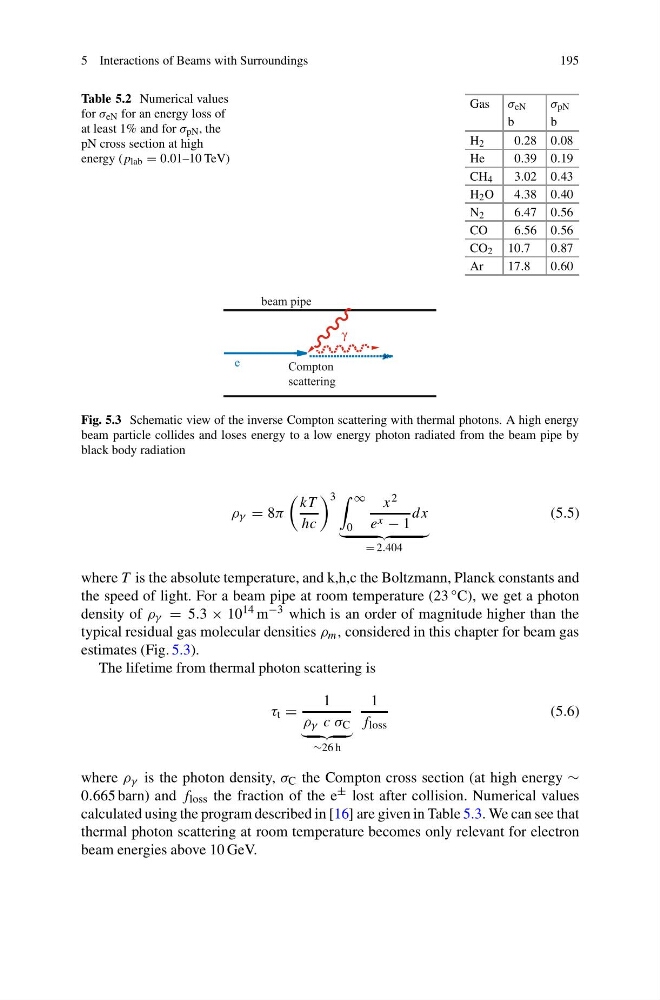
Fig. 5.3 Schematic view of the inverse Compton scattering with thermal photons. A high energy
beam particle collides and loses energy to a low energy photon radiated from the beam pipe by
black body radiation
ρ γ = 8π
kT
hc
3 ∞
0
x 2
e x − 1
dx
= 2.404
(5.5)
where T is the absolute temperature, and k,h,c the Boltzmann, Planck constants and
the speed of light. For a beam pipe at room temperature (23 ◦ C), we get a photon
density of ρ γ = 5.3 × 10 14 m −3 which is an order of magnitude higher than the
typical residual gas molecular densities ρ m , considered in this chapter for beam gas
estimates (Fig. 5.3).
The lifetime from thermal photon scattering is
τ t =
1
ρ γ c σ C
∼26 h
1
f loss
(5.6)
where ρ γ is the photon density, σ C the Compton cross section (at high energy ∼
0.665 barn) and f loss the fraction of the e ± lost after collision. Numerical values
calculated using the program described in [16] are given in Table 5.3. We can see that
thermal photon scattering at room temperature becomes only relevant for electron
beam energies above 10 GeV.
195
Table 5.2 Numerical values
for σ eN for an energy loss of
at least 1% and for σ pN , the
pN cross section at high
energy (p lab = 0.01–10 TeV)
Gas σ eN
σ pN
b
b
H 2
0.28 0.08
He
0.39 0.19
CH 4
3.02 0.43
H 2 O
4.38 0.40
N 2
6.47 0.56
CO
6.56 0.56
CO 2 10.7
0.87
Ar
17.8
0.60
beam pipe
γ
e
Compton
scattering
Fig. 5.3 Schematic view of the inverse Compton scattering with thermal photons. A high energy
beam particle collides and loses energy to a low energy photon radiated from the beam pipe by
black body radiation
ρ γ = 8π
kT
hc
3 ∞
0
x 2
e x − 1
dx
= 2.404
(5.5)
where T is the absolute temperature, and k,h,c the Boltzmann, Planck constants and
the speed of light. For a beam pipe at room temperature (23 ◦ C), we get a photon
density of ρ γ = 5.3 × 10 14 m −3 which is an order of magnitude higher than the
typical residual gas molecular densities ρ m , considered in this chapter for beam gas
estimates (Fig. 5.3).
The lifetime from thermal photon scattering is
τ t =
1
ρ γ c σ C
∼26 h
1
f loss
(5.6)
where ρ γ is the photon density, σ C the Compton cross section (at high energy ∼
0.665 barn) and f loss the fraction of the e ± lost after collision. Numerical values
calculated using the program described in [16] are given in Table 5.3. We can see that
thermal photon scattering at room temperature becomes only relevant for electron
beam energies above 10 GeV.