

6 National and EU Road Networks
In this section, we report two transport model applications that were similar in nature
but applied with slightly different models and at different spatial levels. Their
comparison provides interesting insights for both cases. The first involves the
large-scale network of the European Union. Although somewhat dated, the exercise
is still unique in terms of the rationale of the policy and the scope of responses
considered. The policy aimed to internalize external costs by means of a marginal
external cost-based truck charging scheme. Marginal social costs were made dependent of the type of road, synthesizing external costs from various cost sources.
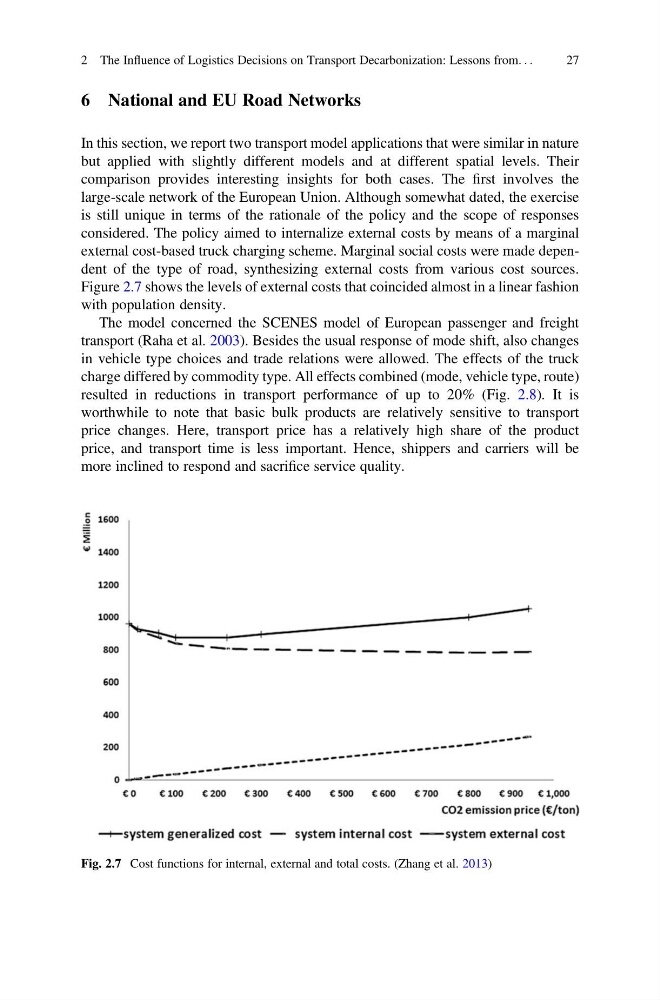
Figure 2.7 shows the levels of external costs that coincided almost in a linear fashion
with population density.
The model concerned the SCENES model of European passenger and freight
transport (Raha et al. 2003). Besides the usual response of mode shift, also changes
in vehicle type choices and trade relations were allowed. The effects of the truck
charge differed by commodity type. All effects combined (mode, vehicle type, route)
resulted in reductions in transport performance of up to 20% (Fig. 2.8). It is
worthwhile to note that basic bulk products are relatively sensitive to transport
price changes. Here, transport price has a relatively high share of the product
price, and transport time is less important. Hence, shippers and carriers will be
more inclined to respond and sacrifice service quality.
Fig. 2.7 Cost functions for internal, external and total costs. (Zhang et al. 2013)
2 The Influence of Logistics Decisions on Transport Decarbonization: Lessons from. . .
27
In this section, we report two transport model applications that were similar in nature
but applied with slightly different models and at different spatial levels. Their
comparison provides interesting insights for both cases. The first involves the
large-scale network of the European Union. Although somewhat dated, the exercise
is still unique in terms of the rationale of the policy and the scope of responses
considered. The policy aimed to internalize external costs by means of a marginal
external cost-based truck charging scheme. Marginal social costs were made dependent of the type of road, synthesizing external costs from various cost sources.
Figure 2.7 shows the levels of external costs that coincided almost in a linear fashion
with population density.
The model concerned the SCENES model of European passenger and freight
transport (Raha et al. 2003). Besides the usual response of mode shift, also changes
in vehicle type choices and trade relations were allowed. The effects of the truck
charge differed by commodity type. All effects combined (mode, vehicle type, route)
resulted in reductions in transport performance of up to 20% (Fig. 2.8). It is
worthwhile to note that basic bulk products are relatively sensitive to transport
price changes. Here, transport price has a relatively high share of the product
price, and transport time is less important. Hence, shippers and carriers will be
more inclined to respond and sacrifice service quality.
Fig. 2.7 Cost functions for internal, external and total costs. (Zhang et al. 2013)
2 The Influence of Logistics Decisions on Transport Decarbonization: Lessons from. . .
27