

2.1 Introduction
21
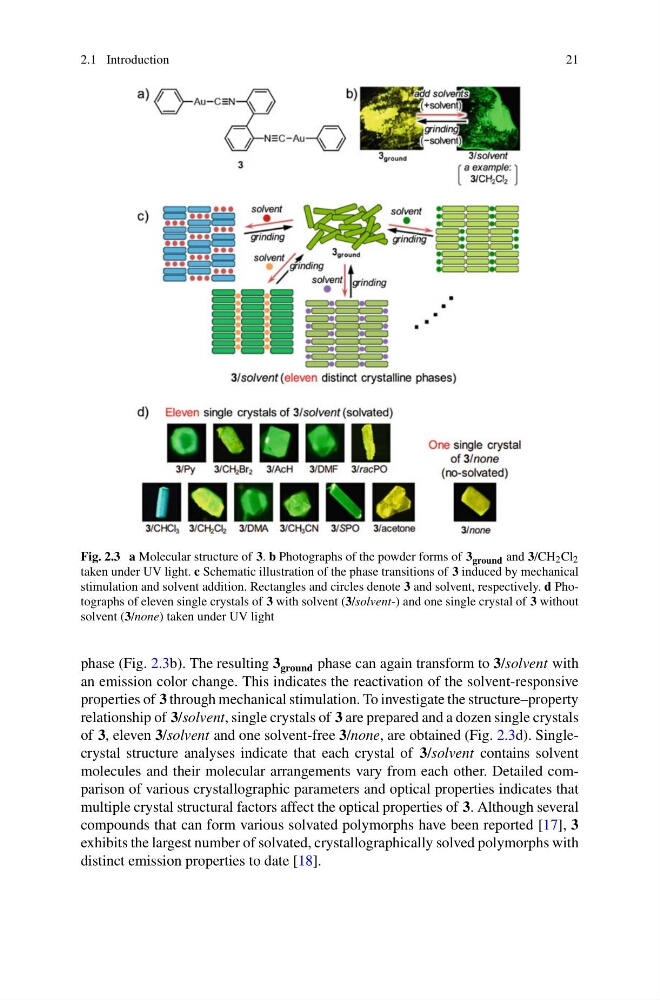
Fig. 2.3 a Molecular structure of 3. b Photographs of the powder forms of 3 ground and 3/CH 2 Cl 2
taken under UV light. c Schematic illustration of the phase transitions of 3 induced by mechanical
stimulation and solvent addition. Rectangles and circles denote 3 and solvent, respectively. d Photographs of eleven single crystals of 3 with solvent (3/solvent-) and one single crystal of 3 without
solvent (3/none) taken under UV light
phase (Fig. 2.3b). The resulting 3 ground phase can again transform to 3/solvent with
an emission color change. This indicates the reactivation of the solvent-responsive
properties of 3 through mechanical stimulation. To investigate the structure–property
relationship of 3/solvent, single crystals of 3 are prepared and a dozen single crystals
of 3, eleven 3/solvent and one solvent-free 3/none, are obtained (Fig. 2.3d). Singlecrystal structure analyses indicate that each crystal of 3/solvent contains solvent
molecules and their molecular arrangements vary from each other. Detailed comparison of various crystallographic parameters and optical properties indicates that
multiple crystal structural factors affect the optical properties of 3. Although several
compounds that can form various solvated polymorphs have been reported [17], 3
exhibits the largest number of solvated, crystallographically solved polymorphs with
distinct emission properties to date [18].
21
Fig. 2.3 a Molecular structure of 3. b Photographs of the powder forms of 3 ground and 3/CH 2 Cl 2
taken under UV light. c Schematic illustration of the phase transitions of 3 induced by mechanical
stimulation and solvent addition. Rectangles and circles denote 3 and solvent, respectively. d Photographs of eleven single crystals of 3 with solvent (3/solvent-) and one single crystal of 3 without
solvent (3/none) taken under UV light
phase (Fig. 2.3b). The resulting 3 ground phase can again transform to 3/solvent with
an emission color change. This indicates the reactivation of the solvent-responsive
properties of 3 through mechanical stimulation. To investigate the structure–property
relationship of 3/solvent, single crystals of 3 are prepared and a dozen single crystals
of 3, eleven 3/solvent and one solvent-free 3/none, are obtained (Fig. 2.3d). Singlecrystal structure analyses indicate that each crystal of 3/solvent contains solvent
molecules and their molecular arrangements vary from each other. Detailed comparison of various crystallographic parameters and optical properties indicates that
multiple crystal structural factors affect the optical properties of 3. Although several
compounds that can form various solvated polymorphs have been reported [17], 3
exhibits the largest number of solvated, crystallographically solved polymorphs with
distinct emission properties to date [18].