

2
1 General Introduction
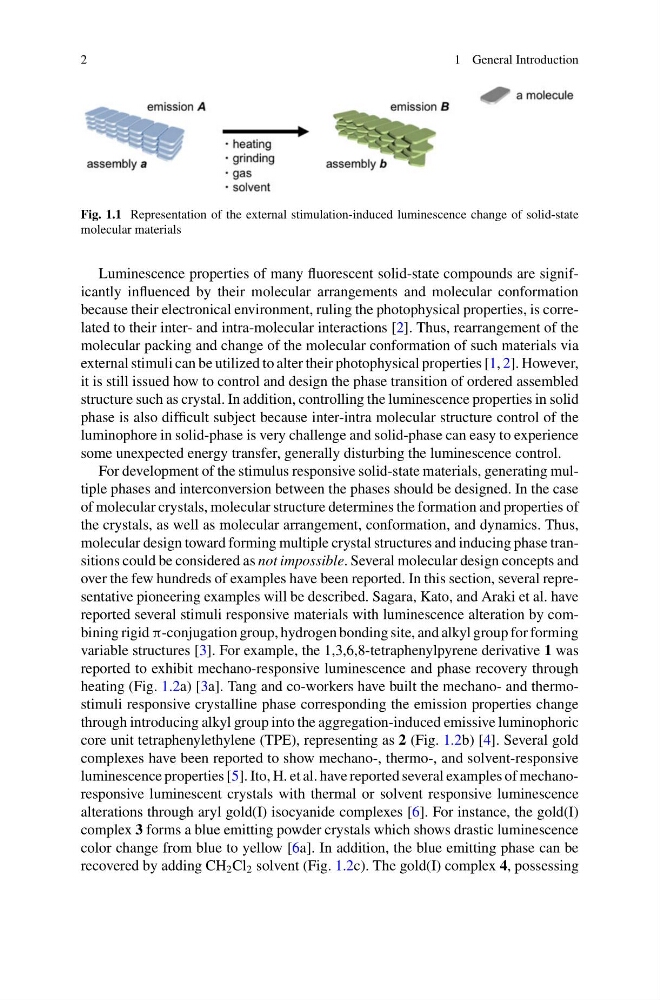
Fig. 1.1 Representation of the external stimulation-induced luminescence change of solid-state
molecular materials
Luminescence properties of many fluorescent solid-state compounds are significantly influenced by their molecular arrangements and molecular conformation
because their electronical environment, ruling the photophysical properties, is correlated to their inter- and intra-molecular interactions [2]. Thus, rearrangement of the
molecular packing and change of the molecular conformation of such materials via
external stimuli can be utilized to alter their photophysical properties [1, 2]. However,
it is still issued how to control and design the phase transition of ordered assembled
structure such as crystal. In addition, controlling the luminescence properties in solid
phase is also difficult subject because inter-intra molecular structure control of the
luminophore in solid-phase is very challenge and solid-phase can easy to experience
some unexpected energy transfer, generally disturbing the luminescence control.
For development of the stimulus responsive solid-state materials, generating multiple phases and interconversion between the phases should be designed. In the case
of molecular crystals, molecular structure determines the formation and properties of
the crystals, as well as molecular arrangement, conformation, and dynamics. Thus,
molecular design toward forming multiple crystal structures and inducing phase transitions could be considered as not impossible. Several molecular design concepts and
over the few hundreds of examples have been reported. In this section, several representative pioneering examples will be described. Sagara, Kato, and Araki et al. have
reported several stimuli responsive materials with luminescence alteration by combining rigid π-conjugation group, hydrogen bonding site, and alkyl group for forming
variable structures [3]. For example, the 1,3,6,8-tetraphenylpyrene derivative 1 was
reported to exhibit mechano-responsive luminescence and phase recovery through
heating (Fig. 1.2a) [3a]. Tang and co-workers have built the mechano- and thermostimuli responsive crystalline phase corresponding the emission properties change
through introducing alkyl group into the aggregation-induced emissive luminophoric
core unit tetraphenylethylene (TPE), representing as 2 (Fig. 1.2b) [4]. Several gold
complexes have been reported to show mechano-, thermo-, and solvent-responsive
luminescence properties [5]. Ito, H. et al. have reported several examples of mechanoresponsive luminescent crystals with thermal or solvent responsive luminescence
alterations through aryl gold(I) isocyanide complexes [6]. For instance, the gold(I)
complex 3 forms a blue emitting powder crystals which shows drastic luminescence
color change from blue to yellow [6a]. In addition, the blue emitting phase can be
recovered by adding CH 2 Cl 2 solvent (Fig. 1.2c). The gold(I) complex 4, possessing
1 General Introduction
Fig. 1.1 Representation of the external stimulation-induced luminescence change of solid-state
molecular materials
Luminescence properties of many fluorescent solid-state compounds are significantly influenced by their molecular arrangements and molecular conformation
because their electronical environment, ruling the photophysical properties, is correlated to their inter- and intra-molecular interactions [2]. Thus, rearrangement of the
molecular packing and change of the molecular conformation of such materials via
external stimuli can be utilized to alter their photophysical properties [1, 2]. However,
it is still issued how to control and design the phase transition of ordered assembled
structure such as crystal. In addition, controlling the luminescence properties in solid
phase is also difficult subject because inter-intra molecular structure control of the
luminophore in solid-phase is very challenge and solid-phase can easy to experience
some unexpected energy transfer, generally disturbing the luminescence control.
For development of the stimulus responsive solid-state materials, generating multiple phases and interconversion between the phases should be designed. In the case
of molecular crystals, molecular structure determines the formation and properties of
the crystals, as well as molecular arrangement, conformation, and dynamics. Thus,
molecular design toward forming multiple crystal structures and inducing phase transitions could be considered as not impossible. Several molecular design concepts and
over the few hundreds of examples have been reported. In this section, several representative pioneering examples will be described. Sagara, Kato, and Araki et al. have
reported several stimuli responsive materials with luminescence alteration by combining rigid π-conjugation group, hydrogen bonding site, and alkyl group for forming
variable structures [3]. For example, the 1,3,6,8-tetraphenylpyrene derivative 1 was
reported to exhibit mechano-responsive luminescence and phase recovery through
heating (Fig. 1.2a) [3a]. Tang and co-workers have built the mechano- and thermostimuli responsive crystalline phase corresponding the emission properties change
through introducing alkyl group into the aggregation-induced emissive luminophoric
core unit tetraphenylethylene (TPE), representing as 2 (Fig. 1.2b) [4]. Several gold
complexes have been reported to show mechano-, thermo-, and solvent-responsive
luminescence properties [5]. Ito, H. et al. have reported several examples of mechanoresponsive luminescent crystals with thermal or solvent responsive luminescence
alterations through aryl gold(I) isocyanide complexes [6]. For instance, the gold(I)
complex 3 forms a blue emitting powder crystals which shows drastic luminescence
color change from blue to yellow [6a]. In addition, the blue emitting phase can be
recovered by adding CH 2 Cl 2 solvent (Fig. 1.2c). The gold(I) complex 4, possessing