

12 Inter-spin Interactions of Organic Radical Chains in Organic 1D. . .
425
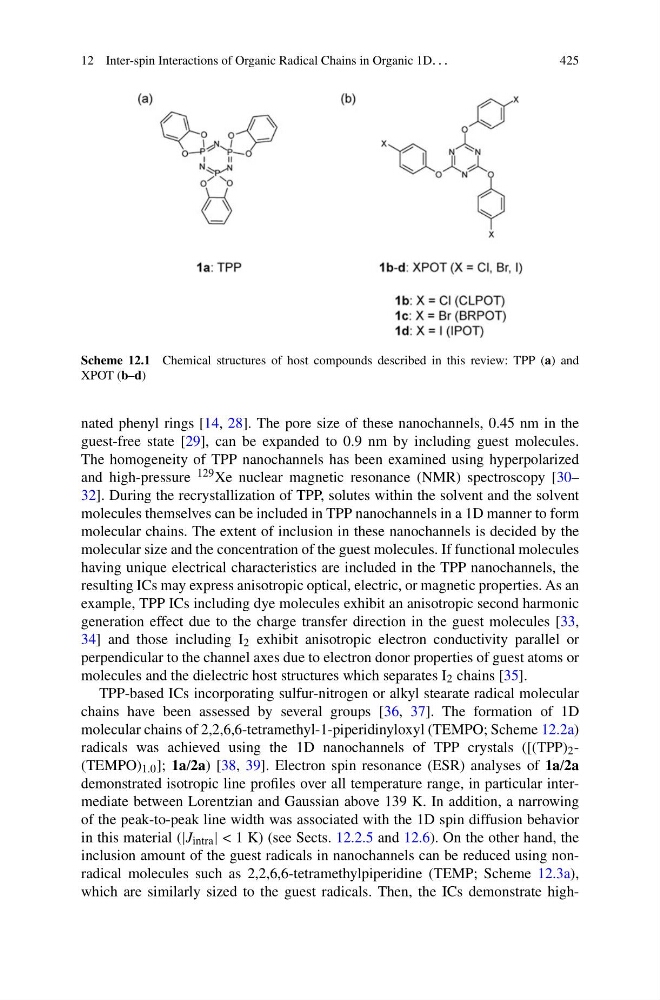
Scheme 12.1 Chemical structures of host compounds described in this review: TPP (a) and
XPOT (b–d)
nated phenyl rings [14, 28]. The pore size of these nanochannels, 0.45 nm in the
guest-free state [29], can be expanded to 0.9 nm by including guest molecules.
The homogeneity of TPP nanochannels has been examined using hyperpolarized
and high-pressure 129 Xe nuclear magnetic resonance (NMR) spectroscopy [30–
32]. During the recrystallization of TPP, solutes within the solvent and the solvent
molecules themselves can be included in TPP nanochannels in a 1D manner to form
molecular chains. The extent of inclusion in these nanochannels is decided by the
molecular size and the concentration of the guest molecules. If functional molecules
having unique electrical characteristics are included in the TPP nanochannels, the
resulting ICs may express anisotropic optical, electric, or magnetic properties. As an
example, TPP ICs including dye molecules exhibit an anisotropic second harmonic
generation effect due to the charge transfer direction in the guest molecules [33,
34] and those including I 2 exhibit anisotropic electron conductivity parallel or
perpendicular to the channel axes due to electron donor properties of guest atoms or
molecules and the dielectric host structures which separates I 2 chains [35].
TPP-based ICs incorporating sulfur-nitrogen or alkyl stearate radical molecular
chains have been assessed by several groups [36, 37]. The formation of 1D
molecular chains of 2,2,6,6-tetramethyl-1-piperidinyloxyl (TEMPO; Scheme 12.2a)
radicals was achieved using the 1D nanochannels of TPP crystals ([(TPP) 2 -
(TEMPO) 1.0 ]; 1a/2a) [38, 39]. Electron spin resonance (ESR) analyses of 1a/2a
demonstrated isotropic line profiles over all temperature range, in particular intermediate between Lorentzian and Gaussian above 139 K. In addition, a narrowing
of the peak-to-peak line width was associated with the 1D spin diffusion behavior
in this material (|J intra | < 1 K) (see Sects. 12.2.5 and 12.6). On the other hand, the
inclusion amount of the guest radicals in nanochannels can be reduced using nonradical molecules such as 2,2,6,6-tetramethylpiperidine (TEMP; Scheme 12.3a),
which are similarly sized to the guest radicals. Then, the ICs demonstrate high-
425
Scheme 12.1 Chemical structures of host compounds described in this review: TPP (a) and
XPOT (b–d)
nated phenyl rings [14, 28]. The pore size of these nanochannels, 0.45 nm in the
guest-free state [29], can be expanded to 0.9 nm by including guest molecules.
The homogeneity of TPP nanochannels has been examined using hyperpolarized
and high-pressure 129 Xe nuclear magnetic resonance (NMR) spectroscopy [30–
32]. During the recrystallization of TPP, solutes within the solvent and the solvent
molecules themselves can be included in TPP nanochannels in a 1D manner to form
molecular chains. The extent of inclusion in these nanochannels is decided by the
molecular size and the concentration of the guest molecules. If functional molecules
having unique electrical characteristics are included in the TPP nanochannels, the
resulting ICs may express anisotropic optical, electric, or magnetic properties. As an
example, TPP ICs including dye molecules exhibit an anisotropic second harmonic
generation effect due to the charge transfer direction in the guest molecules [33,
34] and those including I 2 exhibit anisotropic electron conductivity parallel or
perpendicular to the channel axes due to electron donor properties of guest atoms or
molecules and the dielectric host structures which separates I 2 chains [35].
TPP-based ICs incorporating sulfur-nitrogen or alkyl stearate radical molecular
chains have been assessed by several groups [36, 37]. The formation of 1D
molecular chains of 2,2,6,6-tetramethyl-1-piperidinyloxyl (TEMPO; Scheme 12.2a)
radicals was achieved using the 1D nanochannels of TPP crystals ([(TPP) 2 -
(TEMPO) 1.0 ]; 1a/2a) [38, 39]. Electron spin resonance (ESR) analyses of 1a/2a
demonstrated isotropic line profiles over all temperature range, in particular intermediate between Lorentzian and Gaussian above 139 K. In addition, a narrowing
of the peak-to-peak line width was associated with the 1D spin diffusion behavior
in this material (|J intra | < 1 K) (see Sects. 12.2.5 and 12.6). On the other hand, the
inclusion amount of the guest radicals in nanochannels can be reduced using nonradical molecules such as 2,2,6,6-tetramethylpiperidine (TEMP; Scheme 12.3a),
which are similarly sized to the guest radicals. Then, the ICs demonstrate high-