

11 Surface Characterization of Plasma-Electrolytic Oxidized Coatings by X-Ray. . .
419
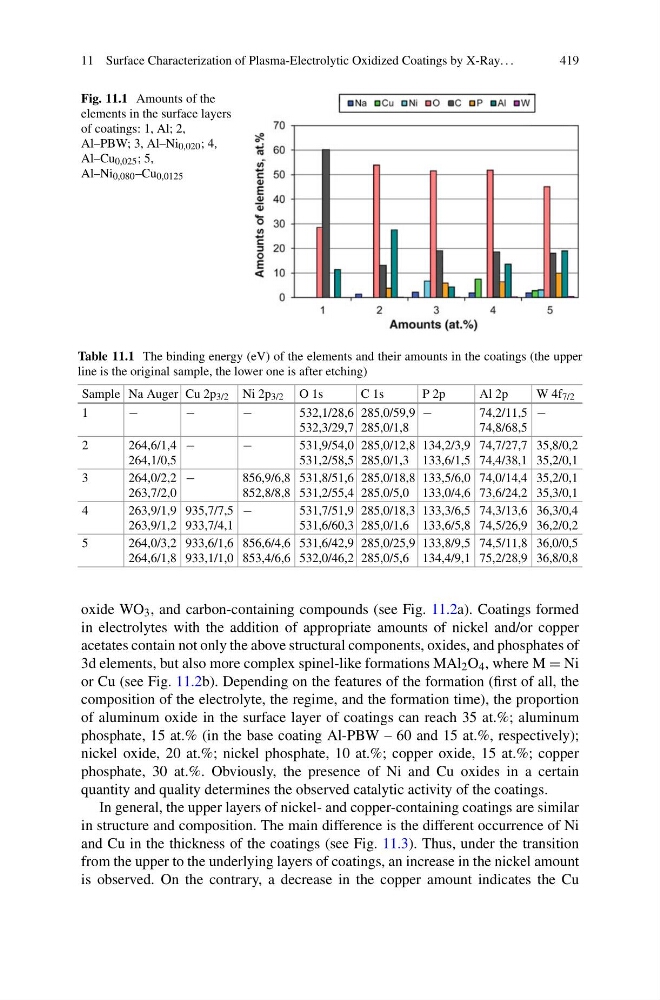
Fig. 11.1 Amounts of the
elements in the surface layers
of coatings: 1, Al; 2,
Al–PBW; 3, Al–Ni 0,020 ; 4,
Al–Cu 0,025 ; 5,
Al–Ni 0,080 –Cu 0,0125
Table 11.1 The binding energy (eV) of the elements and their amounts in the coatings (the upper
line is the original sample, the lower one is after etching)
Sample Na Auger Cu 2p 3/2 Ni 2p 3/2 O 1s
C 1s
P 2p
Al 2p
W 4f 7/2
1
−
−
−
532,1/28,6
532,3/29,7
285,0/59,9
285,0/1,8
−
74,2/11,5
74,8/68,5
−
2
264,6/1,4
264,1/0,5
−
−
531,9/54,0
531,2/58,5
285,0/12,8
285,0/1,3
134,2/3,9
133,6/1,5
74,7/27,7
74,4/38,1
35,8/0,2
35,2/0,1
3
264,0/2,2
263,7/2,0
−
856,9/6,8
852,8/8,8
531,8/51,6
531,2/55,4
285,0/18,8
285,0/5,0
133,5/6,0
133,0/4,6
74,0/14,4
73,6/24,2
35,2/0,1
35,3/0,1
4
263,9/1,9
263,9/1,2
935,7/7,5
933,7/4,1
−
531,7/51,9
531,6/60,3
285,0/18,3
285,0/1,6
133,3/6,5
133,6/5,8
74,3/13,6
74,5/26,9
36,3/0,4
36,2/0,2
5
264,0/3,2
264,6/1,8
933,6/1,6
933,1/1,0
856,6/4,6
853,4/6,6
531,6/42,9
532,0/46,2
285,0/25,9
285,0/5,6
133,8/9,5
134,4/9,1
74,5/11,8
75,2/28,9
36,0/0,5
36,8/0,8
oxide WO 3 , and carbon-containing compounds (see Fig. 11.2a). Coatings formed
in electrolytes with the addition of appropriate amounts of nickel and/or copper
acetates contain not only the above structural components, oxides, and phosphates of
3d elements, but also more complex spinel-like formations MAl 2 O 4 , where M = Ni
or Cu (see Fig. 11.2b). Depending on the features of the formation (first of all, the
composition of the electrolyte, the regime, and the formation time), the proportion
of aluminum oxide in the surface layer of coatings can reach 35 at.%; aluminum
phosphate, 15 at.% (in the base coating Al-PBW – 60 and 15 at.%, respectively);
nickel oxide, 20 at.%; nickel phosphate, 10 at.%; copper oxide, 15 at.%; copper
phosphate, 30 at.%. Obviously, the presence of Ni and Cu oxides in a certain
quantity and quality determines the observed catalytic activity of the coatings.
In general, the upper layers of nickel- and copper-containing coatings are similar
in structure and composition. The main difference is the different occurrence of Ni
and Cu in the thickness of the coatings (see Fig. 11.3). Thus, under the transition
from the upper to the underlying layers of coatings, an increase in the nickel amount
is observed. On the contrary, a decrease in the copper amount indicates the Cu
419
Fig. 11.1 Amounts of the
elements in the surface layers
of coatings: 1, Al; 2,
Al–PBW; 3, Al–Ni 0,020 ; 4,
Al–Cu 0,025 ; 5,
Al–Ni 0,080 –Cu 0,0125
Table 11.1 The binding energy (eV) of the elements and their amounts in the coatings (the upper
line is the original sample, the lower one is after etching)
Sample Na Auger Cu 2p 3/2 Ni 2p 3/2 O 1s
C 1s
P 2p
Al 2p
W 4f 7/2
1
−
−
−
532,1/28,6
532,3/29,7
285,0/59,9
285,0/1,8
−
74,2/11,5
74,8/68,5
−
2
264,6/1,4
264,1/0,5
−
−
531,9/54,0
531,2/58,5
285,0/12,8
285,0/1,3
134,2/3,9
133,6/1,5
74,7/27,7
74,4/38,1
35,8/0,2
35,2/0,1
3
264,0/2,2
263,7/2,0
−
856,9/6,8
852,8/8,8
531,8/51,6
531,2/55,4
285,0/18,8
285,0/5,0
133,5/6,0
133,0/4,6
74,0/14,4
73,6/24,2
35,2/0,1
35,3/0,1
4
263,9/1,9
263,9/1,2
935,7/7,5
933,7/4,1
−
531,7/51,9
531,6/60,3
285,0/18,3
285,0/1,6
133,3/6,5
133,6/5,8
74,3/13,6
74,5/26,9
36,3/0,4
36,2/0,2
5
264,0/3,2
264,6/1,8
933,6/1,6
933,1/1,0
856,6/4,6
853,4/6,6
531,6/42,9
532,0/46,2
285,0/25,9
285,0/5,6
133,8/9,5
134,4/9,1
74,5/11,8
75,2/28,9
36,0/0,5
36,8/0,8
oxide WO 3 , and carbon-containing compounds (see Fig. 11.2a). Coatings formed
in electrolytes with the addition of appropriate amounts of nickel and/or copper
acetates contain not only the above structural components, oxides, and phosphates of
3d elements, but also more complex spinel-like formations MAl 2 O 4 , where M = Ni
or Cu (see Fig. 11.2b). Depending on the features of the formation (first of all, the
composition of the electrolyte, the regime, and the formation time), the proportion
of aluminum oxide in the surface layer of coatings can reach 35 at.%; aluminum
phosphate, 15 at.% (in the base coating Al-PBW – 60 and 15 at.%, respectively);
nickel oxide, 20 at.%; nickel phosphate, 10 at.%; copper oxide, 15 at.%; copper
phosphate, 30 at.%. Obviously, the presence of Ni and Cu oxides in a certain
quantity and quality determines the observed catalytic activity of the coatings.
In general, the upper layers of nickel- and copper-containing coatings are similar
in structure and composition. The main difference is the different occurrence of Ni
and Cu in the thickness of the coatings (see Fig. 11.3). Thus, under the transition
from the upper to the underlying layers of coatings, an increase in the nickel amount
is observed. On the contrary, a decrease in the copper amount indicates the Cu