

7 Computational and Experimental Analysis of Carbon Functional Nanomaterials
291
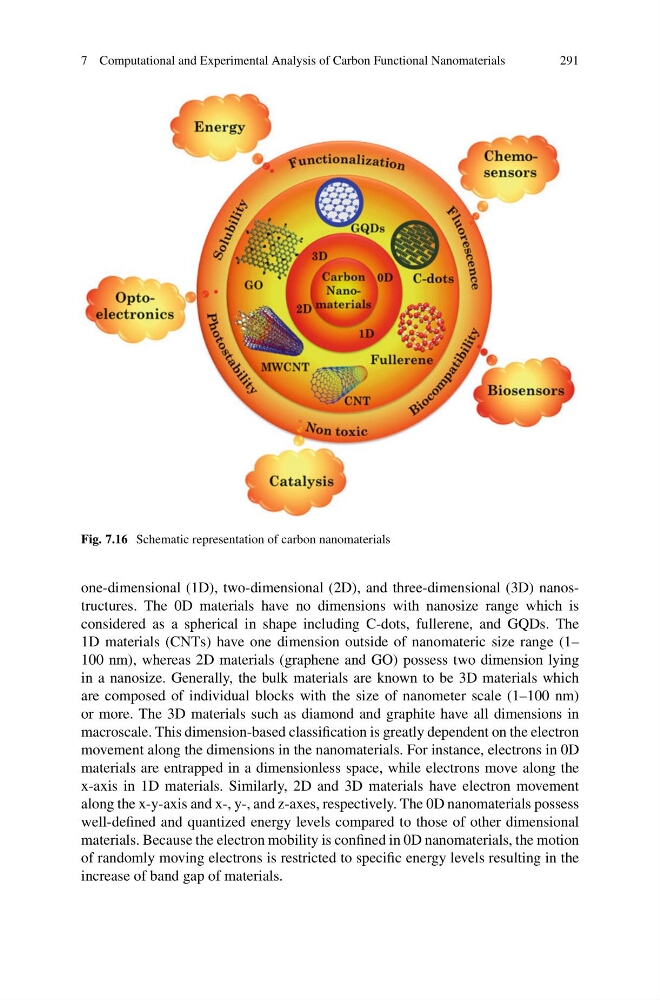
Fig. 7.16 Schematic representation of carbon nanomaterials
one-dimensional (1D), two-dimensional (2D), and three-dimensional (3D) nanostructures. The 0D materials have no dimensions with nanosize range which is
considered as a spherical in shape including C-dots, fullerene, and GQDs. The
1D materials (CNTs) have one dimension outside of nanomateric size range (1–
100 nm), whereas 2D materials (graphene and GO) possess two dimension lying
in a nanosize. Generally, the bulk materials are known to be 3D materials which
are composed of individual blocks with the size of nanometer scale (1–100 nm)
or more. The 3D materials such as diamond and graphite have all dimensions in
macroscale. This dimension-based classification is greatly dependent on the electron
movement along the dimensions in the nanomaterials. For instance, electrons in 0D
materials are entrapped in a dimensionless space, while electrons move along the
x-axis in 1D materials. Similarly, 2D and 3D materials have electron movement
along the x-y-axis and x-, y-, and z-axes, respectively. The 0D nanomaterials possess
well-defined and quantized energy levels compared to those of other dimensional
materials. Because the electron mobility is confined in 0D nanomaterials, the motion
of randomly moving electrons is restricted to specific energy levels resulting in the
increase of band gap of materials.
291
Fig. 7.16 Schematic representation of carbon nanomaterials
one-dimensional (1D), two-dimensional (2D), and three-dimensional (3D) nanostructures. The 0D materials have no dimensions with nanosize range which is
considered as a spherical in shape including C-dots, fullerene, and GQDs. The
1D materials (CNTs) have one dimension outside of nanomateric size range (1–
100 nm), whereas 2D materials (graphene and GO) possess two dimension lying
in a nanosize. Generally, the bulk materials are known to be 3D materials which
are composed of individual blocks with the size of nanometer scale (1–100 nm)
or more. The 3D materials such as diamond and graphite have all dimensions in
macroscale. This dimension-based classification is greatly dependent on the electron
movement along the dimensions in the nanomaterials. For instance, electrons in 0D
materials are entrapped in a dimensionless space, while electrons move along the
x-axis in 1D materials. Similarly, 2D and 3D materials have electron movement
along the x-y-axis and x-, y-, and z-axes, respectively. The 0D nanomaterials possess
well-defined and quantized energy levels compared to those of other dimensional
materials. Because the electron mobility is confined in 0D nanomaterials, the motion
of randomly moving electrons is restricted to specific energy levels resulting in the
increase of band gap of materials.