

1 Theoretical Chemistry for Advanced Nanomaterials: Computational. . .
15
Fig. 1.16 Schematic figure
of the relationship between
electric polarisation (P) and
applied electric field (E)
E
P
Polarisation
Reversal
Polarisation
Reversal
MX 2 Layer
AX Layer
MX 2 Layer
AX Layer
AX Layer
MX 2 Layer
AX Layer
AX Layer
MX 2 Layer
MX 2 Layer
(a)
(b)
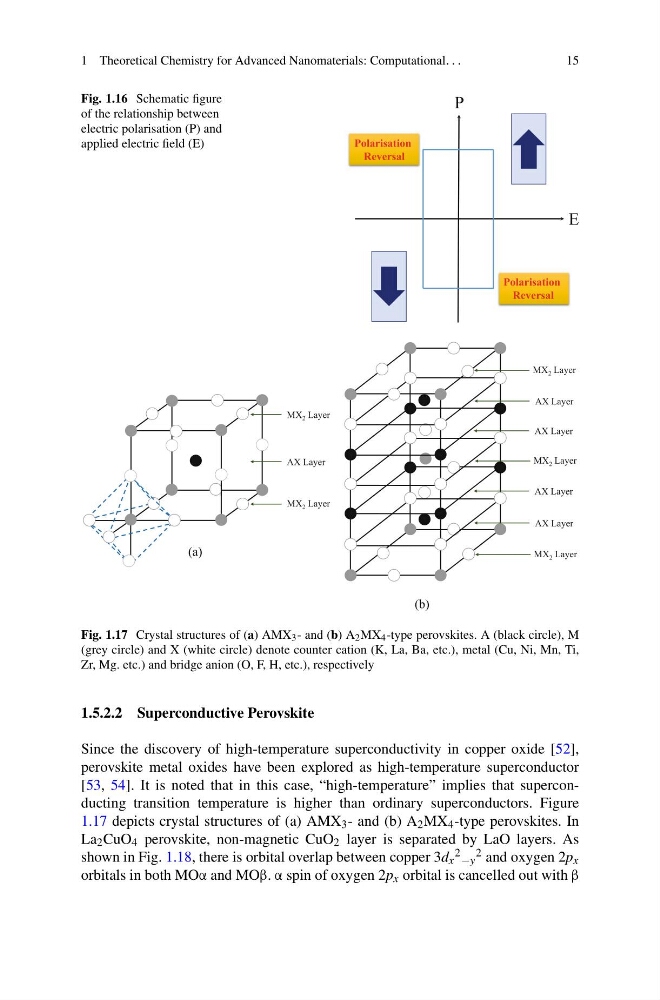
Fig. 1.17 Crystal structures of (a) AMX 3 - and (b) A 2 MX 4 -type perovskites. A (black circle), M
(grey circle) and X (white circle) denote counter cation (K, La, Ba, etc.), metal (Cu, Ni, Mn, Ti,
Zr, Mg. etc.) and bridge anion (O, F, H, etc.), respectively
1.5.2.2 Superconductive Perovskite
Since the discovery of high-temperature superconductivity in copper oxide [52],
perovskite metal oxides have been explored as high-temperature superconductor
[53, 54]. It is noted that in this case, “high-temperature” implies that superconducting transition temperature is higher than ordinary superconductors. Figure
1.17 depicts crystal structures of (a) AMX 3 - and (b) A 2 MX 4 -type perovskites. In
La 2 CuO 4 perovskite, non-magnetic CuO 2 layer is separated by LaO layers. As
shown in Fig. 1.18, there is orbital overlap between copper 3d x
2 −y
2 and oxygen 2p x
orbitals in both MOα and MOβ. α spin of oxygen 2p x orbital is cancelled out with β
15
Fig. 1.16 Schematic figure
of the relationship between
electric polarisation (P) and
applied electric field (E)
E
P
Polarisation
Reversal
Polarisation
Reversal
MX 2 Layer
AX Layer
MX 2 Layer
AX Layer
AX Layer
MX 2 Layer
AX Layer
AX Layer
MX 2 Layer
MX 2 Layer
(a)
(b)
Fig. 1.17 Crystal structures of (a) AMX 3 - and (b) A 2 MX 4 -type perovskites. A (black circle), M
(grey circle) and X (white circle) denote counter cation (K, La, Ba, etc.), metal (Cu, Ni, Mn, Ti,
Zr, Mg. etc.) and bridge anion (O, F, H, etc.), respectively
1.5.2.2 Superconductive Perovskite
Since the discovery of high-temperature superconductivity in copper oxide [52],
perovskite metal oxides have been explored as high-temperature superconductor
[53, 54]. It is noted that in this case, “high-temperature” implies that superconducting transition temperature is higher than ordinary superconductors. Figure
1.17 depicts crystal structures of (a) AMX 3 - and (b) A 2 MX 4 -type perovskites. In
La 2 CuO 4 perovskite, non-magnetic CuO 2 layer is separated by LaO layers. As
shown in Fig. 1.18, there is orbital overlap between copper 3d x
2 −y
2 and oxygen 2p x
orbitals in both MOα and MOβ. α spin of oxygen 2p x orbital is cancelled out with β