

7 Computational and Experimental Analysis of Carbon Functional Nanomaterials
283
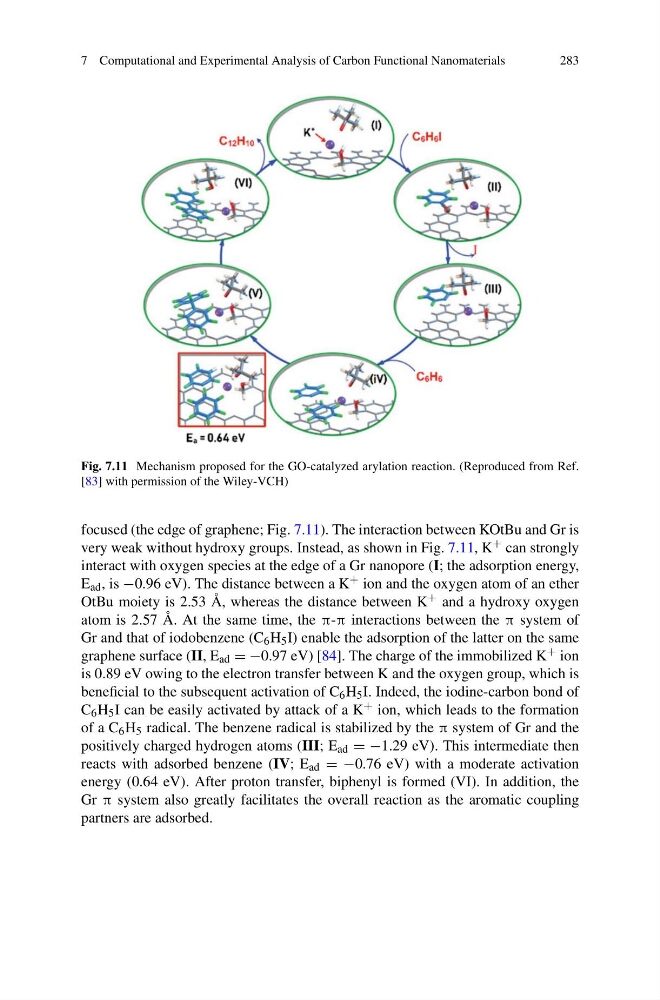
Fig. 7.11 Mechanism proposed for the GO-catalyzed arylation reaction. (Reproduced from Ref.
[83] with permission of the Wiley-VCH)
focused (the edge of graphene; Fig. 7.11). The interaction between KOtBu and Gr is
very weak without hydroxy groups. Instead, as shown in Fig. 7.11, K + can strongly
interact with oxygen species at the edge of a Gr nanopore (I; the adsorption energy,
E ad , is −0.96 eV). The distance between a K + ion and the oxygen atom of an ether
OtBu moiety is 2.53 Å, whereas the distance between K + and a hydroxy oxygen
atom is 2.57 Å. At the same time, the π-π interactions between the π system of
Gr and that of iodobenzene (C 6 H 5 I) enable the adsorption of the latter on the same
graphene surface (II, E ad = −0.97 eV) [84]. The charge of the immobilized K + ion
is 0.89 eV owing to the electron transfer between K and the oxygen group, which is
beneficial to the subsequent activation of C 6 H 5 I. Indeed, the iodine-carbon bond of
C 6 H 5 I can be easily activated by attack of a K + ion, which leads to the formation
of a C 6 H 5 radical. The benzene radical is stabilized by the π system of Gr and the
positively charged hydrogen atoms (III; E ad = −1.29 eV). This intermediate then
reacts with adsorbed benzene (IV; E ad = −0.76 eV) with a moderate activation
energy (0.64 eV). After proton transfer, biphenyl is formed (VI). In addition, the
Gr π system also greatly facilitates the overall reaction as the aromatic coupling
partners are adsorbed.
283
Fig. 7.11 Mechanism proposed for the GO-catalyzed arylation reaction. (Reproduced from Ref.
[83] with permission of the Wiley-VCH)
focused (the edge of graphene; Fig. 7.11). The interaction between KOtBu and Gr is
very weak without hydroxy groups. Instead, as shown in Fig. 7.11, K + can strongly
interact with oxygen species at the edge of a Gr nanopore (I; the adsorption energy,
E ad , is −0.96 eV). The distance between a K + ion and the oxygen atom of an ether
OtBu moiety is 2.53 Å, whereas the distance between K + and a hydroxy oxygen
atom is 2.57 Å. At the same time, the π-π interactions between the π system of
Gr and that of iodobenzene (C 6 H 5 I) enable the adsorption of the latter on the same
graphene surface (II, E ad = −0.97 eV) [84]. The charge of the immobilized K + ion
is 0.89 eV owing to the electron transfer between K and the oxygen group, which is
beneficial to the subsequent activation of C 6 H 5 I. Indeed, the iodine-carbon bond of
C 6 H 5 I can be easily activated by attack of a K + ion, which leads to the formation
of a C 6 H 5 radical. The benzene radical is stabilized by the π system of Gr and the
positively charged hydrogen atoms (III; E ad = −1.29 eV). This intermediate then
reacts with adsorbed benzene (IV; E ad = −0.76 eV) with a moderate activation
energy (0.64 eV). After proton transfer, biphenyl is formed (VI). In addition, the
Gr π system also greatly facilitates the overall reaction as the aromatic coupling
partners are adsorbed.