

7 Computational and Experimental Analysis of Carbon Functional Nanomaterials
277
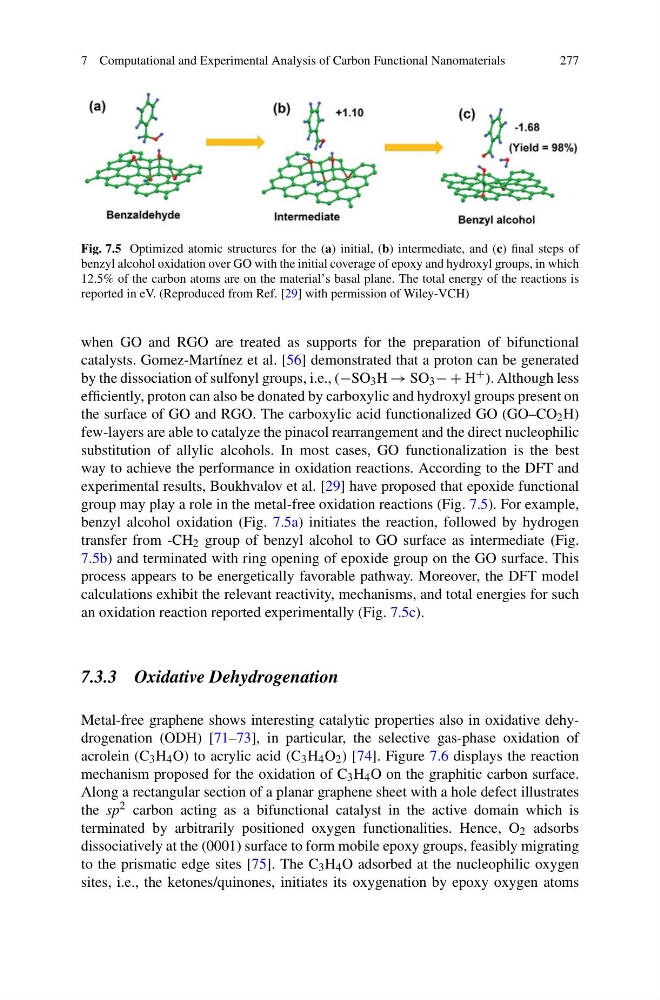
Fig. 7.5 Optimized atomic structures for the (a) initial, (b) intermediate, and (c) final steps of
benzyl alcohol oxidation over GO with the initial coverage of epoxy and hydroxyl groups, in which
12.5% of the carbon atoms are on the material’s basal plane. The total energy of the reactions is
reported in eV. (Reproduced from Ref. [29] with permission of Wiley-VCH)
when GO and RGO are treated as supports for the preparation of bifunctional
catalysts. Gomez-Martínez et al. [56] demonstrated that a proton can be generated
by the dissociation of sulfonyl groups, i.e., (−SO 3 H → SO 3 − + H + ). Although less
efficiently, proton can also be donated by carboxylic and hydroxyl groups present on
the surface of GO and RGO. The carboxylic acid functionalized GO (GO–CO 2 H)
few-layers are able to catalyze the pinacol rearrangement and the direct nucleophilic
substitution of allylic alcohols. In most cases, GO functionalization is the best
way to achieve the performance in oxidation reactions. According to the DFT and
experimental results, Boukhvalov et al. [29] have proposed that epoxide functional
group may play a role in the metal-free oxidation reactions (Fig. 7.5). For example,
benzyl alcohol oxidation (Fig. 7.5a) initiates the reaction, followed by hydrogen
transfer from -CH 2 group of benzyl alcohol to GO surface as intermediate (Fig.
7.5b) and terminated with ring opening of epoxide group on the GO surface. This
process appears to be energetically favorable pathway. Moreover, the DFT model
calculations exhibit the relevant reactivity, mechanisms, and total energies for such
an oxidation reaction reported experimentally (Fig. 7.5c).
7.3.3 Oxidative Dehydrogenation
Metal-free graphene shows interesting catalytic properties also in oxidative dehydrogenation (ODH) [71–73], in particular, the selective gas-phase oxidation of
acrolein (C 3 H 4 O) to acrylic acid (C 3 H 4 O 2 ) [74]. Figure 7.6 displays the reaction
mechanism proposed for the oxidation of C 3 H 4 O on the graphitic carbon surface.
Along a rectangular section of a planar graphene sheet with a hole defect illustrates
the sp 2 carbon acting as a bifunctional catalyst in the active domain which is
terminated by arbitrarily positioned oxygen functionalities. Hence, O 2 adsorbs
dissociatively at the (0001) surface to form mobile epoxy groups, feasibly migrating
to the prismatic edge sites [75]. The C 3 H 4 O adsorbed at the nucleophilic oxygen
sites, i.e., the ketones/quinones, initiates its oxygenation by epoxy oxygen atoms
277
Fig. 7.5 Optimized atomic structures for the (a) initial, (b) intermediate, and (c) final steps of
benzyl alcohol oxidation over GO with the initial coverage of epoxy and hydroxyl groups, in which
12.5% of the carbon atoms are on the material’s basal plane. The total energy of the reactions is
reported in eV. (Reproduced from Ref. [29] with permission of Wiley-VCH)
when GO and RGO are treated as supports for the preparation of bifunctional
catalysts. Gomez-Martínez et al. [56] demonstrated that a proton can be generated
by the dissociation of sulfonyl groups, i.e., (−SO 3 H → SO 3 − + H + ). Although less
efficiently, proton can also be donated by carboxylic and hydroxyl groups present on
the surface of GO and RGO. The carboxylic acid functionalized GO (GO–CO 2 H)
few-layers are able to catalyze the pinacol rearrangement and the direct nucleophilic
substitution of allylic alcohols. In most cases, GO functionalization is the best
way to achieve the performance in oxidation reactions. According to the DFT and
experimental results, Boukhvalov et al. [29] have proposed that epoxide functional
group may play a role in the metal-free oxidation reactions (Fig. 7.5). For example,
benzyl alcohol oxidation (Fig. 7.5a) initiates the reaction, followed by hydrogen
transfer from -CH 2 group of benzyl alcohol to GO surface as intermediate (Fig.
7.5b) and terminated with ring opening of epoxide group on the GO surface. This
process appears to be energetically favorable pathway. Moreover, the DFT model
calculations exhibit the relevant reactivity, mechanisms, and total energies for such
an oxidation reaction reported experimentally (Fig. 7.5c).
7.3.3 Oxidative Dehydrogenation
Metal-free graphene shows interesting catalytic properties also in oxidative dehydrogenation (ODH) [71–73], in particular, the selective gas-phase oxidation of
acrolein (C 3 H 4 O) to acrylic acid (C 3 H 4 O 2 ) [74]. Figure 7.6 displays the reaction
mechanism proposed for the oxidation of C 3 H 4 O on the graphitic carbon surface.
Along a rectangular section of a planar graphene sheet with a hole defect illustrates
the sp 2 carbon acting as a bifunctional catalyst in the active domain which is
terminated by arbitrarily positioned oxygen functionalities. Hence, O 2 adsorbs
dissociatively at the (0001) surface to form mobile epoxy groups, feasibly migrating
to the prismatic edge sites [75]. The C 3 H 4 O adsorbed at the nucleophilic oxygen
sites, i.e., the ketones/quinones, initiates its oxygenation by epoxy oxygen atoms