

5 Enabling Materials By Dimensionality: From 0D to 3D Carbon-Based. . .
157
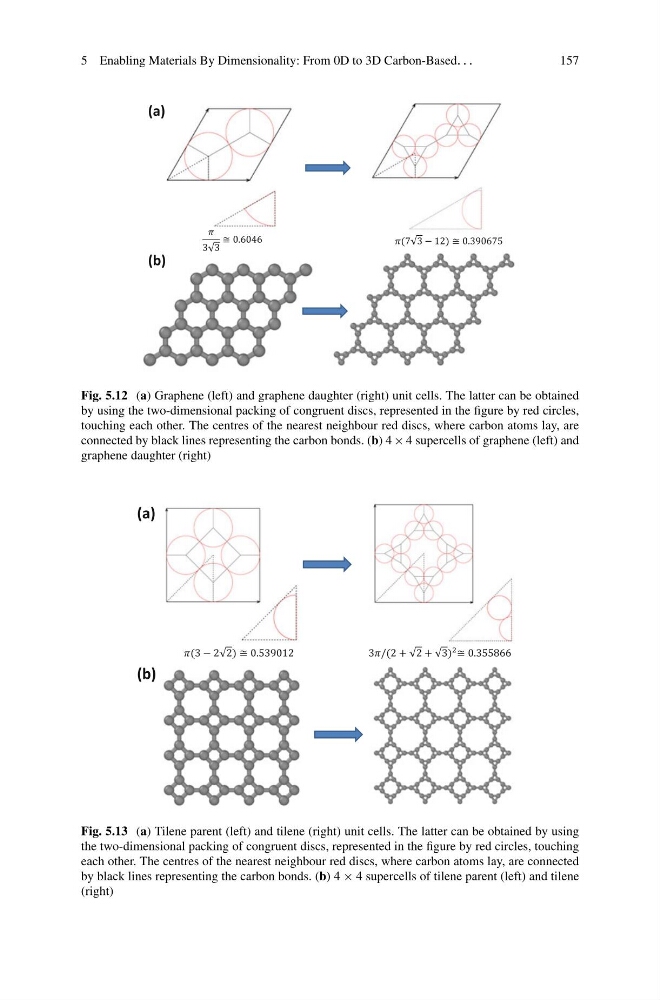
Fig. 5.12 (a) Graphene (left) and graphene daughter (right) unit cells. The latter can be obtained
by using the two-dimensional packing of congruent discs, represented in the figure by red circles,
touching each other. The centres of the nearest neighbour red discs, where carbon atoms lay, are
connected by black lines representing the carbon bonds. (b) 4 × 4 supercells of graphene (left) and
graphene daughter (right)
Fig. 5.13 (a) Tilene parent (left) and tilene (right) unit cells. The latter can be obtained by using
the two-dimensional packing of congruent discs, represented in the figure by red circles, touching
each other. The centres of the nearest neighbour red discs, where carbon atoms lay, are connected
by black lines representing the carbon bonds. (b) 4 × 4 supercells of tilene parent (left) and tilene
(right)
157
Fig. 5.12 (a) Graphene (left) and graphene daughter (right) unit cells. The latter can be obtained
by using the two-dimensional packing of congruent discs, represented in the figure by red circles,
touching each other. The centres of the nearest neighbour red discs, where carbon atoms lay, are
connected by black lines representing the carbon bonds. (b) 4 × 4 supercells of graphene (left) and
graphene daughter (right)
Fig. 5.13 (a) Tilene parent (left) and tilene (right) unit cells. The latter can be obtained by using
the two-dimensional packing of congruent discs, represented in the figure by red circles, touching
each other. The centres of the nearest neighbour red discs, where carbon atoms lay, are connected
by black lines representing the carbon bonds. (b) 4 × 4 supercells of tilene parent (left) and tilene
(right)