

4.4 Determination of Pharmacokinetics of Drugs
Targeting specific, small molecules as modulators of drug delivery may play a significant role in the development of therapeutics. Small molecules can alter the pharmacokinetics of therapeutic macromolecules leading to more efficient drug delivery with
less systemic toxicity. McCann et al. used FMI to observe the biodistribution and
excretion patterns associated with molecular probes composed of human serum albumin (HSA) conjugated to high and low numbers of various monosaccharides: Glc-α,
Gal-β, Man-α, Fuc-α, and Fuc-β. First, the conjugation of IRDye800CW to HSA
demonstrated nonspecific distribution throughout the body, suggesting the addition
of IRDye800CW minimally changed the biodistribution of HSA. However, the conjugation with either low numbers or high numbers of sugar molecules resulted in rapid
and specific changes in biodistribution. The conjugation of HSA to a low number of
sugar molecules leads to slower clearance of the probe from the blood circulation
compared to HSA conjugated to a high number of sugar molecules (Fig. 17) [108].
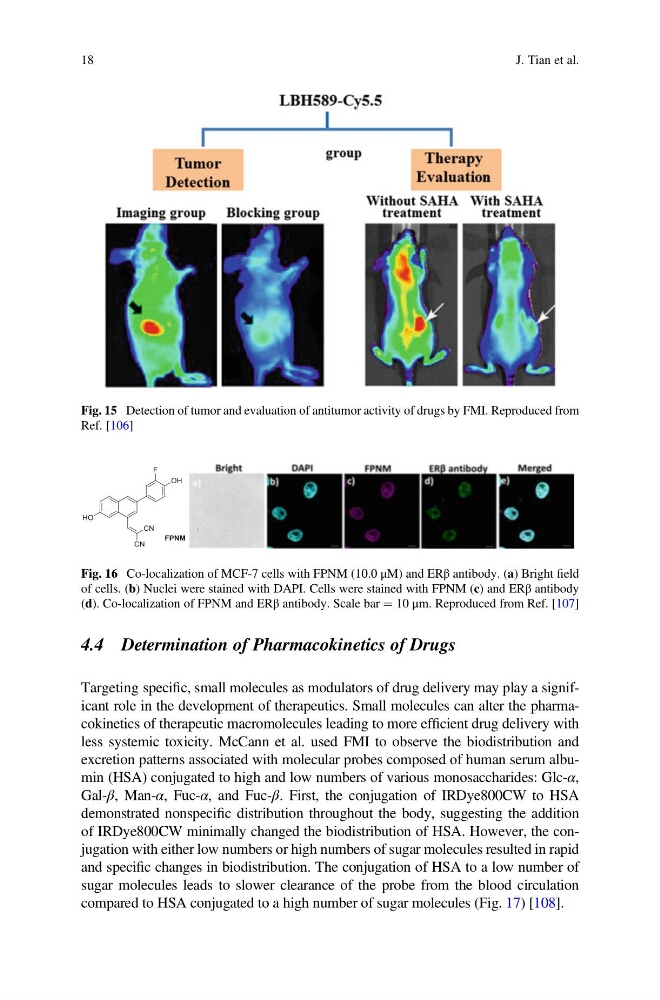
Fig. 15 Detection of tumor and evaluation of antitumor activity of drugs by FMI. Reproduced from
Ref. [106]
Fig. 16 Co-localization of MCF-7 cells with FPNM (10.0 μM) and ERβ antibody. (a) Bright field
of cells. (b) Nuclei were stained with DAPI. Cells were stained with FPNM (c) and ERβ antibody
(d). Co-localization of FPNM and ERβ antibody. Scale bar ¼ 10 μm. Reproduced from Ref. [107]
18
J. Tian et al.
Targeting specific, small molecules as modulators of drug delivery may play a significant role in the development of therapeutics. Small molecules can alter the pharmacokinetics of therapeutic macromolecules leading to more efficient drug delivery with
less systemic toxicity. McCann et al. used FMI to observe the biodistribution and
excretion patterns associated with molecular probes composed of human serum albumin (HSA) conjugated to high and low numbers of various monosaccharides: Glc-α,
Gal-β, Man-α, Fuc-α, and Fuc-β. First, the conjugation of IRDye800CW to HSA
demonstrated nonspecific distribution throughout the body, suggesting the addition
of IRDye800CW minimally changed the biodistribution of HSA. However, the conjugation with either low numbers or high numbers of sugar molecules resulted in rapid
and specific changes in biodistribution. The conjugation of HSA to a low number of
sugar molecules leads to slower clearance of the probe from the blood circulation
compared to HSA conjugated to a high number of sugar molecules (Fig. 17) [108].
Fig. 15 Detection of tumor and evaluation of antitumor activity of drugs by FMI. Reproduced from
Ref. [106]
Fig. 16 Co-localization of MCF-7 cells with FPNM (10.0 μM) and ERβ antibody. (a) Bright field
of cells. (b) Nuclei were stained with DAPI. Cells were stained with FPNM (c) and ERβ antibody
(d). Co-localization of FPNM and ERβ antibody. Scale bar ¼ 10 μm. Reproduced from Ref. [107]
18
J. Tian et al.