

rate of water evaporation from the hydrogel. In addition, the application of C-dots is
quite significant in the generation of competent and economically viable
photocatalytic material for water splitting and dye removal. The photocatalytic
activity was mainly achievable due to the promising light-harvesting and electron
transference aptitude of C-dots (Martindale et al. 2015). The C-dots prepared via
using the waste orange peels have the tendency to degrade the azo dye, i.e. naphthol
blue-black from aqueous media by using UV irradiation method. The complete
degradation of dye was achieved within 45 min of UV exposure in presence of
C-dots. The effective photo-degradation behaviour of C-dots can be explained on the
basis of successful electronic charge interaction over the surface of nano dots. The
transference of photo-generated species has also displayed higher rate in presence of
C-dots (Prasannan and Imae 2013). The application of C-dots prepared by using the
expired milk has currently been used for the sensing of harmful toxic dyes from the
aqueous media. The easy up take of as prepared C-dots has enhanced their role in
bioimaging application. The as prepared nanoparticles have also been employed for
the solid-state fluorescent sensing, security labelling applications and wearable
optoelectronic devices with combining them with dye molecules. The fluorescent
nature of prepared C-dots has made them useful as substitute for inks or dye and
employed them in drawing patterns. The base plates for various types of textile
materials, flexible type of plastic films are easily printed by using the highly
biocompatible C-dots prepared by using the raw expired milk. The high adsorption
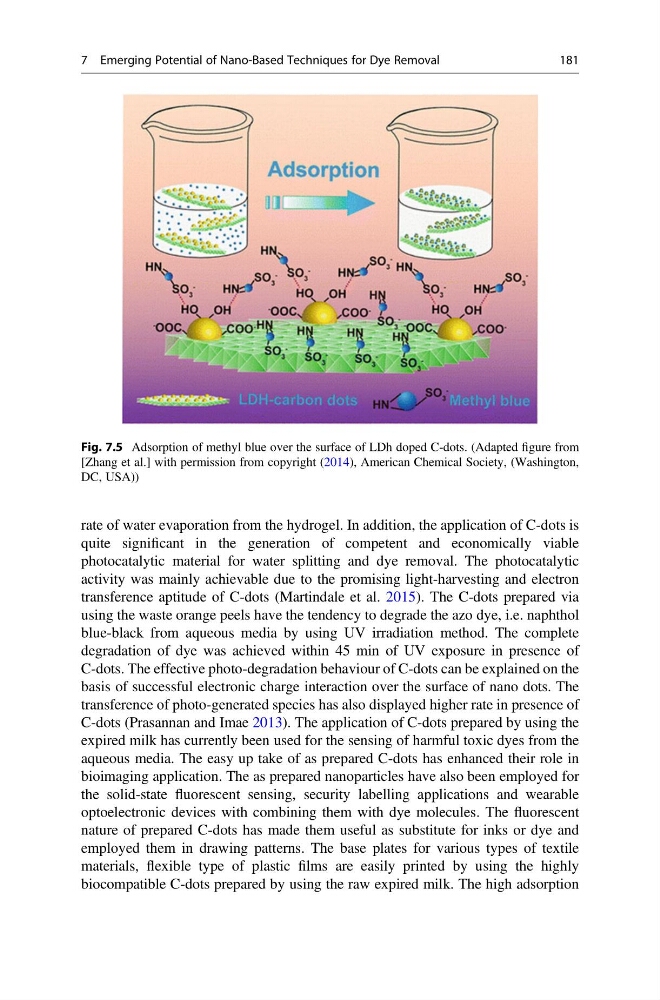
Fig. 7.5 Adsorption of methyl blue over the surface of LDh doped C-dots. (Adapted figure from
[Zhang et al.] with permission from copyright (2014), American Chemical Society, (Washington,
DC, USA))
7 Emerging Potential of Nano-Based Techniques for Dye Removal
181
quite significant in the generation of competent and economically viable
photocatalytic material for water splitting and dye removal. The photocatalytic
activity was mainly achievable due to the promising light-harvesting and electron
transference aptitude of C-dots (Martindale et al. 2015). The C-dots prepared via
using the waste orange peels have the tendency to degrade the azo dye, i.e. naphthol
blue-black from aqueous media by using UV irradiation method. The complete
degradation of dye was achieved within 45 min of UV exposure in presence of
C-dots. The effective photo-degradation behaviour of C-dots can be explained on the
basis of successful electronic charge interaction over the surface of nano dots. The
transference of photo-generated species has also displayed higher rate in presence of
C-dots (Prasannan and Imae 2013). The application of C-dots prepared by using the
expired milk has currently been used for the sensing of harmful toxic dyes from the
aqueous media. The easy up take of as prepared C-dots has enhanced their role in
bioimaging application. The as prepared nanoparticles have also been employed for
the solid-state fluorescent sensing, security labelling applications and wearable
optoelectronic devices with combining them with dye molecules. The fluorescent
nature of prepared C-dots has made them useful as substitute for inks or dye and
employed them in drawing patterns. The base plates for various types of textile
materials, flexible type of plastic films are easily printed by using the highly
biocompatible C-dots prepared by using the raw expired milk. The high adsorption
Fig. 7.5 Adsorption of methyl blue over the surface of LDh doped C-dots. (Adapted figure from
[Zhang et al.] with permission from copyright (2014), American Chemical Society, (Washington,
DC, USA))
7 Emerging Potential of Nano-Based Techniques for Dye Removal
181