

250
F. Hermanutz et al.
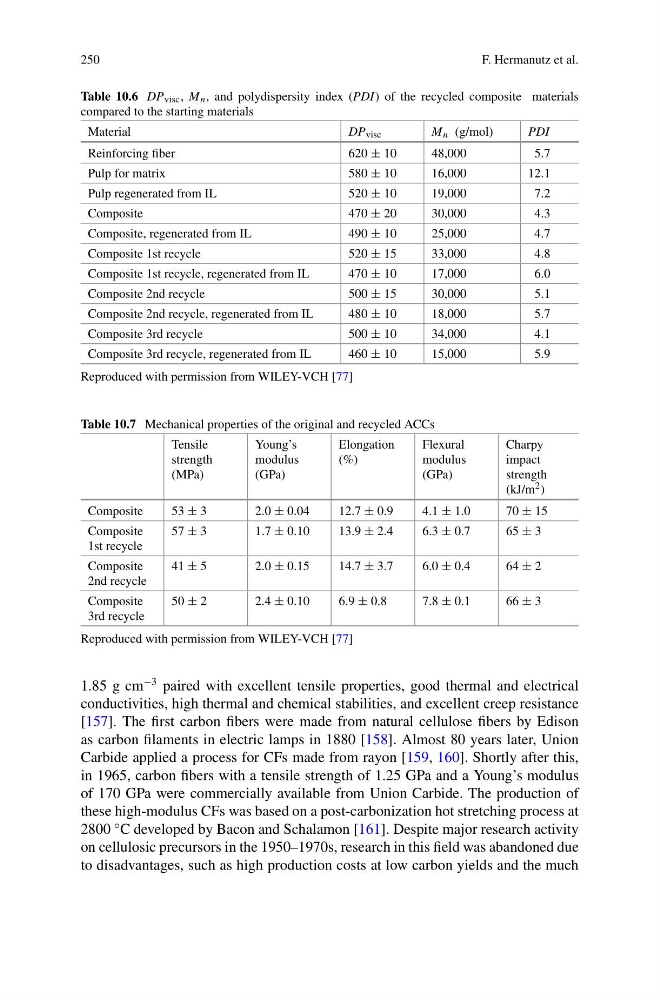
Table 10.6 DP visc , M n , and polydispersity index (PDI) of the recycled composite materials
compared to the starting materials
Material
DP visc
M n (g/mol)
PDI
Reinforcing fiber
620 ± 10
48,000
5.7
Pulp for matrix
580 ± 10
16,000
12.1
Pulp regenerated from IL
520 ± 10
19,000
7.2
Composite
470 ± 20
30,000
4.3
Composite, regenerated from IL
490 ± 10
25,000
4.7
Composite 1st recycle
520 ± 15
33,000
4.8
Composite 1st recycle, regenerated from IL
470 ± 10
17,000
6.0
Composite 2nd recycle
500 ± 15
30,000
5.1
Composite 2nd recycle, regenerated from IL
480 ± 10
18,000
5.7
Composite 3rd recycle
500 ± 10
34,000
4.1
Composite 3rd recycle, regenerated from IL
460 ± 10
15,000
5.9
Reproduced with permission from WILEY-VCH [77]
Table 10.7 Mechanical properties of the original and recycled ACCs
Tensile
strength
(MPa)
Young’s
modulus
(GPa)
Elongation
(%)
Flexural
modulus
(GPa)
Charpy
impact
strength
(kJ/m 2 )
Composite
53 ± 3
2.0 ± 0.04
12.7 ± 0.9
4.1 ± 1.0
70 ± 15
Composite
1st recycle
57 ± 3
1.7 ± 0.10
13.9 ± 2.4
6.3 ± 0.7
65 ± 3
Composite
2nd recycle
41 ± 5
2.0 ± 0.15
14.7 ± 3.7
6.0 ± 0.4
64 ± 2
Composite
3rd recycle
50 ± 2
2.4 ± 0.10
6.9 ± 0.8
7.8 ± 0.1
66 ± 3
Reproduced with permission from WILEY-VCH [77]
1.85 g cm
−3 paired with excellent tensile properties, good thermal and electrical
conductivities, high thermal and chemical stabilities, and excellent creep resistance
[157]. The first carbon fibers were made from natural cellulose fibers by Edison
as carbon filaments in electric lamps in 1880 [158]. Almost 80 years later, Union
Carbide applied a process for CFs made from rayon [159, 160]. Shortly after this,
in 1965, carbon fibers with a tensile strength of 1.25 GPa and a Young’s modulus
of 170 GPa were commercially available from Union Carbide. The production of
these high-modulus CFs was based on a post-carbonization hot stretching process at
2800 °C developed by Bacon and Schalamon [161]. Despite major research activity
on cellulosic precursors in the 1950–1970s, research in this field was abandoned due
to disadvantages, such as high production costs at low carbon yields and the much
F. Hermanutz et al.
Table 10.6 DP visc , M n , and polydispersity index (PDI) of the recycled composite materials
compared to the starting materials
Material
DP visc
M n (g/mol)
PDI
Reinforcing fiber
620 ± 10
48,000
5.7
Pulp for matrix
580 ± 10
16,000
12.1
Pulp regenerated from IL
520 ± 10
19,000
7.2
Composite
470 ± 20
30,000
4.3
Composite, regenerated from IL
490 ± 10
25,000
4.7
Composite 1st recycle
520 ± 15
33,000
4.8
Composite 1st recycle, regenerated from IL
470 ± 10
17,000
6.0
Composite 2nd recycle
500 ± 15
30,000
5.1
Composite 2nd recycle, regenerated from IL
480 ± 10
18,000
5.7
Composite 3rd recycle
500 ± 10
34,000
4.1
Composite 3rd recycle, regenerated from IL
460 ± 10
15,000
5.9
Reproduced with permission from WILEY-VCH [77]
Table 10.7 Mechanical properties of the original and recycled ACCs
Tensile
strength
(MPa)
Young’s
modulus
(GPa)
Elongation
(%)
Flexural
modulus
(GPa)
Charpy
impact
strength
(kJ/m 2 )
Composite
53 ± 3
2.0 ± 0.04
12.7 ± 0.9
4.1 ± 1.0
70 ± 15
Composite
1st recycle
57 ± 3
1.7 ± 0.10
13.9 ± 2.4
6.3 ± 0.7
65 ± 3
Composite
2nd recycle
41 ± 5
2.0 ± 0.15
14.7 ± 3.7
6.0 ± 0.4
64 ± 2
Composite
3rd recycle
50 ± 2
2.4 ± 0.10
6.9 ± 0.8
7.8 ± 0.1
66 ± 3
Reproduced with permission from WILEY-VCH [77]
1.85 g cm
−3 paired with excellent tensile properties, good thermal and electrical
conductivities, high thermal and chemical stabilities, and excellent creep resistance
[157]. The first carbon fibers were made from natural cellulose fibers by Edison
as carbon filaments in electric lamps in 1880 [158]. Almost 80 years later, Union
Carbide applied a process for CFs made from rayon [159, 160]. Shortly after this,
in 1965, carbon fibers with a tensile strength of 1.25 GPa and a Young’s modulus
of 170 GPa were commercially available from Union Carbide. The production of
these high-modulus CFs was based on a post-carbonization hot stretching process at
2800 °C developed by Bacon and Schalamon [161]. Despite major research activity
on cellulosic precursors in the 1950–1970s, research in this field was abandoned due
to disadvantages, such as high production costs at low carbon yields and the much