

10 Development of New Cellulosic Fibers and Composites …
241
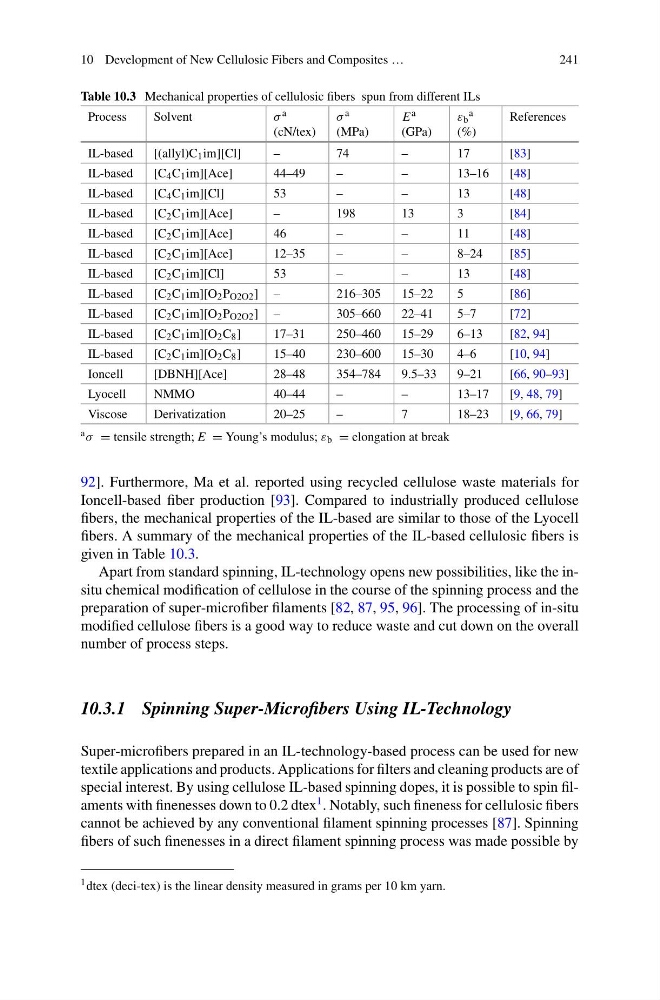
Table 10.3 Mechanical properties of cellulosic fibers spun from different ILs
Process
Solvent
σ a
(cN/tex)
σ a
(MPa)
E a
(GPa)
ε b
a
(%)
References
IL-based
[(allyl)C 1 im][Cl]
–
74
–
17
[83]
IL-based
[C 4 C 1 im][Ace]
44–49
–
–
13–16
[48]
IL-based
[C 4 C 1 im][Cl]
53
–
–
13
[48]
IL-based
[C 2 C 1 im][Ace]
–
198
13
3
[84]
IL-based
[C 2 C 1 im][Ace]
46
–
–
11
[48]
IL-based
[C 2 C 1 im][Ace]
12–35
–
–
8–24
[85]
IL-based
[C 2 C 1 im][Cl]
53
–
–
13
[48]
IL-based
[C 2 C 1 im][O 2 P O2O2 ] –
216–305
15–22
5
[86]
IL-based
[C 2 C 1 im][O 2 P O2O2 ] –
305–660
22–41
5–7
[72]
IL-based
[C 2 C 1 im][O 2 C 8 ]
17–31
250–460
15–29
6–13
[82, 94]
IL-based
[C 2 C 1 im][O 2 C 8 ]
15–40
230–600
15–30
4–6
[10, 94]
Ioncell
[DBNH][Ace]
28–48
354–784
9.5–33
9–21
[66, 90–93]
Lyocell
NMMO
40–44
–
–
13–17
[9, 48, 79]
Viscose
Derivatization
20–25
–
7
18–23
[9, 66, 79]
a σ = tensile strength; E = Young’s modulus; ε b = elongation at break
92]. Furthermore, Ma et al. reported using recycled cellulose waste materials for
Ioncell-based fiber production [93]. Compared to industrially produced cellulose
fibers, the mechanical properties of the IL-based are similar to those of the Lyocell
fibers. A summary of the mechanical properties of the IL-based cellulosic fibers is
given in Table 10.3.
Apart from standard spinning, IL-technology opens new possibilities, like the insitu chemical modification of cellulose in the course of the spinning process and the
preparation of super-microfiber filaments [82, 87, 95, 96]. The processing of in-situ
modified cellulose fibers is a good way to reduce waste and cut down on the overall
number of process steps.
10.3.1 Spinning Super-Microfibers Using IL-Technology
Super-microfibers prepared in an IL-technology-based process can be used for new
textile applications and products. Applications for filters and cleaning products are of
special interest. By using cellulose IL-based spinning dopes, it is possible to spin filaments with finenesses down to 0.2 dtex
1 . Notably, such fineness for cellulosic fibers
cannot be achieved by any conventional filament spinning processes [87]. Spinning
fibers of such finenesses in a direct filament spinning process was made possible by
1 dtex (deci-tex) is the linear density measured in grams per 10 km yarn.
241
Table 10.3 Mechanical properties of cellulosic fibers spun from different ILs
Process
Solvent
σ a
(cN/tex)
σ a
(MPa)
E a
(GPa)
ε b
a
(%)
References
IL-based
[(allyl)C 1 im][Cl]
–
74
–
17
[83]
IL-based
[C 4 C 1 im][Ace]
44–49
–
–
13–16
[48]
IL-based
[C 4 C 1 im][Cl]
53
–
–
13
[48]
IL-based
[C 2 C 1 im][Ace]
–
198
13
3
[84]
IL-based
[C 2 C 1 im][Ace]
46
–
–
11
[48]
IL-based
[C 2 C 1 im][Ace]
12–35
–
–
8–24
[85]
IL-based
[C 2 C 1 im][Cl]
53
–
–
13
[48]
IL-based
[C 2 C 1 im][O 2 P O2O2 ] –
216–305
15–22
5
[86]
IL-based
[C 2 C 1 im][O 2 P O2O2 ] –
305–660
22–41
5–7
[72]
IL-based
[C 2 C 1 im][O 2 C 8 ]
17–31
250–460
15–29
6–13
[82, 94]
IL-based
[C 2 C 1 im][O 2 C 8 ]
15–40
230–600
15–30
4–6
[10, 94]
Ioncell
[DBNH][Ace]
28–48
354–784
9.5–33
9–21
[66, 90–93]
Lyocell
NMMO
40–44
–
–
13–17
[9, 48, 79]
Viscose
Derivatization
20–25
–
7
18–23
[9, 66, 79]
a σ = tensile strength; E = Young’s modulus; ε b = elongation at break
92]. Furthermore, Ma et al. reported using recycled cellulose waste materials for
Ioncell-based fiber production [93]. Compared to industrially produced cellulose
fibers, the mechanical properties of the IL-based are similar to those of the Lyocell
fibers. A summary of the mechanical properties of the IL-based cellulosic fibers is
given in Table 10.3.
Apart from standard spinning, IL-technology opens new possibilities, like the insitu chemical modification of cellulose in the course of the spinning process and the
preparation of super-microfiber filaments [82, 87, 95, 96]. The processing of in-situ
modified cellulose fibers is a good way to reduce waste and cut down on the overall
number of process steps.
10.3.1 Spinning Super-Microfibers Using IL-Technology
Super-microfibers prepared in an IL-technology-based process can be used for new
textile applications and products. Applications for filters and cleaning products are of
special interest. By using cellulose IL-based spinning dopes, it is possible to spin filaments with finenesses down to 0.2 dtex
1 . Notably, such fineness for cellulosic fibers
cannot be achieved by any conventional filament spinning processes [87]. Spinning
fibers of such finenesses in a direct filament spinning process was made possible by
1 dtex (deci-tex) is the linear density measured in grams per 10 km yarn.