

240
F. Hermanutz et al.
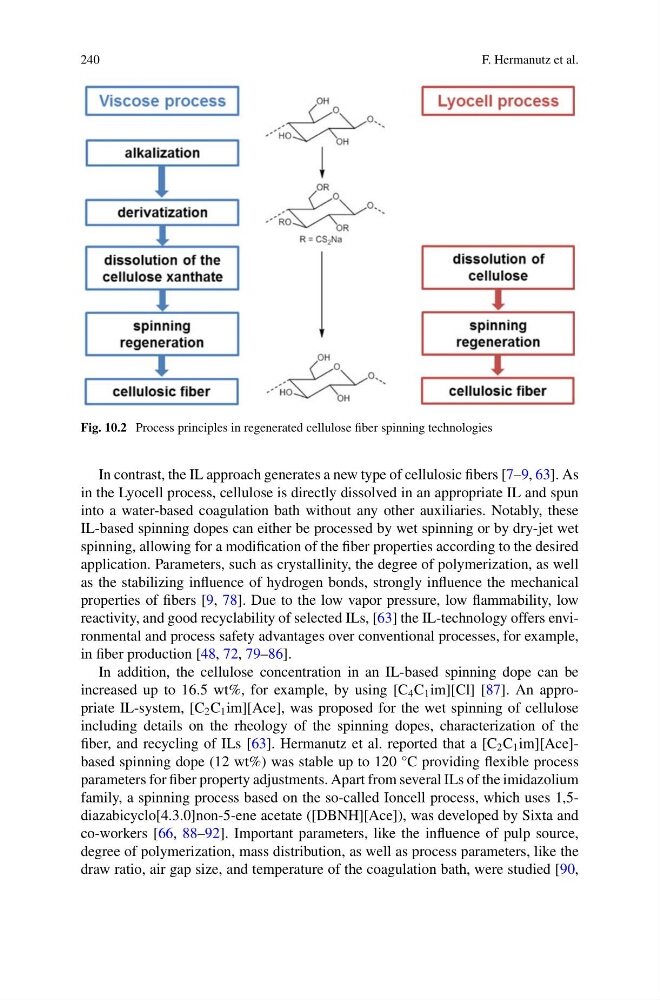
Fig. 10.2 Process principles in regenerated cellulose fiber spinning technologies
In contrast, the IL approach generates a new type of cellulosic fibers [7–9, 63]. As
in the Lyocell process, cellulose is directly dissolved in an appropriate IL and spun
into a water-based coagulation bath without any other auxiliaries. Notably, these
IL-based spinning dopes can either be processed by wet spinning or by dry-jet wet
spinning, allowing for a modification of the fiber properties according to the desired
application. Parameters, such as crystallinity, the degree of polymerization, as well
as the stabilizing influence of hydrogen bonds, strongly influence the mechanical
properties of fibers [9, 78]. Due to the low vapor pressure, low flammability, low
reactivity, and good recyclability of selected ILs, [63] the IL-technology offers environmental and process safety advantages over conventional processes, for example,
in fiber production [48, 72, 79–86].
In addition, the cellulose concentration in an IL-based spinning dope can be
increased up to 16.5 wt%, for example, by using [C 4 C 1 im][Cl] [87]. An appropriate IL-system, [C 2 C 1 im][Ace], was proposed for the wet spinning of cellulose
including details on the rheology of the spinning dopes, characterization of the
fiber, and recycling of ILs [63]. Hermanutz et al. reported that a [C 2 C 1 im][Ace]based spinning dope (12 wt%) was stable up to 120 °C providing flexible process
parameters for fiber property adjustments. Apart from several ILs of the imidazolium
family, a spinning process based on the so-called Ioncell process, which uses 1,5diazabicyclo[4.3.0]non-5-ene acetate ([DBNH][Ace]), was developed by Sixta and
co-workers [66, 88–92]. Important parameters, like the influence of pulp source,
degree of polymerization, mass distribution, as well as process parameters, like the
draw ratio, air gap size, and temperature of the coagulation bath, were studied [90,
F. Hermanutz et al.
Fig. 10.2 Process principles in regenerated cellulose fiber spinning technologies
In contrast, the IL approach generates a new type of cellulosic fibers [7–9, 63]. As
in the Lyocell process, cellulose is directly dissolved in an appropriate IL and spun
into a water-based coagulation bath without any other auxiliaries. Notably, these
IL-based spinning dopes can either be processed by wet spinning or by dry-jet wet
spinning, allowing for a modification of the fiber properties according to the desired
application. Parameters, such as crystallinity, the degree of polymerization, as well
as the stabilizing influence of hydrogen bonds, strongly influence the mechanical
properties of fibers [9, 78]. Due to the low vapor pressure, low flammability, low
reactivity, and good recyclability of selected ILs, [63] the IL-technology offers environmental and process safety advantages over conventional processes, for example,
in fiber production [48, 72, 79–86].
In addition, the cellulose concentration in an IL-based spinning dope can be
increased up to 16.5 wt%, for example, by using [C 4 C 1 im][Cl] [87]. An appropriate IL-system, [C 2 C 1 im][Ace], was proposed for the wet spinning of cellulose
including details on the rheology of the spinning dopes, characterization of the
fiber, and recycling of ILs [63]. Hermanutz et al. reported that a [C 2 C 1 im][Ace]based spinning dope (12 wt%) was stable up to 120 °C providing flexible process
parameters for fiber property adjustments. Apart from several ILs of the imidazolium
family, a spinning process based on the so-called Ioncell process, which uses 1,5diazabicyclo[4.3.0]non-5-ene acetate ([DBNH][Ace]), was developed by Sixta and
co-workers [66, 88–92]. Important parameters, like the influence of pulp source,
degree of polymerization, mass distribution, as well as process parameters, like the
draw ratio, air gap size, and temperature of the coagulation bath, were studied [90,