

170
L. Brown et al.
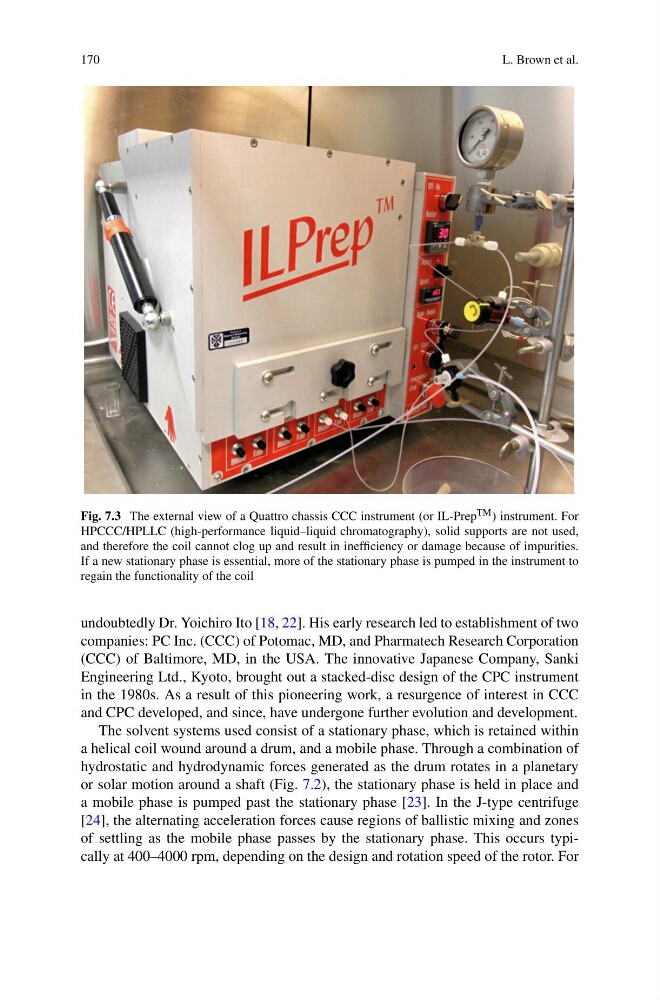
Fig. 7.3 The external view of a Quattro chassis CCC instrument (or IL-Prep TM ) instrument. For
HPCCC/HPLLC (high-performance liquid–liquid chromatography), solid supports are not used,
and therefore the coil cannot clog up and result in inefficiency or damage because of impurities.
If a new stationary phase is essential, more of the stationary phase is pumped in the instrument to
regain the functionality of the coil
undoubtedly Dr. Yoichiro Ito [18, 22]. His early research led to establishment of two
companies: PC Inc. (CCC) of Potomac, MD, and Pharmatech Research Corporation
(CCC) of Baltimore, MD, in the USA. The innovative Japanese Company, Sanki
Engineering Ltd., Kyoto, brought out a stacked-disc design of the CPC instrument
in the 1980s. As a result of this pioneering work, a resurgence of interest in CCC
and CPC developed, and since, have undergone further evolution and development.
The solvent systems used consist of a stationary phase, which is retained within
a helical coil wound around a drum, and a mobile phase. Through a combination of
hydrostatic and hydrodynamic forces generated as the drum rotates in a planetary
or solar motion around a shaft (Fig. 7.2), the stationary phase is held in place and
a mobile phase is pumped past the stationary phase [23]. In the J-type centrifuge
[24], the alternating acceleration forces cause regions of ballistic mixing and zones
of settling as the mobile phase passes by the stationary phase. This occurs typically at 400–4000 rpm, depending on the design and rotation speed of the rotor. For
L. Brown et al.
Fig. 7.3 The external view of a Quattro chassis CCC instrument (or IL-Prep TM ) instrument. For
HPCCC/HPLLC (high-performance liquid–liquid chromatography), solid supports are not used,
and therefore the coil cannot clog up and result in inefficiency or damage because of impurities.
If a new stationary phase is essential, more of the stationary phase is pumped in the instrument to
regain the functionality of the coil
undoubtedly Dr. Yoichiro Ito [18, 22]. His early research led to establishment of two
companies: PC Inc. (CCC) of Potomac, MD, and Pharmatech Research Corporation
(CCC) of Baltimore, MD, in the USA. The innovative Japanese Company, Sanki
Engineering Ltd., Kyoto, brought out a stacked-disc design of the CPC instrument
in the 1980s. As a result of this pioneering work, a resurgence of interest in CCC
and CPC developed, and since, have undergone further evolution and development.
The solvent systems used consist of a stationary phase, which is retained within
a helical coil wound around a drum, and a mobile phase. Through a combination of
hydrostatic and hydrodynamic forces generated as the drum rotates in a planetary
or solar motion around a shaft (Fig. 7.2), the stationary phase is held in place and
a mobile phase is pumped past the stationary phase [23]. In the J-type centrifuge
[24], the alternating acceleration forces cause regions of ballistic mixing and zones
of settling as the mobile phase passes by the stationary phase. This occurs typically at 400–4000 rpm, depending on the design and rotation speed of the rotor. For