

represented in Fig. 6.3. In the case of pure EP resin, the evolution of combustible
volatile components and flammable gases is very high; when the pressure inside the
char layer reaches a critical point, the char structure weakens and breaks down,
resulting in an open porous morphology (Fig. 6.3), whereas in the case of
FR-containing EP resins, there is no porous morphology due to the formation of a
strong char layer, which can inhibit the evolution of combustible components. The
morphology of the char layer and the relationship between the chemical components of the char layer and FR activity of epoxy resins was also investigated. It was
found that the char structure of pure EP showed a highly open porous morphology
and with increasing FR in the EP resins, the porosity gradually decreased and
completely disappeared (like a honey comb-sealed structure) and a strong dense
char was formed [21].
Zhang et al. [22] reported that EP, EP/DOPO, EP/PEPA, and EP/DOPO-PEPA
resins exhibited morphologies of broken char residue, crosslinked char, cracks and
porous char, and a compact char structure, respectively. The compact char in the
DOPO-PEPA resin could be attributed to the compatibility and synergetic effect of
EP/DOPO-PEPA resin, which led to an enhanced FR activity and mechanical
strength. Similarly, other studies clearly demonstrated the differences in the char
morphologies of various polymers with and without FR; in the presence of a FR, a
strong sealed and structured char morphology was observed, whereas in the case of
pure polymers, open and fractured char morphologies were observed but there may
be slight differences due to differences in the chemical structures of the used FRs
and their interactions with the polymers. This discussion clearly indicates that the
char structure and morphology play an important role in controlling the FR activity.
In the case of IFRs, most of the reported char morphologies exhibited good
adhesion and a solid shield structure, which acted as a strong barrier to prevent
further burning [23]. In some cases, during the process of burning, non-flammable
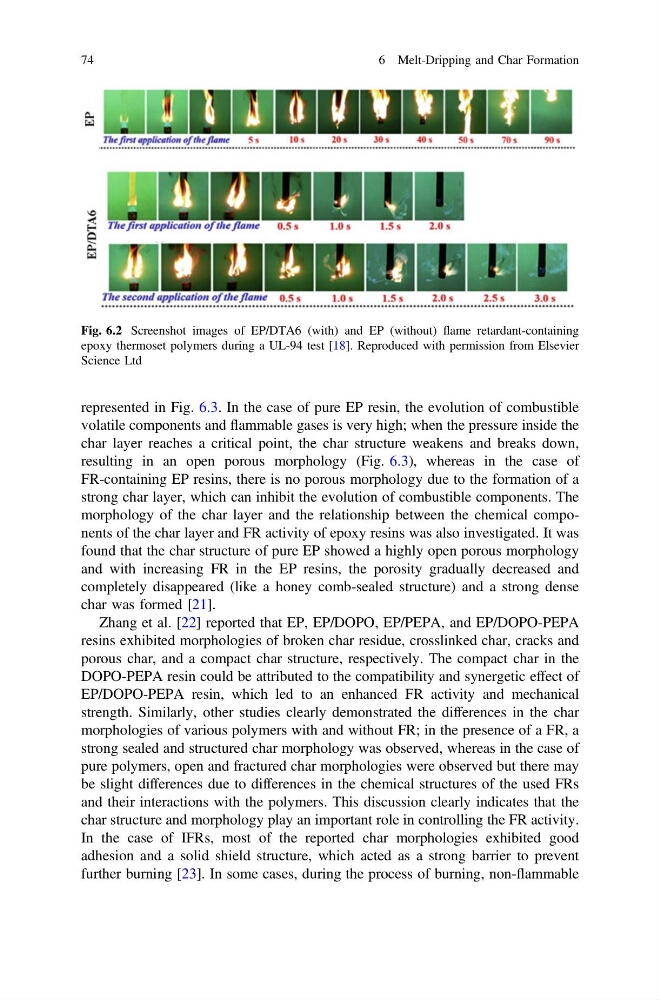
Fig. 6.2 Screenshot images of EP/DTA6 (with) and EP (without) flame retardant-containing
epoxy thermoset polymers during a UL-94 test [18]. Reproduced with permission from Elsevier
Science Ltd
74
6 Melt-Dripping and Char Formation
volatile components and flammable gases is very high; when the pressure inside the
char layer reaches a critical point, the char structure weakens and breaks down,
resulting in an open porous morphology (Fig. 6.3), whereas in the case of
FR-containing EP resins, there is no porous morphology due to the formation of a
strong char layer, which can inhibit the evolution of combustible components. The
morphology of the char layer and the relationship between the chemical components of the char layer and FR activity of epoxy resins was also investigated. It was
found that the char structure of pure EP showed a highly open porous morphology
and with increasing FR in the EP resins, the porosity gradually decreased and
completely disappeared (like a honey comb-sealed structure) and a strong dense
char was formed [21].
Zhang et al. [22] reported that EP, EP/DOPO, EP/PEPA, and EP/DOPO-PEPA
resins exhibited morphologies of broken char residue, crosslinked char, cracks and
porous char, and a compact char structure, respectively. The compact char in the
DOPO-PEPA resin could be attributed to the compatibility and synergetic effect of
EP/DOPO-PEPA resin, which led to an enhanced FR activity and mechanical
strength. Similarly, other studies clearly demonstrated the differences in the char
morphologies of various polymers with and without FR; in the presence of a FR, a
strong sealed and structured char morphology was observed, whereas in the case of
pure polymers, open and fractured char morphologies were observed but there may
be slight differences due to differences in the chemical structures of the used FRs
and their interactions with the polymers. This discussion clearly indicates that the
char structure and morphology play an important role in controlling the FR activity.
In the case of IFRs, most of the reported char morphologies exhibited good
adhesion and a solid shield structure, which acted as a strong barrier to prevent
further burning [23]. In some cases, during the process of burning, non-flammable
Fig. 6.2 Screenshot images of EP/DTA6 (with) and EP (without) flame retardant-containing
epoxy thermoset polymers during a UL-94 test [18]. Reproduced with permission from Elsevier
Science Ltd
74
6 Melt-Dripping and Char Formation