

220
In the above formula, the variance of the charge current flow rates is represented
by I 1 and I 2 , and T 1 and T 2 represent the corresponding time to charge the battery
completely . The formula used to acquire the corresponding time to charge the battery entirely is
t charging
Ampere hour of battery
Charging current
=
Conclusion
Coextensively, conventional transport infrastructure systems all over the world
cause adverse environmental impacts, and also result in a waste of funds annually.
The solution for balancing the link amid traffic, price, energy, and atmosphere in
this research may come from the introduction of flying vehicle technology.
Subsequenlty, the installation of a wind turbine into the flying vehicle helps in the
production of energy by itself when the vehicle is functioning in consideration of
the sophisticated energy demand and the necessity for a more conducive ecosystem.
In recent days, the construction of infrastructure has been costing trillions of dollars; the amount of fossil fuel consumed by the transport sector annually is
5.6 × 10
20
J/year (560 EJ/year). Besides substructure building costing trillions of
dollars annually and the transport segment consuming 5.6 × 10
20
J/year (560 EJ/
year) fossil fuel annually, the two are also accountable for approximately 34% of the
total yearly change in climatic conditions. If the sectors involved in this technology
take it incumbent upon themselves to develop this technology appropriately, a new
epoch of science to dispatch unembellished transport, substructure, and energy
glitches can be seen with this technology.
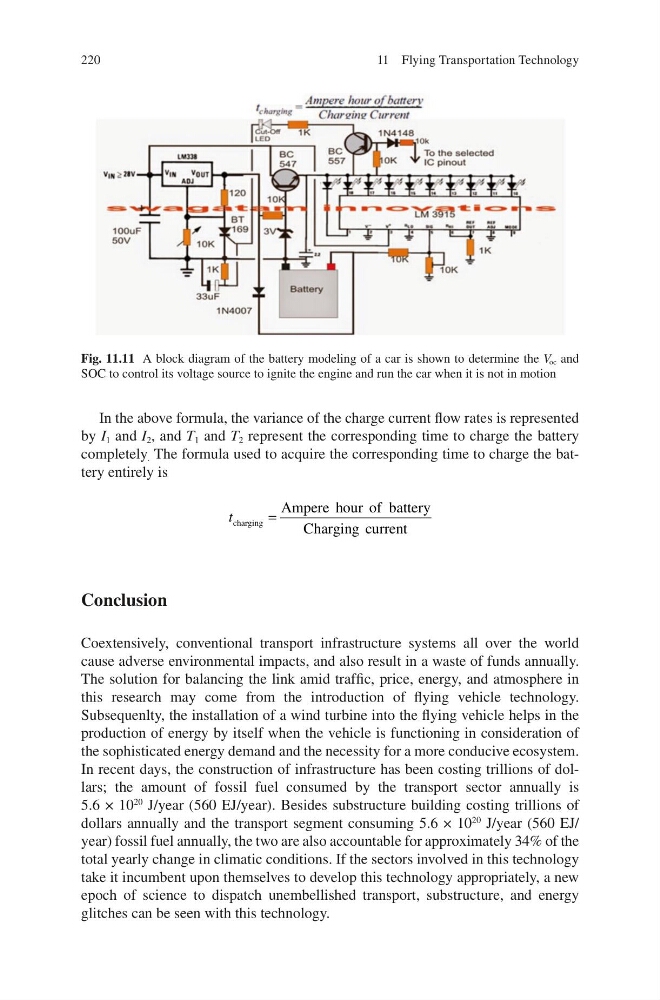
Fig. 11.11 A block diagram of the battery modeling of a car is shown to determine the V oc and
SOC to control its voltage source to ignite the engine and run the car when it is not in motion
11 Flying Transportation Technology
In the above formula, the variance of the charge current flow rates is represented
by I 1 and I 2 , and T 1 and T 2 represent the corresponding time to charge the battery
completely . The formula used to acquire the corresponding time to charge the battery entirely is
t charging
Ampere hour of battery
Charging current
=
Conclusion
Coextensively, conventional transport infrastructure systems all over the world
cause adverse environmental impacts, and also result in a waste of funds annually.
The solution for balancing the link amid traffic, price, energy, and atmosphere in
this research may come from the introduction of flying vehicle technology.
Subsequenlty, the installation of a wind turbine into the flying vehicle helps in the
production of energy by itself when the vehicle is functioning in consideration of
the sophisticated energy demand and the necessity for a more conducive ecosystem.
In recent days, the construction of infrastructure has been costing trillions of dollars; the amount of fossil fuel consumed by the transport sector annually is
5.6 × 10
20
J/year (560 EJ/year). Besides substructure building costing trillions of
dollars annually and the transport segment consuming 5.6 × 10
20
J/year (560 EJ/
year) fossil fuel annually, the two are also accountable for approximately 34% of the
total yearly change in climatic conditions. If the sectors involved in this technology
take it incumbent upon themselves to develop this technology appropriately, a new
epoch of science to dispatch unembellished transport, substructure, and energy
glitches can be seen with this technology.
Fig. 11.11 A block diagram of the battery modeling of a car is shown to determine the V oc and
SOC to control its voltage source to ignite the engine and run the car when it is not in motion
11 Flying Transportation Technology