

37
2.3.7 Surface Plasmon Resonance
Recently, numerous strategies for protein labeling were developed, and they allowed
the characterization of proteins concerning their composition, folding, or interaction with other proteins [74]. Surface plasmon resonance (SPR) is a label-free
detection procedure which is a suitable and reliable platform in clinical analysis for
biomolecular interactions. Undeniably, SPR has been proven to be one of the most
powerful technologies to determine the specificity, affinity, and kinetic parameters
displayed during the binding of macromolecules. These binding of macromolecules
include, but are not limited to, protein-protein, protein-DNA, enzyme-substrate or
inhibitor, receptor-drug, lipid membrane-protein, protein-polysaccharide, and cell
or virus-protein [75–84]. SPR is an optical technique that measures the refractive
index changes in the vicinity of thin metal layers (i.e., gold, silver, or aluminum
films) in response to biomolecular interactions.
2.3.7.1 SPR Principle
When the photon of an incident light strikes a metal surface, typically a gold surface, surface plasmon resonance occurs. When a portion of the light energy excites
the electrons of the metal surface layer, at a certain angle of incidence, it creates
electron movements which propagate parallel to the metal surface. This electric
oscillation is termed as a “plasmon.” This oscillation, in turn, makes an electric field
whose range is approximately 300 nm from the border between the metal surface
and sample solution [76, 79]. In a commercial SPR biosensor configuration, the
incident light employed is generated by a high-reflective index glass prism of the
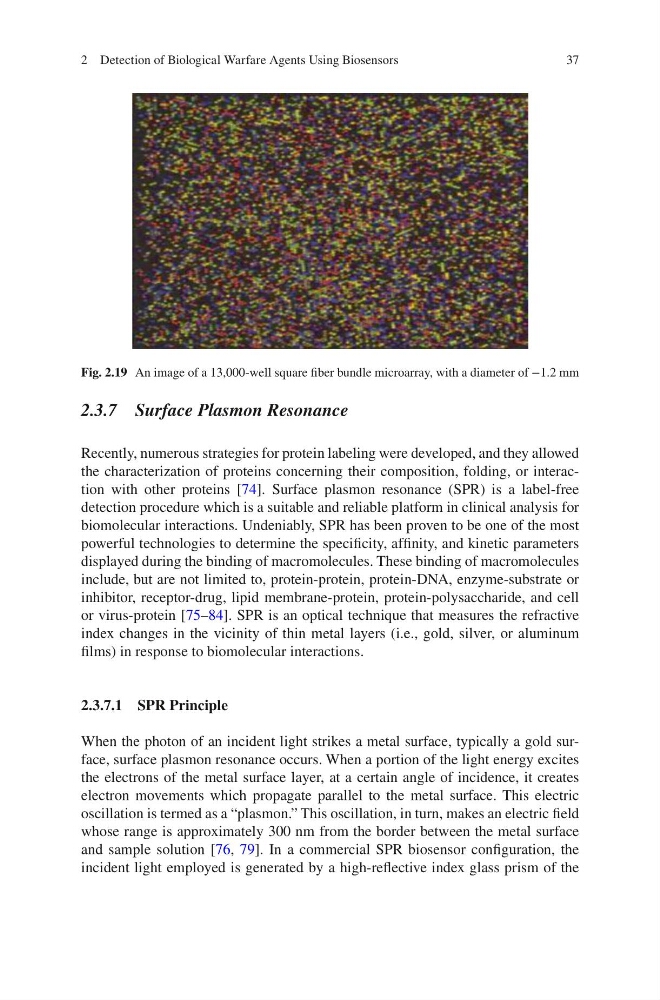
Fig. 2.19 An image of a 13,000-well square fiber bundle microarray, with a diameter of −1.2 mm
2 Detection of Biological Warfare Agents Using Biosensors
2.3.7 Surface Plasmon Resonance
Recently, numerous strategies for protein labeling were developed, and they allowed
the characterization of proteins concerning their composition, folding, or interaction with other proteins [74]. Surface plasmon resonance (SPR) is a label-free
detection procedure which is a suitable and reliable platform in clinical analysis for
biomolecular interactions. Undeniably, SPR has been proven to be one of the most
powerful technologies to determine the specificity, affinity, and kinetic parameters
displayed during the binding of macromolecules. These binding of macromolecules
include, but are not limited to, protein-protein, protein-DNA, enzyme-substrate or
inhibitor, receptor-drug, lipid membrane-protein, protein-polysaccharide, and cell
or virus-protein [75–84]. SPR is an optical technique that measures the refractive
index changes in the vicinity of thin metal layers (i.e., gold, silver, or aluminum
films) in response to biomolecular interactions.
2.3.7.1 SPR Principle
When the photon of an incident light strikes a metal surface, typically a gold surface, surface plasmon resonance occurs. When a portion of the light energy excites
the electrons of the metal surface layer, at a certain angle of incidence, it creates
electron movements which propagate parallel to the metal surface. This electric
oscillation is termed as a “plasmon.” This oscillation, in turn, makes an electric field
whose range is approximately 300 nm from the border between the metal surface
and sample solution [76, 79]. In a commercial SPR biosensor configuration, the
incident light employed is generated by a high-reflective index glass prism of the
Fig. 2.19 An image of a 13,000-well square fiber bundle microarray, with a diameter of −1.2 mm
2 Detection of Biological Warfare Agents Using Biosensors