

89
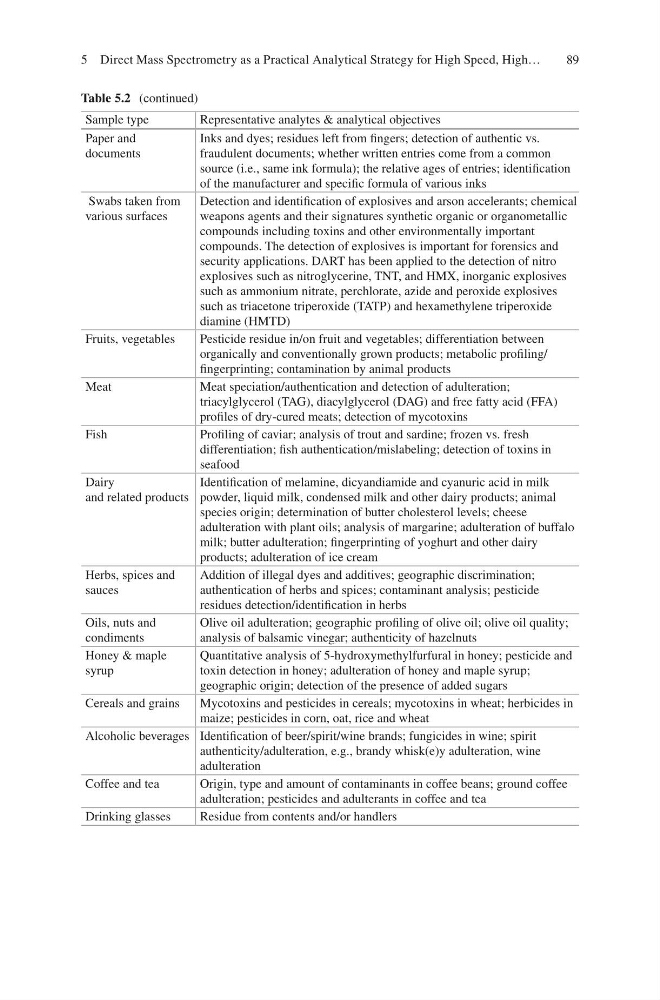
Table 5.2 (continued)
Sample type
Representative analytes & analytical objectives
Paper and
documents
Inks and dyes; residues left from fingers; detection of authentic vs.
fraudulent documents; whether written entries come from a common
source (i.e., same ink formula); the relative ages of entries; identification
of the manufacturer and specific formula of various inks
Swabs taken from
various surfaces
Detection and identification of explosives and arson accelerants; chemical
weapons agents and their signatures synthetic organic or organometallic
compounds including toxins and other environmentally important
compounds. The detection of explosives is important for forensics and
security applications. DART has been applied to the detection of nitro
explosives such as nitroglycerine, TNT, and HMX, inorganic explosives
such as ammonium nitrate, perchlorate, azide and peroxide explosives
such as triacetone triperoxide (TATP) and hexamethylene triperoxide
diamine (HMTD)
Fruits, vegetables
Pesticide residue in/on fruit and vegetables; differentiation between
organically and conventionally grown products; metabolic profiling/
fingerprinting; contamination by animal products
Meat
Meat speciation/authentication and detection of adulteration;
triacylglycerol (TAG), diacylglycerol (DAG) and free fatty acid (FFA)
profiles of dry-cured meats; detection of mycotoxins
Fish
Profiling of caviar; analysis of trout and sardine; frozen vs. fresh
differentiation; fish authentication/mislabeling; detection of toxins in
seafood
Dairy
and related products
Identification of melamine, dicyandiamide and cyanuric acid in milk
powder, liquid milk, condensed milk and other dairy products; animal
species origin; determination of butter cholesterol levels; cheese
adulteration with plant oils; analysis of margarine; adulteration of buffalo
milk; butter adulteration; fingerprinting of yoghurt and other dairy
products; adulteration of ice cream
Herbs, spices and
sauces
Addition of illegal dyes and additives; geographic discrimination;
authentication of herbs and spices; contaminant analysis; pesticide
residues detection/identification in herbs
Oils, nuts and
condiments
Olive oil adulteration; geographic profiling of olive oil; olive oil quality;
analysis of balsamic vinegar; authenticity of hazelnuts
Honey & maple
syrup
Quantitative analysis of 5-hydroxymethylfurfural in honey; pesticide and
toxin detection in honey; adulteration of honey and maple syrup;
geographic origin; detection of the presence of added sugars
Cereals and grains
Mycotoxins and pesticides in cereals; mycotoxins in wheat; herbicides in
maize; pesticides in corn, oat, rice and wheat
Alcoholic beverages Identification of beer/spirit/wine brands; fungicides in wine; spirit
authenticity/adulteration, e.g., brandy whisk(e)y adulteration, wine
adulteration
Coffee and tea
Origin, type and amount of contaminants in coffee beans; ground coffee
adulteration; pesticides and adulterants in coffee and tea
Drinking glasses
Residue from contents and/or handlers
5 Direct Mass Spectrometry as a Practical Analytical Strategy for High Speed, High…
Table 5.2 (continued)
Sample type
Representative analytes & analytical objectives
Paper and
documents
Inks and dyes; residues left from fingers; detection of authentic vs.
fraudulent documents; whether written entries come from a common
source (i.e., same ink formula); the relative ages of entries; identification
of the manufacturer and specific formula of various inks
Swabs taken from
various surfaces
Detection and identification of explosives and arson accelerants; chemical
weapons agents and their signatures synthetic organic or organometallic
compounds including toxins and other environmentally important
compounds. The detection of explosives is important for forensics and
security applications. DART has been applied to the detection of nitro
explosives such as nitroglycerine, TNT, and HMX, inorganic explosives
such as ammonium nitrate, perchlorate, azide and peroxide explosives
such as triacetone triperoxide (TATP) and hexamethylene triperoxide
diamine (HMTD)
Fruits, vegetables
Pesticide residue in/on fruit and vegetables; differentiation between
organically and conventionally grown products; metabolic profiling/
fingerprinting; contamination by animal products
Meat
Meat speciation/authentication and detection of adulteration;
triacylglycerol (TAG), diacylglycerol (DAG) and free fatty acid (FFA)
profiles of dry-cured meats; detection of mycotoxins
Fish
Profiling of caviar; analysis of trout and sardine; frozen vs. fresh
differentiation; fish authentication/mislabeling; detection of toxins in
seafood
Dairy
and related products
Identification of melamine, dicyandiamide and cyanuric acid in milk
powder, liquid milk, condensed milk and other dairy products; animal
species origin; determination of butter cholesterol levels; cheese
adulteration with plant oils; analysis of margarine; adulteration of buffalo
milk; butter adulteration; fingerprinting of yoghurt and other dairy
products; adulteration of ice cream
Herbs, spices and
sauces
Addition of illegal dyes and additives; geographic discrimination;
authentication of herbs and spices; contaminant analysis; pesticide
residues detection/identification in herbs
Oils, nuts and
condiments
Olive oil adulteration; geographic profiling of olive oil; olive oil quality;
analysis of balsamic vinegar; authenticity of hazelnuts
Honey & maple
syrup
Quantitative analysis of 5-hydroxymethylfurfural in honey; pesticide and
toxin detection in honey; adulteration of honey and maple syrup;
geographic origin; detection of the presence of added sugars
Cereals and grains
Mycotoxins and pesticides in cereals; mycotoxins in wheat; herbicides in
maize; pesticides in corn, oat, rice and wheat
Alcoholic beverages Identification of beer/spirit/wine brands; fungicides in wine; spirit
authenticity/adulteration, e.g., brandy whisk(e)y adulteration, wine
adulteration
Coffee and tea
Origin, type and amount of contaminants in coffee beans; ground coffee
adulteration; pesticides and adulterants in coffee and tea
Drinking glasses
Residue from contents and/or handlers
5 Direct Mass Spectrometry as a Practical Analytical Strategy for High Speed, High…