

64
4 Mechanical characterization on constituent level
Table 14 Available material properties of glass fiber fabric reinforced phenolic resin
Notation
E1
[MPa]
E2
[MPa]
G12
[MPa]
ν12 [-]
σ1
[MPa]
σ2
[MPa]
τ12
[MPa]
Ply th
[mm]
ABS5047-02
[Nas97]
20100
19500
3720
0.08
-
-
-
0.09
ABS5047-08
[Nas97]
24600
23100
5630
0.12
-
-
-
0.19
ABS5047-08
[Hei08]
24745
23043
3842
0.07
352
325
46
-
GFRP
[Zin10]
25540
22970
3410
0.15
326
288
41
0.25
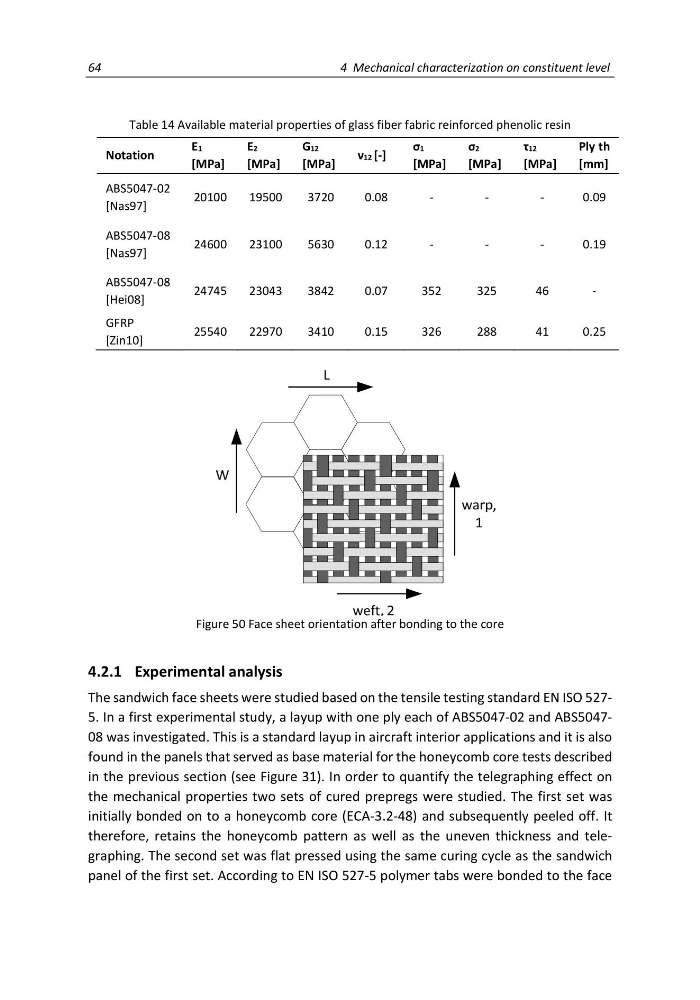
Figure 50 Face sheet orientation after bonding to the core
4.2.1 Experimental analysis
The sandwich face sheets were studied based on the tensile testing standard EN ISO 5275. In a first experimental study, a layup with one ply each of ABS5047-02 and ABS504708 was investigated. This is a standard layup in aircraft interior applications and it is also
found in the panels that served as base material for the honeycomb core tests described
in the previous section (see Figure 31). In order to quantify the telegraphing effect on
the mechanical properties two sets of cured prepregs were studied. The first set was
initially bonded on to a honeycomb core (ECA-3.2-48) and subsequently peeled off. It
therefore, retains the honeycomb pattern as well as the uneven thickness and telegraphing. The second set was flat pressed using the same curing cycle as the sandwich
panel of the first set. According to EN ISO 527-5 polymer tabs were bonded to the face
4 Mechanical characterization on constituent level
Table 14 Available material properties of glass fiber fabric reinforced phenolic resin
Notation
E1
[MPa]
E2
[MPa]
G12
[MPa]
ν12 [-]
σ1
[MPa]
σ2
[MPa]
τ12
[MPa]
Ply th
[mm]
ABS5047-02
[Nas97]
20100
19500
3720
0.08
-
-
-
0.09
ABS5047-08
[Nas97]
24600
23100
5630
0.12
-
-
-
0.19
ABS5047-08
[Hei08]
24745
23043
3842
0.07
352
325
46
-
GFRP
[Zin10]
25540
22970
3410
0.15
326
288
41
0.25
Figure 50 Face sheet orientation after bonding to the core
4.2.1 Experimental analysis
The sandwich face sheets were studied based on the tensile testing standard EN ISO 5275. In a first experimental study, a layup with one ply each of ABS5047-02 and ABS504708 was investigated. This is a standard layup in aircraft interior applications and it is also
found in the panels that served as base material for the honeycomb core tests described
in the previous section (see Figure 31). In order to quantify the telegraphing effect on
the mechanical properties two sets of cured prepregs were studied. The first set was
initially bonded on to a honeycomb core (ECA-3.2-48) and subsequently peeled off. It
therefore, retains the honeycomb pattern as well as the uneven thickness and telegraphing. The second set was flat pressed using the same curing cycle as the sandwich
panel of the first set. According to EN ISO 527-5 polymer tabs were bonded to the face