

7.4 Phase 3 - Model development
119
combination of geometry representation and model parameters yields the virtual test,
which in turn produces the virtual test results. Figure 88 illustrates a flow chart of the
FE-modelling and numerical studies process step. In the following, the FE-modelling and
the numerical studies are further explained based on the detailed honeycomb example.
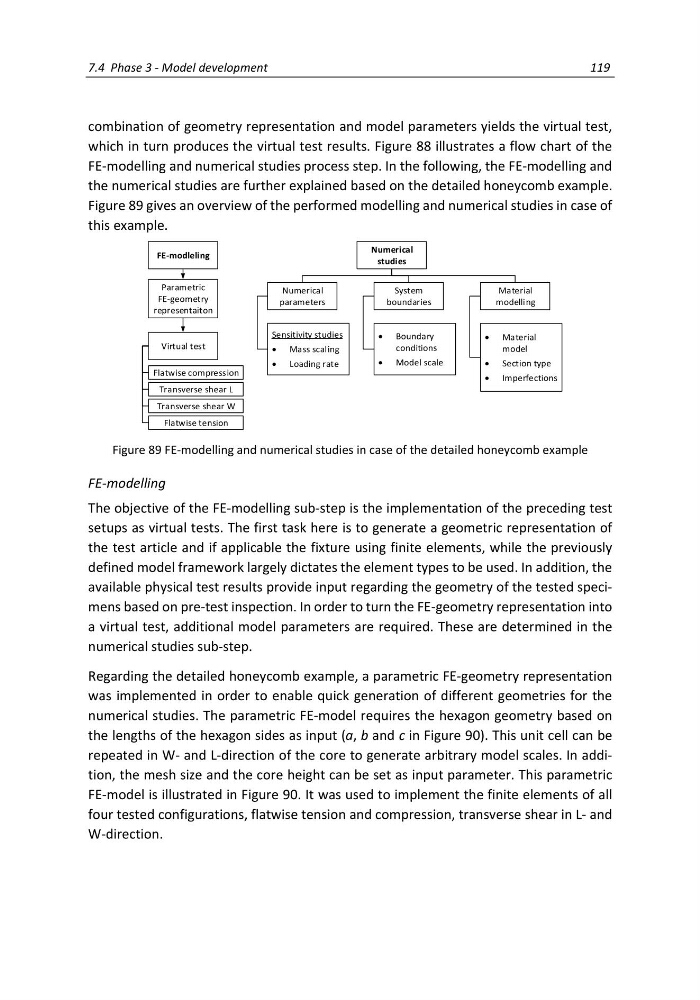
Figure 89 gives an overview of the performed modelling and numerical studies in case of
this example.
Figure 89 FE-modelling and numerical studies in case of the detailed honeycomb example
FE-modelling
The objective of the FE-modelling sub-step is the implementation of the preceding test
setups as virtual tests. The first task here is to generate a geometric representation of
the test article and if applicable the fixture using finite elements, while the previously
defined model framework largely dictates the element types to be used. In addition, the
available physical test results provide input regarding the geometry of the tested specimens based on pre-test inspection. In order to turn the FE-geometry representation into
a virtual test, additional model parameters are required. These are determined in the
numerical studies sub-step.
Regarding the detailed honeycomb example, a parametric FE-geometry representation
was implemented in order to enable quick generation of different geometries for the
numerical studies. The parametric FE-model requires the hexagon geometry based on
the lengths of the hexagon sides as input (a, b and c in Figure 90). This unit cell can be
repeated in W- and L-direction of the core to generate arbitrary model scales. In addition, the mesh size and the core height can be set as input parameter. This parametric
FE-model is illustrated in Figure 90. It was used to implement the finite elements of all
four tested configurations, flatwise tension and compression, transverse shear in L- and
W-direction.
FE-modleling
Material
modelling
Numerical
parameters
System
boundaries
Numerical
studies
Parametric
FE-geometry
representaiton
Sensitivity studies
Mass scaling
Loading rate
Boundary
conditions
Model scale
Material
model
Section type
Imperfections
Virtual test
Flatwise compression
Transverse shear L
Flatwise tension
Transverse shear W
119
combination of geometry representation and model parameters yields the virtual test,
which in turn produces the virtual test results. Figure 88 illustrates a flow chart of the
FE-modelling and numerical studies process step. In the following, the FE-modelling and
the numerical studies are further explained based on the detailed honeycomb example.
Figure 89 gives an overview of the performed modelling and numerical studies in case of
this example.
Figure 89 FE-modelling and numerical studies in case of the detailed honeycomb example
FE-modelling
The objective of the FE-modelling sub-step is the implementation of the preceding test
setups as virtual tests. The first task here is to generate a geometric representation of
the test article and if applicable the fixture using finite elements, while the previously
defined model framework largely dictates the element types to be used. In addition, the
available physical test results provide input regarding the geometry of the tested specimens based on pre-test inspection. In order to turn the FE-geometry representation into
a virtual test, additional model parameters are required. These are determined in the
numerical studies sub-step.
Regarding the detailed honeycomb example, a parametric FE-geometry representation
was implemented in order to enable quick generation of different geometries for the
numerical studies. The parametric FE-model requires the hexagon geometry based on
the lengths of the hexagon sides as input (a, b and c in Figure 90). This unit cell can be
repeated in W- and L-direction of the core to generate arbitrary model scales. In addition, the mesh size and the core height can be set as input parameter. This parametric
FE-model is illustrated in Figure 90. It was used to implement the finite elements of all
four tested configurations, flatwise tension and compression, transverse shear in L- and
W-direction.
FE-modleling
Material
modelling
Numerical
parameters
System
boundaries
Numerical
studies
Parametric
FE-geometry
representaiton
Sensitivity studies
Mass scaling
Loading rate
Boundary
conditions
Model scale
Material
model
Section type
Imperfections
Virtual test
Flatwise compression
Transverse shear L
Flatwise tension
Transverse shear W