

120
7 Virtual testing approach for sandwich panel joints
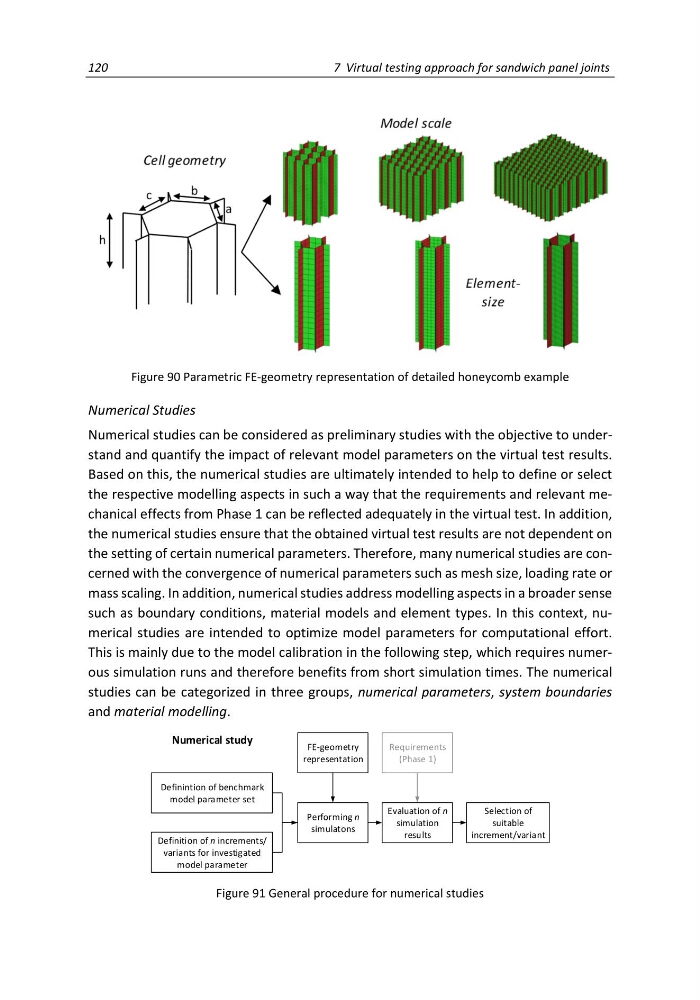
Figure 90 Parametric FE-geometry representation of detailed honeycomb example
Numerical Studies
Numerical studies can be considered as preliminary studies with the objective to understand and quantify the impact of relevant model parameters on the virtual test results.
Based on this, the numerical studies are ultimately intended to help to define or select
the respective modelling aspects in such a way that the requirements and relevant mechanical effects from Phase 1 can be reflected adequately in the virtual test. In addition,
the numerical studies ensure that the obtained virtual test results are not dependent on
the setting of certain numerical parameters. Therefore, many numerical studies are concerned with the convergence of numerical parameters such as mesh size, loading rate or
mass scaling. In addition, numerical studies address modelling aspects in a broader sense
such as boundary conditions, material models and element types. In this context, numerical studies are intended to optimize model parameters for computational effort.
This is mainly due to the model calibration in the following step, which requires numerous simulation runs and therefore benefits from short simulation times. The numerical
studies can be categorized in three groups, numerical parameters, system boundaries
and material modelling.
FE-geometry
representation
Definintion of benchmark
model parameter set
Definition of n increments/
variants for investigated
model parameter
Performing n
simulatons
Evaluation of n
simulation
results
Selection of
suitable
increment/variant
Requirements
(Phase 1)
Numerical study
Figure 91 General procedure for numerical studies
7 Virtual testing approach for sandwich panel joints
Figure 90 Parametric FE-geometry representation of detailed honeycomb example
Numerical Studies
Numerical studies can be considered as preliminary studies with the objective to understand and quantify the impact of relevant model parameters on the virtual test results.
Based on this, the numerical studies are ultimately intended to help to define or select
the respective modelling aspects in such a way that the requirements and relevant mechanical effects from Phase 1 can be reflected adequately in the virtual test. In addition,
the numerical studies ensure that the obtained virtual test results are not dependent on
the setting of certain numerical parameters. Therefore, many numerical studies are concerned with the convergence of numerical parameters such as mesh size, loading rate or
mass scaling. In addition, numerical studies address modelling aspects in a broader sense
such as boundary conditions, material models and element types. In this context, numerical studies are intended to optimize model parameters for computational effort.
This is mainly due to the model calibration in the following step, which requires numerous simulation runs and therefore benefits from short simulation times. The numerical
studies can be categorized in three groups, numerical parameters, system boundaries
and material modelling.
FE-geometry
representation
Definintion of benchmark
model parameter set
Definition of n increments/
variants for investigated
model parameter
Performing n
simulatons
Evaluation of n
simulation
results
Selection of
suitable
increment/variant
Requirements
(Phase 1)
Numerical study
Figure 91 General procedure for numerical studies