

28
2 Instrumentation for Cluster Science
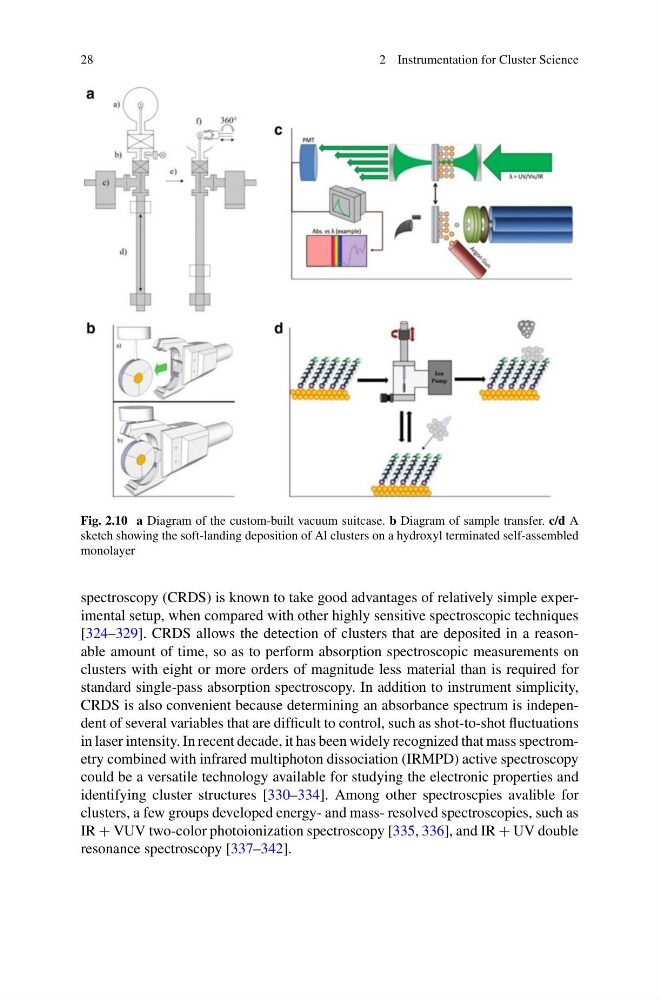
Fig. 2.10 a Diagram of the custom-built vacuum suitcase. b Diagram of sample transfer. c/d A
sketch showing the soft-landing deposition of Al clusters on a hydroxyl terminated self-assembled
monolayer
spectroscopy (CRDS) is known to take good advantages of relatively simple experimental setup, when compared with other highly sensitive spectroscopic techniques
[324–329]. CRDS allows the detection of clusters that are deposited in a reasonable amount of time, so as to perform absorption spectroscopic measurements on
clusters with eight or more orders of magnitude less material than is required for
standard single-pass absorption spectroscopy. In addition to instrument simplicity,
CRDS is also convenient because determining an absorbance spectrum is independent of several variables that are difficult to control, such as shot-to-shot fluctuations
in laser intensity. In recent decade, it has been widely recognized that mass spectrometry combined with infrared multiphoton dissociation (IRMPD) active spectroscopy
could be a versatile technology available for studying the electronic properties and
identifying cluster structures [330–334]. Among other spectroscpies avalible for
clusters, a few groups developed energy- and mass- resolved spectroscopies, such as
IR + VUV two-color photoionization spectroscopy [335, 336], and IR + UV double
resonance spectroscopy [337–342].
2 Instrumentation for Cluster Science
Fig. 2.10 a Diagram of the custom-built vacuum suitcase. b Diagram of sample transfer. c/d A
sketch showing the soft-landing deposition of Al clusters on a hydroxyl terminated self-assembled
monolayer
spectroscopy (CRDS) is known to take good advantages of relatively simple experimental setup, when compared with other highly sensitive spectroscopic techniques
[324–329]. CRDS allows the detection of clusters that are deposited in a reasonable amount of time, so as to perform absorption spectroscopic measurements on
clusters with eight or more orders of magnitude less material than is required for
standard single-pass absorption spectroscopy. In addition to instrument simplicity,
CRDS is also convenient because determining an absorbance spectrum is independent of several variables that are difficult to control, such as shot-to-shot fluctuations
in laser intensity. In recent decade, it has been widely recognized that mass spectrometry combined with infrared multiphoton dissociation (IRMPD) active spectroscopy
could be a versatile technology available for studying the electronic properties and
identifying cluster structures [330–334]. Among other spectroscpies avalible for
clusters, a few groups developed energy- and mass- resolved spectroscopies, such as
IR + VUV two-color photoionization spectroscopy [335, 336], and IR + UV double
resonance spectroscopy [337–342].