

230
13 Metal Cluster Catalysis
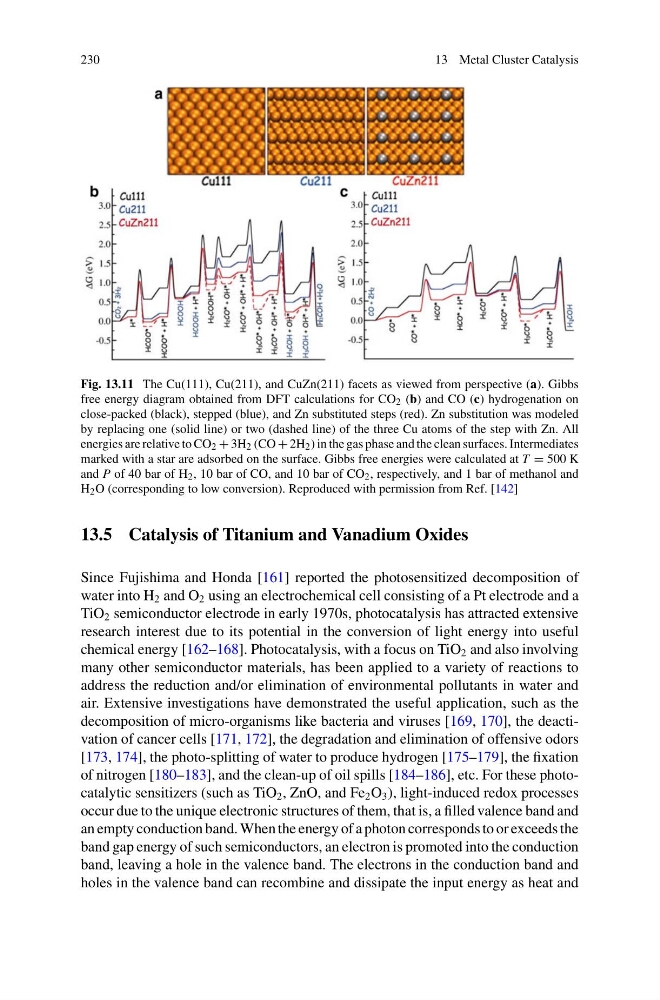
Fig. 13.11 The Cu(111), Cu(211), and CuZn(211) facets as viewed from perspective (a). Gibbs
free energy diagram obtained from DFT calculations for CO 2 (b) and CO (c) hydrogenation on
close-packed (black), stepped (blue), and Zn substituted steps (red). Zn substitution was modeled
by replacing one (solid line) or two (dashed line) of the three Cu atoms of the step with Zn. All
energies are relative to CO 2 + 3H 2 (CO + 2H 2 ) in the gas phase and the clean surfaces. Intermediates
marked with a star are adsorbed on the surface. Gibbs free energies were calculated at T = 500 K
and P of 40 bar of H 2 , 10 bar of CO, and 10 bar of CO 2 , respectively, and 1 bar of methanol and
H 2 O (corresponding to low conversion). Reproduced with permission from Ref. [142]
13.5 Catalysis of Titanium and Vanadium Oxides
Since Fujishima and Honda [161] reported the photosensitized decomposition of
water into H 2 and O 2 using an electrochemical cell consisting of a Pt electrode and a
TiO 2 semiconductor electrode in early 1970s, photocatalysis has attracted extensive
research interest due to its potential in the conversion of light energy into useful
chemical energy [162–168]. Photocatalysis, with a focus on TiO 2 and also involving
many other semiconductor materials, has been applied to a variety of reactions to
address the reduction and/or elimination of environmental pollutants in water and
air. Extensive investigations have demonstrated the useful application, such as the
decomposition of micro-organisms like bacteria and viruses [169, 170], the deactivation of cancer cells [171, 172], the degradation and elimination of offensive odors
[173, 174], the photo-splitting of water to produce hydrogen [175–179], the fixation
of nitrogen [180–183], and the clean-up of oil spills [184–186], etc. For these photocatalytic sensitizers (such as TiO 2 , ZnO, and Fe 2 O 3 ), light-induced redox processes
occur due to the unique electronic structures of them, that is, a filled valence band and
an empty conduction band. When the energy of a photon corresponds to or exceeds the
band gap energy of such semiconductors, an electron is promoted into the conduction
band, leaving a hole in the valence band. The electrons in the conduction band and
holes in the valence band can recombine and dissipate the input energy as heat and
13 Metal Cluster Catalysis
Fig. 13.11 The Cu(111), Cu(211), and CuZn(211) facets as viewed from perspective (a). Gibbs
free energy diagram obtained from DFT calculations for CO 2 (b) and CO (c) hydrogenation on
close-packed (black), stepped (blue), and Zn substituted steps (red). Zn substitution was modeled
by replacing one (solid line) or two (dashed line) of the three Cu atoms of the step with Zn. All
energies are relative to CO 2 + 3H 2 (CO + 2H 2 ) in the gas phase and the clean surfaces. Intermediates
marked with a star are adsorbed on the surface. Gibbs free energies were calculated at T = 500 K
and P of 40 bar of H 2 , 10 bar of CO, and 10 bar of CO 2 , respectively, and 1 bar of methanol and
H 2 O (corresponding to low conversion). Reproduced with permission from Ref. [142]
13.5 Catalysis of Titanium and Vanadium Oxides
Since Fujishima and Honda [161] reported the photosensitized decomposition of
water into H 2 and O 2 using an electrochemical cell consisting of a Pt electrode and a
TiO 2 semiconductor electrode in early 1970s, photocatalysis has attracted extensive
research interest due to its potential in the conversion of light energy into useful
chemical energy [162–168]. Photocatalysis, with a focus on TiO 2 and also involving
many other semiconductor materials, has been applied to a variety of reactions to
address the reduction and/or elimination of environmental pollutants in water and
air. Extensive investigations have demonstrated the useful application, such as the
decomposition of micro-organisms like bacteria and viruses [169, 170], the deactivation of cancer cells [171, 172], the degradation and elimination of offensive odors
[173, 174], the photo-splitting of water to produce hydrogen [175–179], the fixation
of nitrogen [180–183], and the clean-up of oil spills [184–186], etc. For these photocatalytic sensitizers (such as TiO 2 , ZnO, and Fe 2 O 3 ), light-induced redox processes
occur due to the unique electronic structures of them, that is, a filled valence band and
an empty conduction band. When the energy of a photon corresponds to or exceeds the
band gap energy of such semiconductors, an electron is promoted into the conduction
band, leaving a hole in the valence band. The electrons in the conduction band and
holes in the valence band can recombine and dissipate the input energy as heat and