

206
12 Charge Transfer and the Harpoon Mechanism
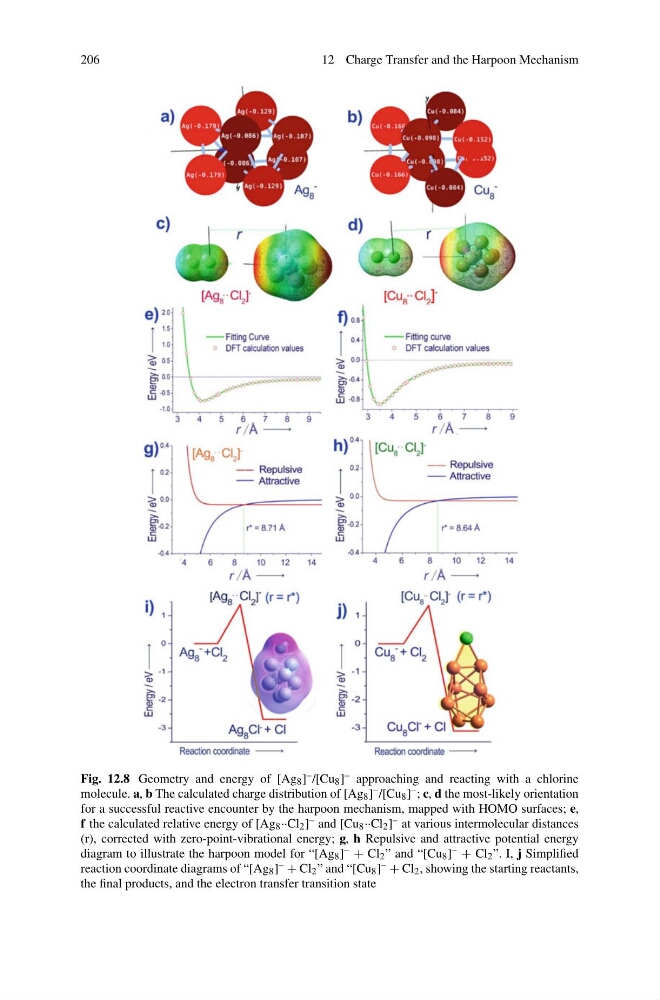
Fig. 12.8 Geometry and energy of [Ag 8 ] – /[Cu 8 ] – approaching and reacting with a chlorine
molecule. a, b The calculated charge distribution of [Ag 8 ] – /[Cu 8 ] – ; c, d the most-likely orientation
for a successful reactive encounter by the harpoon mechanism, mapped with HOMO surfaces; e,
f the calculated relative energy of [Ag 8 ··Cl 2 ] – and [Cu 8 ··Cl 2 ] – at various intermolecular distances
(r), corrected with zero-point-vibrational energy; g, h Repulsive and attractive potential energy
diagram to illustrate the harpoon model for “[Ag 8 ] – + Cl 2 ” and “[Cu 8 ] – + Cl 2 ”. I, j Simplified
reaction coordinate diagrams of “[Ag 8 ] – + Cl 2 ” and “[Cu 8 ] – + Cl 2 , showing the starting reactants,
the final products, and the electron transfer transition state
12 Charge Transfer and the Harpoon Mechanism
Fig. 12.8 Geometry and energy of [Ag 8 ] – /[Cu 8 ] – approaching and reacting with a chlorine
molecule. a, b The calculated charge distribution of [Ag 8 ] – /[Cu 8 ] – ; c, d the most-likely orientation
for a successful reactive encounter by the harpoon mechanism, mapped with HOMO surfaces; e,
f the calculated relative energy of [Ag 8 ··Cl 2 ] – and [Cu 8 ··Cl 2 ] – at various intermolecular distances
(r), corrected with zero-point-vibrational energy; g, h Repulsive and attractive potential energy
diagram to illustrate the harpoon model for “[Ag 8 ] – + Cl 2 ” and “[Cu 8 ] – + Cl 2 ”. I, j Simplified
reaction coordinate diagrams of “[Ag 8 ] – + Cl 2 ” and “[Cu 8 ] – + Cl 2 , showing the starting reactants,
the final products, and the electron transfer transition state