

(a)
(b)
(c)
t=5
t=415
t=1000
50
100
0
150
200
0.2
0.1
0.3
0.4
0.5
0.6
0.7
0.8
0.9
1
0
0
50
100
150
200
0
50
100
150
200
50
100
0
150
2 0 0
0.2
0.1
0.3
0.4
0.5
0.6
0.7
0.8
0.9
1
0
50
100
0
150
200
0
50
100
150
200
0.2
0.1
0.3
0.4
0.5
0.6
0.7
0.8
0.9
1
0
I
N
t=5
t=114
t=432
t=12
t=60
t=435
0.2
0.1
0.3
0.4
0.5
0.6
0.7
0.8
0.9
1
0
0.2
0.1
0.3
0.4
0.5
0.6
0.7
0.8
0.9
1
0
0.2
0.1
0.3
0.4
0.5
0.6
0.7
0.8
0.9
1
0
0
50
100
150
200
50
100
0
200
150
0
50
100
150
200
0
50
100
150
200
50
100
0
200
150
50
100
0
200
150
0.2
0.1
0.3
0.4
0.5
0.6
0.7
0.8
0.9
1
0
0.2
0.1
0.3
0.4
0.5
0.6
0.7
0.8
0.9
1
0
0.2
0.1
0.3
0.4
0.5
0.6
0.7
0.8
0.9
1
0
0
50
100
150
200
0
50
100
150
200
0
50
100
150
200
50
100
0
200
150
50
100
200
150
0
0
50
100
200
150
x
y
x
y
x
y
x
y
x
x
y
y
y
y
y
x
x
x
I
N
I
N
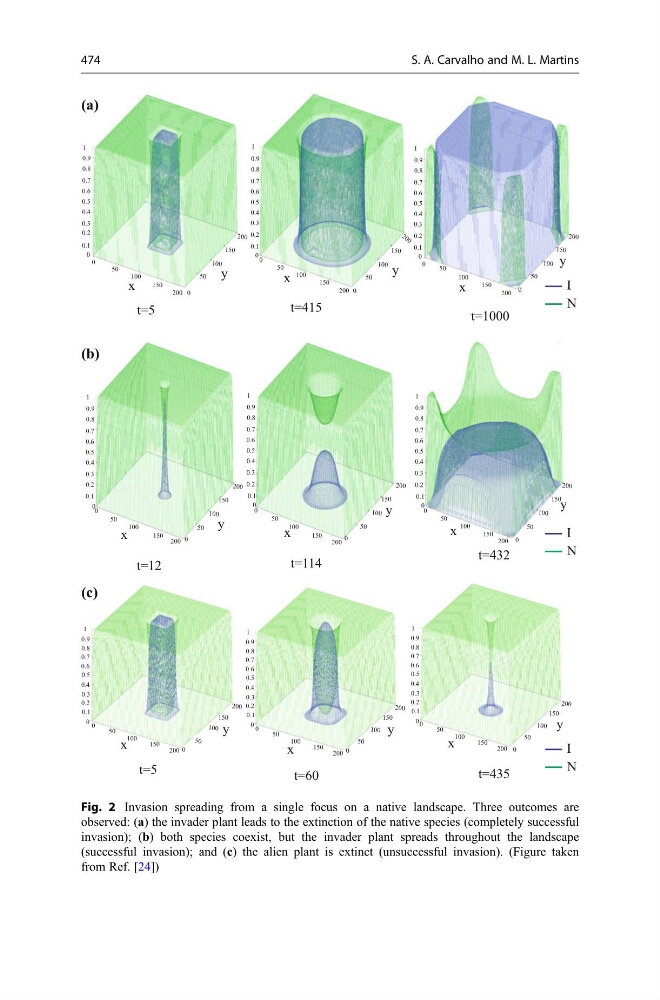
Fig. 2 Invasion spreading from a single focus on a native landscape. Three outcomes are
observed: (a) the invader plant leads to the extinction of the native species (completely successful
invasion); (b) both species coexist, but the invader plant spreads throughout the landscape
(successful invasion); and (c) the alien plant is extinct (unsuccessful invasion). (Figure taken
from Ref. [24])
474
S. A. Carvalho and M. L. Martins
(b)
(c)
t=5
t=415
t=1000
50
100
0
150
200
0.2
0.1
0.3
0.4
0.5
0.6
0.7
0.8
0.9
1
0
0
50
100
150
200
0
50
100
150
200
50
100
0
150
2 0 0
0.2
0.1
0.3
0.4
0.5
0.6
0.7
0.8
0.9
1
0
50
100
0
150
200
0
50
100
150
200
0.2
0.1
0.3
0.4
0.5
0.6
0.7
0.8
0.9
1
0
I
N
t=5
t=114
t=432
t=12
t=60
t=435
0.2
0.1
0.3
0.4
0.5
0.6
0.7
0.8
0.9
1
0
0.2
0.1
0.3
0.4
0.5
0.6
0.7
0.8
0.9
1
0
0.2
0.1
0.3
0.4
0.5
0.6
0.7
0.8
0.9
1
0
0
50
100
150
200
50
100
0
200
150
0
50
100
150
200
0
50
100
150
200
50
100
0
200
150
50
100
0
200
150
0.2
0.1
0.3
0.4
0.5
0.6
0.7
0.8
0.9
1
0
0.2
0.1
0.3
0.4
0.5
0.6
0.7
0.8
0.9
1
0
0.2
0.1
0.3
0.4
0.5
0.6
0.7
0.8
0.9
1
0
0
50
100
150
200
0
50
100
150
200
0
50
100
150
200
50
100
0
200
150
50
100
200
150
0
0
50
100
200
150
x
y
x
y
x
y
x
y
x
x
y
y
y
y
y
x
x
x
I
N
I
N
Fig. 2 Invasion spreading from a single focus on a native landscape. Three outcomes are
observed: (a) the invader plant leads to the extinction of the native species (completely successful
invasion); (b) both species coexist, but the invader plant spreads throughout the landscape
(successful invasion); and (c) the alien plant is extinct (unsuccessful invasion). (Figure taken
from Ref. [24])
474
S. A. Carvalho and M. L. Martins