

the quality of plant production. Under stress conditions, the normal metabolism of
plants can undergo changes that lead to increased synthesis of some compounds and
weakening of others (Fig. 7). Often these changes are related to the accumulation of
compounds having a protective or regulatory function.
The content of phenolic compounds in peach fruit depends on many external and
internal factors, including variety, the degree of maturity, environmental conditions,
and storage conditions. Among them, light, temperature, oxygen, ethylene, growth
regulators, nutrients, and pesticides have been shown to affect phenolic metabolism
[33–35]. Plant phenols are readily oxidized by polyphenol oxidase (PPO), most
commonly after tissue damage, as PPO is believed to act as a protective enzyme
[36]. Endocarp lignification in the fruit of the peach is carried out in accordance with
the separate induction of competitive flavonoid pathways in the mesocarp and the
exocarp tissue layers. The induction of flavonoid biosynthesis is preserved among
Rosaceae and possibly also in many other fruits, whereas the induction of lignin is
not. The coordination of these two processes is likely to be critical to controlling a
number of important agronomic situations in fruit and nuts. Furthermore, the
development of peach and Arabidopsis endocarp seems to be controlled by very
similar mechanisms, which include the regulatory transcription factors (which stimulate endocarp differentiation), negative regulator and factor that cause secondary
wall formation, and lignin deposition [37].
5.1
Temperature and Oxidative Stress
Cold is one of several important environmental stresses affecting plant productivity
and distribution. Tolerance to low but not freezing temperatures – the phenomenon is
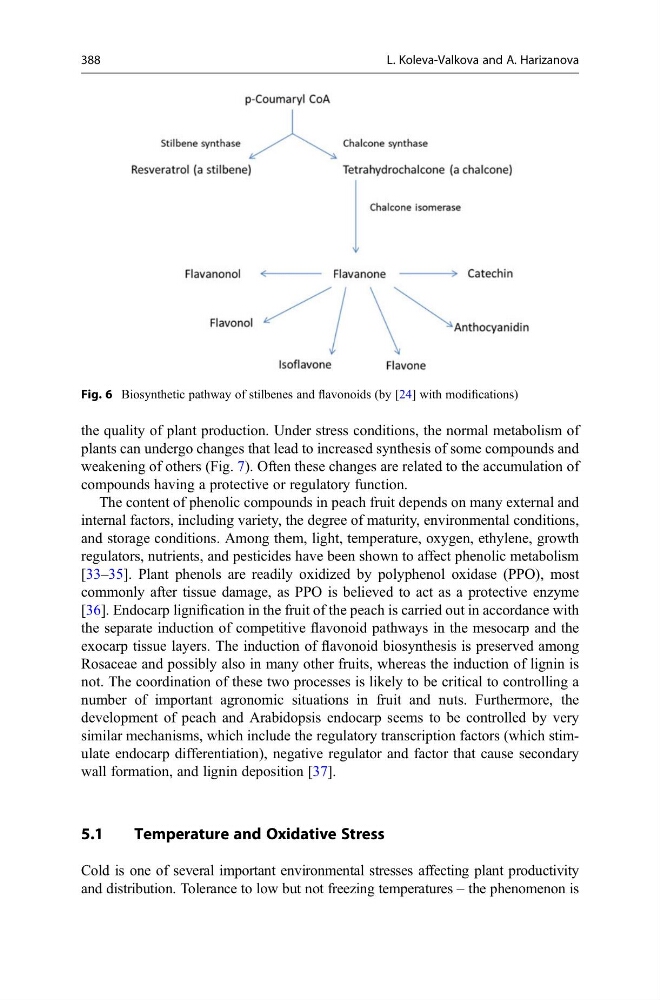
Fig. 6 Biosynthetic pathway of stilbenes and flavonoids (by [24] with modifications)
388
L. Koleva-Valkova and A. Harizanova
plants can undergo changes that lead to increased synthesis of some compounds and
weakening of others (Fig. 7). Often these changes are related to the accumulation of
compounds having a protective or regulatory function.
The content of phenolic compounds in peach fruit depends on many external and
internal factors, including variety, the degree of maturity, environmental conditions,
and storage conditions. Among them, light, temperature, oxygen, ethylene, growth
regulators, nutrients, and pesticides have been shown to affect phenolic metabolism
[33–35]. Plant phenols are readily oxidized by polyphenol oxidase (PPO), most
commonly after tissue damage, as PPO is believed to act as a protective enzyme
[36]. Endocarp lignification in the fruit of the peach is carried out in accordance with
the separate induction of competitive flavonoid pathways in the mesocarp and the
exocarp tissue layers. The induction of flavonoid biosynthesis is preserved among
Rosaceae and possibly also in many other fruits, whereas the induction of lignin is
not. The coordination of these two processes is likely to be critical to controlling a
number of important agronomic situations in fruit and nuts. Furthermore, the
development of peach and Arabidopsis endocarp seems to be controlled by very
similar mechanisms, which include the regulatory transcription factors (which stimulate endocarp differentiation), negative regulator and factor that cause secondary
wall formation, and lignin deposition [37].
5.1
Temperature and Oxidative Stress
Cold is one of several important environmental stresses affecting plant productivity
and distribution. Tolerance to low but not freezing temperatures – the phenomenon is
Fig. 6 Biosynthetic pathway of stilbenes and flavonoids (by [24] with modifications)
388
L. Koleva-Valkova and A. Harizanova