

ammonium lyase (TAL). The introduction of a hydroxyl group in the para-position
of the phenyl ring of cinnamic acid proceeds via catalysis with monooxygenase
using cytochrome P450 as the oxygen binding site. The p-coumaric acid formed can
be further hydroxylated in the 3 and 5 positions by hydroxylase and eventually
methylated by O-methyl transferase with S-adenosylmethionine as a methyl donor;
this results in the formation of caffeine, ferulic, and sinapic acids (Fig. 5). These
compounds have a phenyl ring (C6) and a three-carbon side chain and are collectively called phenylpropanoids, which serve as precursors for the synthesis of lignins
and many other compounds [24].
Benzoic acid derivatives are obtained by the loss of a bicarbonate residue from
phenylpropanoids. Salicylic acid is a benzoic acid derivative and acts as a signal
molecule (Fig. 5) [32]. After infection or ultraviolet radiation, many plants increase
the salicylic acid content, which can induce biosynthesis of the protective substances. Similar to the phenylpropanoid series, the hydroxylation and eventual
methylation of hydroxybenzoic acid lead to the formation of dihydroxybenzoic
acid (protocatechuic acid), vanillic acid, syringic acid, and gallic acid.
Hydroxybenzoic acids are usually present in the bound form in plants and are
often a component of a complex structure such as lignins and hydrolyzable tannins.
They are also in the form of organic acids and as sugar derivatives. However, there
are exceptions in which they are mainly present in a free form [24].
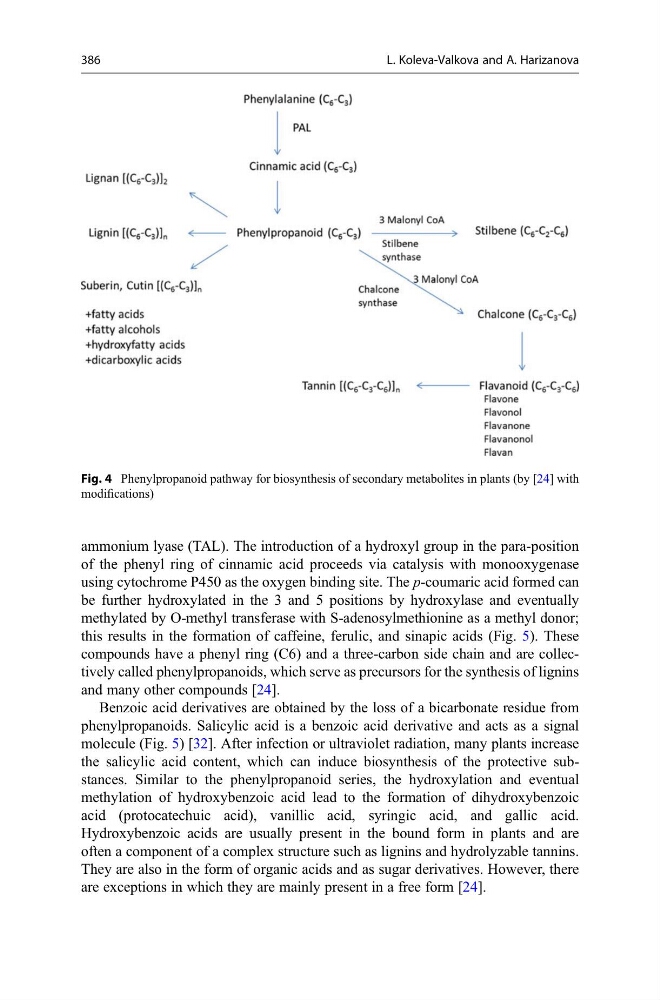
Fig. 4 Phenylpropanoid pathway for biosynthesis of secondary metabolites in plants (by [24] with
modifications)
386
L. Koleva-Valkova and A. Harizanova
of the phenyl ring of cinnamic acid proceeds via catalysis with monooxygenase
using cytochrome P450 as the oxygen binding site. The p-coumaric acid formed can
be further hydroxylated in the 3 and 5 positions by hydroxylase and eventually
methylated by O-methyl transferase with S-adenosylmethionine as a methyl donor;
this results in the formation of caffeine, ferulic, and sinapic acids (Fig. 5). These
compounds have a phenyl ring (C6) and a three-carbon side chain and are collectively called phenylpropanoids, which serve as precursors for the synthesis of lignins
and many other compounds [24].
Benzoic acid derivatives are obtained by the loss of a bicarbonate residue from
phenylpropanoids. Salicylic acid is a benzoic acid derivative and acts as a signal
molecule (Fig. 5) [32]. After infection or ultraviolet radiation, many plants increase
the salicylic acid content, which can induce biosynthesis of the protective substances. Similar to the phenylpropanoid series, the hydroxylation and eventual
methylation of hydroxybenzoic acid lead to the formation of dihydroxybenzoic
acid (protocatechuic acid), vanillic acid, syringic acid, and gallic acid.
Hydroxybenzoic acids are usually present in the bound form in plants and are
often a component of a complex structure such as lignins and hydrolyzable tannins.
They are also in the form of organic acids and as sugar derivatives. However, there
are exceptions in which they are mainly present in a free form [24].
Fig. 4 Phenylpropanoid pathway for biosynthesis of secondary metabolites in plants (by [24] with
modifications)
386
L. Koleva-Valkova and A. Harizanova