

20 Power Plant Open Cooling System in the Context of the Objectives …
409
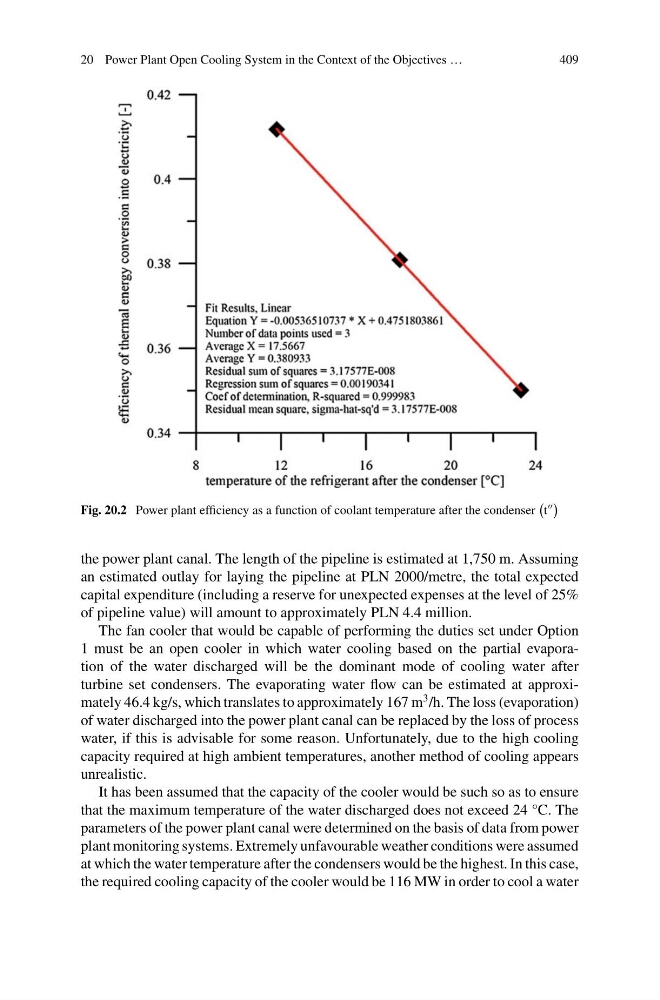
Fig. 20.2 Power plant efficiency as a function of coolant temperature after the condenser
t
the power plant canal. The length of the pipeline is estimated at 1,750 m. Assuming
an estimated outlay for laying the pipeline at PLN 2000/metre, the total expected
capital expenditure (including a reserve for unexpected expenses at the level of 25%
of pipeline value) will amount to approximately PLN 4.4 million.
The fan cooler that would be capable of performing the duties set under Option
1 must be an open cooler in which water cooling based on the partial evaporation of the water discharged will be the dominant mode of cooling water after
turbine set condensers. The evaporating water flow can be estimated at approximately 46.4 kg/s, which translates to approximately 167 m
3 /h. The loss (evaporation)
of water discharged into the power plant canal can be replaced by the loss of process
water, if this is advisable for some reason. Unfortunately, due to the high cooling
capacity required at high ambient temperatures, another method of cooling appears
unrealistic.
It has been assumed that the capacity of the cooler would be such so as to ensure
that the maximum temperature of the water discharged does not exceed 24 °C. The
parameters of the power plant canal were determined on the basis of data from power
plant monitoring systems. Extremely unfavourable weather conditions were assumed
at which the water temperature after the condensers would be the highest. In this case,
the required cooling capacity of the cooler would be 116 MW in order to cool a water
409
Fig. 20.2 Power plant efficiency as a function of coolant temperature after the condenser
t
the power plant canal. The length of the pipeline is estimated at 1,750 m. Assuming
an estimated outlay for laying the pipeline at PLN 2000/metre, the total expected
capital expenditure (including a reserve for unexpected expenses at the level of 25%
of pipeline value) will amount to approximately PLN 4.4 million.
The fan cooler that would be capable of performing the duties set under Option
1 must be an open cooler in which water cooling based on the partial evaporation of the water discharged will be the dominant mode of cooling water after
turbine set condensers. The evaporating water flow can be estimated at approximately 46.4 kg/s, which translates to approximately 167 m
3 /h. The loss (evaporation)
of water discharged into the power plant canal can be replaced by the loss of process
water, if this is advisable for some reason. Unfortunately, due to the high cooling
capacity required at high ambient temperatures, another method of cooling appears
unrealistic.
It has been assumed that the capacity of the cooler would be such so as to ensure
that the maximum temperature of the water discharged does not exceed 24 °C. The
parameters of the power plant canal were determined on the basis of data from power
plant monitoring systems. Extremely unfavourable weather conditions were assumed
at which the water temperature after the condensers would be the highest. In this case,
the required cooling capacity of the cooler would be 116 MW in order to cool a water