

2 Aerodynamics
157
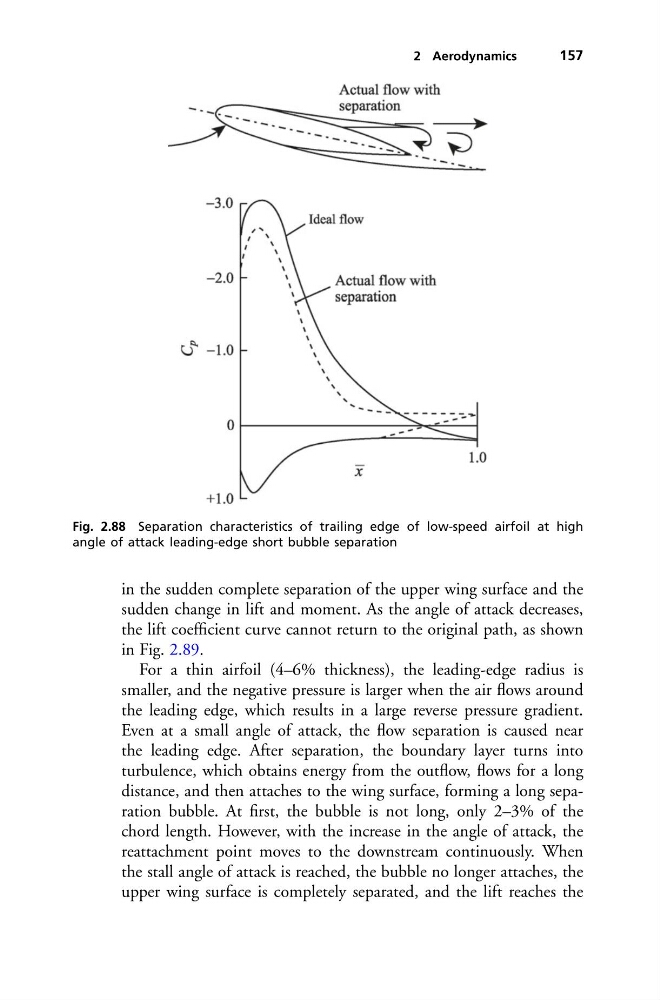
Fig. 2.88 Separation characteristics of trailing edge of low-speed airfoil at high
angle of attack leading-edge short bubble separation
in the sudden complete separation of the upper wing surface and the
sudden change in lift and moment. As the angle of attack decreases,
the lift coefficient curve cannot return to the original path, as shown
in Fig. 2.89.
For a thin airfoil (4–6% thickness), the leading-edge radius is
smaller, and the negative pressure is larger when the air flows around
the leading edge, which results in a large reverse pressure gradient.
Even at a small angle of attack, the flow separation is caused near
the leading edge. After separation, the boundary layer turns into
turbulence, which obtains energy from the outflow, flows for a long
distance, and then attaches to the wing surface, forming a long separation bubble. At first, the bubble is not long, only 2–3% of the
chord length. However, with the increase in the angle of attack, the
reattachment point moves to the downstream continuously. When
the stall angle of attack is reached, the bubble no longer attaches, the
upper wing surface is completely separated, and the lift reaches the
157
Fig. 2.88 Separation characteristics of trailing edge of low-speed airfoil at high
angle of attack leading-edge short bubble separation
in the sudden complete separation of the upper wing surface and the
sudden change in lift and moment. As the angle of attack decreases,
the lift coefficient curve cannot return to the original path, as shown
in Fig. 2.89.
For a thin airfoil (4–6% thickness), the leading-edge radius is
smaller, and the negative pressure is larger when the air flows around
the leading edge, which results in a large reverse pressure gradient.
Even at a small angle of attack, the flow separation is caused near
the leading edge. After separation, the boundary layer turns into
turbulence, which obtains energy from the outflow, flows for a long
distance, and then attaches to the wing surface, forming a long separation bubble. At first, the bubble is not long, only 2–3% of the
chord length. However, with the increase in the angle of attack, the
reattachment point moves to the downstream continuously. When
the stall angle of attack is reached, the bubble no longer attaches, the
upper wing surface is completely separated, and the lift reaches the